
Struggling to spec out the right tube magnets for your production line or engineering assembly? Choosing the wrong magnetic configuration can leave tramp metal undetected in your process—or cause premature demagnetization under high operating temperatures.
Whether you need heavy-duty stainless-steel magnetic separation bars for food and chemical processing or precision-bored hollow cylindrical magnets for shafts and sensors, getting the specs right matters.
In this guide, I’ll break down the exact Gauss ratings, N-grades, 304 vs. 316L stainless steel casings, and mounting options you need to compare—so you can source the right tube magnets with confidence.
Let’s dive right in!
What Is a Tube Magnet?
When buyers and engineers ask us for tube magnets, they usually mean one of two completely different products. In the magnetics industry, “tube” refers either to an enclosed magnetic assembly used to trap metal contaminants or to a standalone permanent magnet shaped like a hollow cylinder.
-
- Magnetic Separator Tubes (Filter Bars): Permanent magnets sealed inside a protective, non-magnetic outer tube—typically stainless steel—to pull ferrous particles out of powders, liquids, or granules.
- Hollow Cylindrical Magnets: Solid permanent magnet materials (such as sintered NdFeB, SmCo, or Ferrite) manufactured with a central bore to fit over shafts or integrate into motors and sensors.
Despite sharing a name, these two product types are not interchangeable. A separator tube is a complete magnetic assembly engineered for filtration and easy cleaning, while a hollow ring-tube magnet is a bare component built into mechanical or electromagnetic equipment.
| Feature | Magnetic Separator Tube | Hollow Cylindrical Magnet |
|---|---|---|
| Structure | Magnet core sealed inside a non-magnetic metal housing | Single-piece permanent magnet with a central hole (bore) |
| Primary Job | Capturing ferrous tramp metal from material flows | Providing magnetic fields in motors, sensors, and assemblies |
| Handling | Exposed directly to product streams in hoppers or chutes | Mounted onto shafts or enclosed inside machinery |
The Two Main Types of Tube Magnets
When buyers ask us for tube magnets, they almost always mean one of two completely different products. Getting these mixed up early can stall a quote, so we always separate them first: enclosed magnetic separator tubes built for tramp-metal filtration, and bare hollow cylindrical magnets built for mechanical assemblies.
Magnetic Separator Tubes and Bars
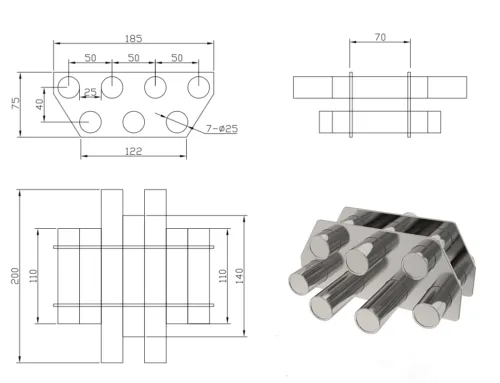
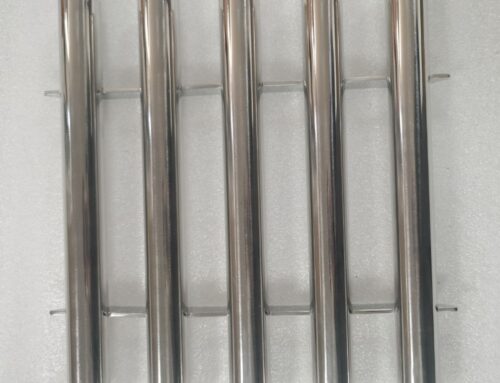
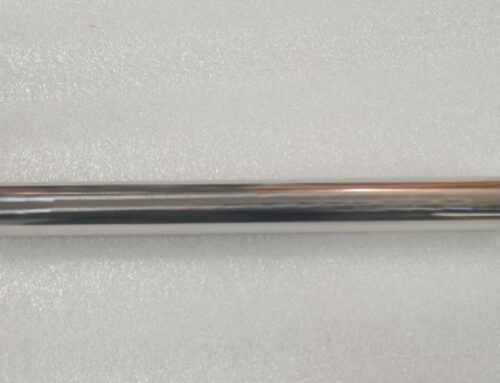
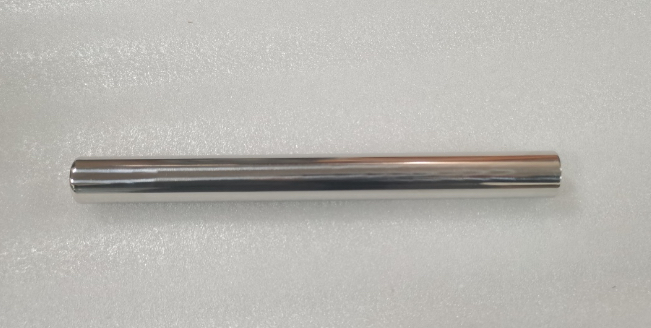
A magnetic separator tube (often called a magnetic separation bar or magnetic filter tube) is a finished tube magnet assembly. We build these by sealing permanent magnets—such as sintered neodymium or ferrite—inside a non-magnetic protective housing like stainless steel.
-
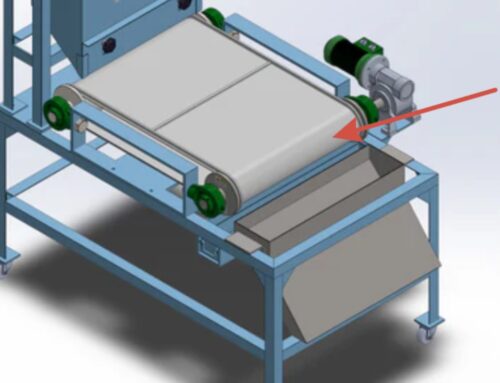
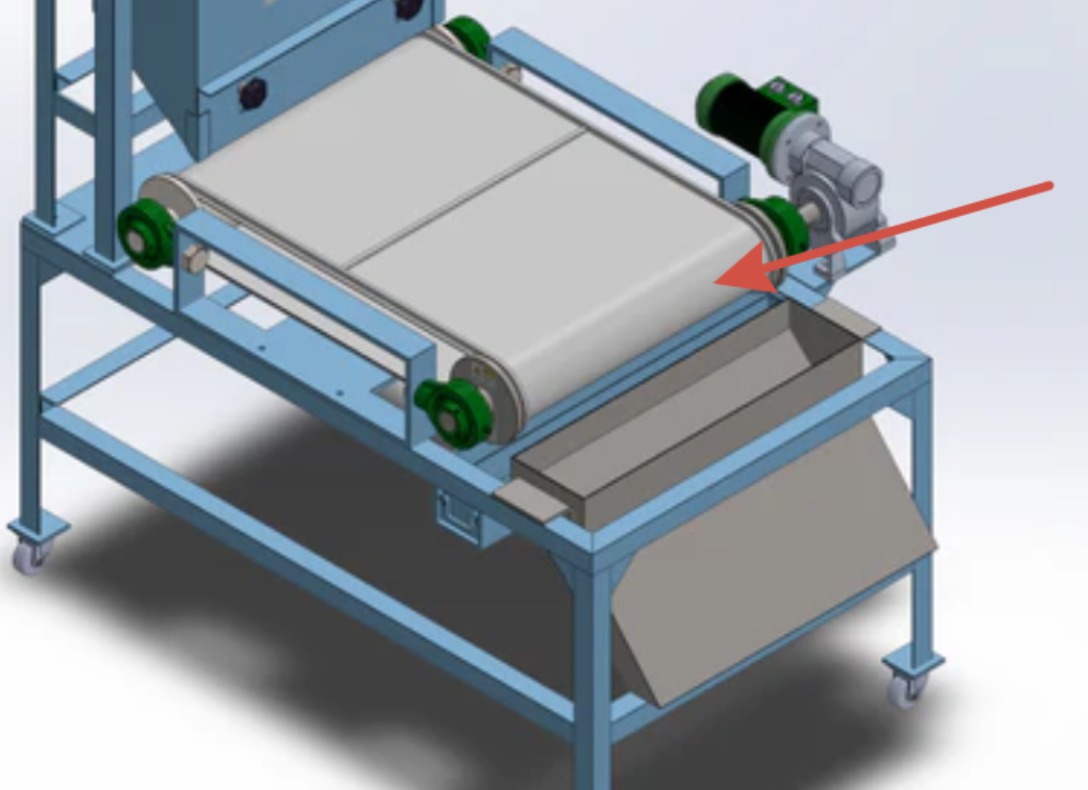
- Where they go: You will typically install them inside hoppers, chutes, grates, and material-flow lines to pull stray ferrous particles out of powders, granules, or liquids.
- What drives capture performance: Holding onto metal debris in a live line depends on the internal magnetic circuit, the material being processed, flow speed, installation angle, and regular cleaning.
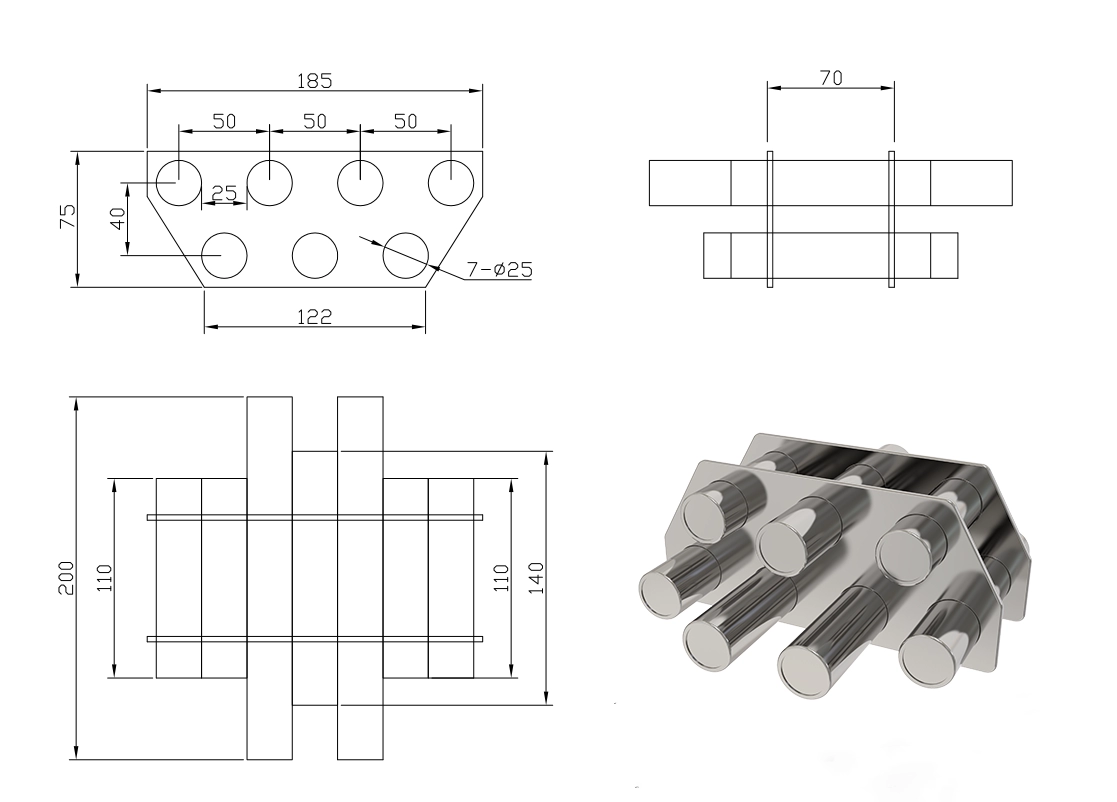
- Tube vs. full system: Keep in mind that a single stainless steel magnetic bar is an individual replacement or modular component, whereas a complete magnetic separator is a full housing assembly built with multiple tubes, frames, or drawer grids to manage the entire product stream.
Hollow Cylindrical and Ring-Tube Magnets
A hollow cylindrical magnet—sometimes referred to as a ring tube magnet—is a bare permanent magnet formed with a central hole (bore) running straight through its length. Unlike separator rods, these do not come sealed inside a protective steel tube unless your design calls for a custom assembly.
-
- Key geometry: We manufacture these to three core dimensions: outer diameter (OD), inner diameter or bore (ID), and overall length or wall thickness.
- Where they go: Engineers fit them over shafts or integrate them directly inside electric motors, sensors, robotics, and custom hardware—much like how permanent magnets are engineered into magnetic door latches and mechanical assemblies.
- Critical specs: Because these sit inside moving or sensing systems, confirming the exact magnetization direction (axial vs. diametral) and dimensional tolerances is essential before production.
How to Tell Which Type You Need
| Feature | Magnetic Separator Tube / Bar | Hollow Cylindrical / Ring-Tube Magnet |
|---|---|---|
| Primary Job | Capturing ferrous contaminants from material streams | Driving motion, sensing, or holding inside a device |
| Construction | Permanent magnets sealed in a non-magnetic housing (e.g., stainless steel) | Bare permanent magnet material (NdFeB, SmCo, Ferrite, AlNiCo) |
| Key Dimensions | Outer diameter, overall length, and end-cap/thread style | Outer diameter (OD), inner bore diameter (ID), and length |
| Typical Placement | Hoppers, chutes, grates, and processing lines | Mounted on shafts, inside motors, sensors, or custom assemblies |
If you are trying to clean unwanted metal out of a product flow, you need a magnetic separator tube. If you are building a magnet onto a shaft or inside an electromechanical device, you need a hollow cylindrical magnet.
Sending us a quick sketch, a 2D/3D part drawing, or a brief description of your application lets our engineering team confirm the exact configuration, magnetic circuit, and material grade before quoting.
How Tube Magnets Work
At a fundamental level, all tube magnets generate a magnetic field to attract ferrous materials or interact with nearby magnetic components. However, how they perform in the real world depends entirely on whether you are pulling tramp metal out of a product stream or building a precision mechanical assembly.
Magnetic Separation and Capturing Ferrous Contamination
In a magnetic separator tube, internal permanent magnets create concentrated magnetic zones along the outer stainless steel shell. As bulk material flows over the bar, susceptible iron and steel particles are pulled out of the stream and held against the tube surface.
Real-world capture efficiency depends on five interacting variables:
| Factor | How It Impacts Separation Performance |
|---|---|
| Particle Size & Type | Larger, strongly magnetic iron fragments pull in easily; fine, weakly magnetic work-hardened stainless particles require much stronger fields. |
| Distance & Product Depth | Magnetic pull drops off sharply as distance increases. Thick product layers keep outer particles too far from the tube surface. |
| Flow Rate | Fast-moving material reduces contact time, giving the magnetic field less opportunity to pull contaminants out of the stream. |
Capture vs. Retention: Getting a metal shaving to touch the tube is only half the battle. In a working process, continuous material flow can easily wipe captured particles right back off the bar. Reliable contaminant retention requires strong magnetic holding zones that lock particles safely in place—similar to the high-force magnetic circuits used in heavy-duty mining magnetic coupling systems—until the tube is cleaned.
Hollow Magnets in Mechanical and Electromagnetic Designs
When we supply bare hollow cylindrical magnets for motors, sensors, or actuators, the focus shifts from trapping metal to shaping a precise magnetic field inside a larger assembly. Several design choices dictate how the magnet behaves once installed:
-
- Bore Size & Wall Thickness: The ratio between the outer diameter and inner bore directly controls the volume of magnetic material available and how the field distributes around a central shaft.
- Magnetization Direction & Pole Arrangement: Whether the magnet is magnetized axially (through the length) or diametrically (across the diameter), or configured with multiple poles, determines how it interacts with coils or Hall-effect sensors.
- Surrounding Components: A magnet never works in isolation. Nearby steel housings, shafts, and air gaps form part of the overall magnetic circuit, redirecting or concentrating magnetic flux in the finished assembly.
Common Tube Magnet Materials
Choosing the right magnetic material comes down to balancing magnetic strength against your actual operating environment. Whether we are building a bare hollow cylindrical magnet or sealing a magnetic core inside a stainless steel magnetic separator tube, each material family brings distinct trade-offs in temperature resistance, corrosion protection, and cost.
| Material | Core Advantage | Key Selection Trade-Off | Typical Fit |
|---|---|---|---|
| Neodymium (NdFeB) | Highest magnetic strength in a compact footprint | Lower heat limits; requires protective coating or steel housing | High-capture separator bars and compact motor or sensor rings |
| Samarium Cobalt (SmCo) | Strong performance in high-heat and harsh environments | Higher material cost; brittle without mechanical protection | Elevated-temperature processing lines and demanding industrial assemblies |
| Ferrite (Ceramic) | Cost-effective with natural corrosion resistance | Lower magnetic pull per unit volume; requires larger dimensions | Budget-sensitive separation tasks and larger hollow magnet designs |
| Alnico & Bonded | Specialized thermal stability or complex custom shapes | Lower resistance to demagnetization (Alnico) or lower peak strength (Bonded) | High-heat instrumentation or precision-molded ring-tube geometries |
Neodymium (NdFeB)
Sintered neodymium tube magnets deliver the strongest magnetic field for their size. When space is tight—such as inside a compact sensor housing or a high-efficiency filtration grate—NdFeB provides maximum pull force. Because bare neodymium can corrode and chip easily, we balance magnetic grade selection with operating temperature limits and add protective surface coatings or enclose the magnets inside a sealed stainless steel tube.
Samarium Cobalt (SmCo)
When standard neodymium cannot handle the heat, Samarium Cobalt steps in. SmCo maintains reliable magnetic output in demanding temperatures and harsh chemical environments, depending on the overall circuit design and exposure conditions. While it carries a higher material cost and requires careful handling during assembly due to brittleness, it is often the practical choice for hot-process separator rods and high-temperature motors.
Ferrite (Ceramic)
Ferrite tube magnets offer a cost-effective, naturally corrosion-resistant alternative when extreme magnetic density is not required. Because ceramic magnets produce a weaker field than rare-earth options, we evaluate them against your available space and capture targets—often increasing the outer diameter or wall thickness to achieve the required holding force.
Alnico and Bonded Magnet Options
For specialized applications, Alnico and bonded magnets (such as injection-molded or compression-bonded grades) solve unique design problems:
Alnico: Handles very high operating temperatures and offers strong thermal stability, making it useful in specialized instrumentation and sensing setups where mechanical shock and demagnetizing fields are controlled.
Bonded Magnets: Combine magnetic powder with a polymer binder to form complex hollow shapes, tight tolerances, or multi-pole magnetization patterns that are difficult to machine from sintered blocks.
Rather than choosing a material by grade name alone, we match the alloy to your working temperature, mechanical fit, and target performance in the finished assembly—including specialized drives like magnetic coupling assemblies.
Key Specifications to Compare Before Buying Tube Magnets
When sourcing tube magnets, comparing quotes on price alone often leads to fitment issues or poor performance on the production line. Whether we are reviewing drawings for a magnetic separator tube or a hollow cylindrical magnet, we always check five core specification areas before moving to production.
Dimensions and Tolerances
Nominal dimensions tell us the basic size, while manufacturing tolerances define how much variation your assembly or housing can safely accept. Tightening tolerances unnecessarily increases machining costs, while leaving them too loose causes binding or poor alignment.
| Specification Area | Magnetic Separator Tubes & Bars | Hollow Cylindrical Tube Magnets |
|---|---|---|
| Core Geometry | Outside diameter (OD), overall length, and end-cap shape | Outside diameter (OD), inner bore diameter (ID), and wall thickness/length |
| Critical Fit Checks | Installation clearances inside hoppers, chutes, or grate frames | Shaft fit, concentricity between OD and ID, and perpendicularity |
| Tolerance Focus | Straightness over long spans and end-to-end length | Tight bore and OD tolerances for rotating or sensor assemblies |
Magnetic Performance and Test Conditions
A single headline number rarely tells the full story. Magnetic bar Gauss rating measurements and pull-force values measure different things and are not directly interchangeable.
-
- Surface Gauss: Measures magnetic flux density at a specific point on the surface, which varies depending on where the probe is placed (pole center vs. gap).
- Pull Force: Measures the mechanical force needed to detach a specific steel test piece, which changes based on test-piece thickness, shape, and air gap.
Always ask suppliers to state the exact measurement location, instrument type, and test setup alongside any magnetic value. For separation equipment, request process-based guidance tailored to your flow rate and particle size rather than relying on a peak lab number alone.
Temperature and Environmental Conditions
Heat, moisture, and chemical exposure directly affect how long a tube magnet assembly holds its magnetic strength and physical integrity.
-
- Operating Temperature: Evaluate both continuous running temperatures and short-term thermal spikes, as different magnet materials and grades handle heat differently.
- Moisture and Chemicals: Washdown cycles, acidic or alkaline ingredients, and humidity require protective barriers to prevent oxidation or material degradation.
- Circuit Interaction: In motors or sensor housings, nearby steel components and thermal cycles also influence how the magnetic circuit performs over time.
Housing, Coating, and Corrosion Protection
Bare permanent magnets can chip or corrode in demanding environments, so surface protection is a critical part of the specification.
-
- For Separator Assemblies: Specify the non-magnetic housing material—most commonly stainless steel—along with surface finish requirements, continuous weld integrity, and sealed end-cap construction suited to your cleaning methods.
- For Hollow Permanent Magnets: Choose protective coatings or non-magnetic sleeves matched to your operating environment, especially when using sintered NdFeB in humid or mechanical assemblies, such as when comparing surface permanent magnet and interior permanent magnet rotor designs.
Mounting and Integration
How a part attaches to your equipment dictates the final mechanical features on the drawing.
-
- Magnetic Separator Rods: Common options include female tapped holes, male threaded studs, plain ends, or sanitary ends designed for quick removal and cleaning in grates and housings.
- Hollow Tube Magnets: Integration depends on how the magnet is secured to a shaft or carrier—whether by press fit, adhesive bonding, keyways, or mechanical retainers—as well as assembly clearance constraints.
Applications for Tube Magnets
Because tube magnets come in two distinct forms—sealed separation rods and hollow cylindrical magnets—they solve completely different problems on the factory floor and inside finished equipment. Matching the right style to your workflow comes down to whether you are cleaning a product stream or building a mechanical assembly.
Magnetic Separation in Processing and Material Handling
When buyers ask us for a magnetic separator tube or stainless steel magnetic bar, they are usually trying to trap fine iron and steel contamination before it ruins downstream machinery or taints a batch. We supply these assemblies across several high-volume bulk handling sectors:
-
- Food and Ingredient Processing: Removing fine metal wear from flour, sugar, spices, grains, and liquids.
- Chemical and Pharmaceutical Production: Capturing ferrous particles in powders and slurries where purity is critical.
- Plastics and Resins: Protecting injection molding nozzles and extruders from stray metal fragments in regrind or virgin pellets.
- Bulk Materials and Recycling: Pulling ferrous debris out of dry minerals, ceramics, and recovered material streams.
Every processing line runs differently, so we always look at your exact product-contact conditions before recommending a build. You need to account for flow speed, moisture, washdown chemicals, and any industry-specific hygiene rules or surface finish standards that govern your facility.
Motors, Sensors, and Custom Assemblies
On the OEM side, engineers use bare hollow cylindrical magnets (also called ring tube magnets) as active components inside moving or sensing hardware. Because of the open center bore, they slide directly over shafts, housings, or sensor probes:
-
- Electric Motors and Motion Systems: Serving as rotor cores or magnetic couplings in EV drives, servo motors, and high-efficiency industrial motors.
- Robotics and Automation: Providing compact, reliable magnetic fields for actuators and end-of-arm tooling.
- Position Sensing and Instrumentation: Working alongside Hall-effect sensors to track linear travel or rotary speed.
- Consumer and Medical Equipment: Delivering quiet, consistent magnetic performance in appliances, drones, and diagnostic devices.
Selecting a hollow magnet starts with the magnetic function you need and how the part fits into your mechanical interface. Confirming shaft clearances and magnet geometric dimensioning and tolerancing early keeps assembly smooth and prevents cracking during installation.
Application Comparison at a Glance
| Application Area | Recommended Tube Magnet Type | Primary Function | Key Selection Factors |
|---|---|---|---|
| Food, Pharma & Chemicals | Magnetic separator tube | Trap fine ferrous contaminants | Sanitary finish, weld quality, cleaning protocols |
| Plastics & Bulk Recycling | Magnetic separation bar | Protect processing equipment | Flow rate, abrasion resistance, pull strength |
| Motors & Robotics | Hollow cylindrical magnet | Generate torque or coupling force | Operating temperature, magnet grade, bore tolerance |
| Sensors & Instrumentation | Ring tube magnet | Provide a stable reference field | Magnetization direction, concentricity, dimensional stability |
Magnetic Separator Tube vs. Magnetic Bar: What Is the Difference?
Across supplier catalogs, magnetic separator tube and magnetic bar often describe the exact same product—a permanent magnet core sealed inside a non-magnetic protective tube, typically stainless steel, used to pull ferrous contaminants out of flowing materials. However, “magnetic bar” is also used more broadly across the industry for solid rectangular or cylindrical bar magnets without a protective outer housing.
To understand how magnetic bars are used in real-world equipment, we always look at construction and end use rather than the catalog label alone.
How They Compare in Form and Function
| Feature | Magnetic Separator Tube (Filter Rod) | General Magnetic Bar (Bare Magnet) |
|---|---|---|
| Physical Form | Cylindrical magnet assembly sealed inside a non-magnetic metal shell (e.g., stainless steel) | Solid rectangular block or round rod made directly from permanent magnet material |
| Typical Installation | Mounted inside hoppers, chutes, pipes, or magnetic grate frames via threaded ends | Integrated into sensors, holding fixtures, motors, or custom mechanical assemblies |
| Intended Use | Capturing fine iron and steel particles from powders, liquids, or bulk streams | Providing direct magnetic holding force, actuation, or field sensing |
Confirm Construction Before Ordering
Because suppliers label tube magnets and separator rods differently, never order based on product name alone. Always verify three details before sending an RFQ:
-
- Housing: Confirm whether you need a sealed stainless-steel outer shell for product-contact filtration or an exposed permanent magnet.
- Geometry: Check if the application requires a round cross-section for smooth material flow or a rectangular bar shape.
- Mounting Interface: Specify tapped holes, threaded studs, or bare ends so the component fits your existing equipment.
How to Select the Right Tube Magnet
Choosing the wrong magnet style or overlooking an operating condition leads to poor capture rates, corroded housings, or parts that simply do not fit your equipment. When I help buyers and engineers source tube magnets, we walk through a straightforward eight-step checklist to make sure the final part matches the real-world job.
-
- Define the primary purpose. Decide right away whether you are removing tramp iron from a product stream, or integrating a magnet into a motor, sensor, or mechanical assembly.
- Identify the exact product category and installation location. Pinpoint whether your setup calls for a sealed magnetic separator rod mounted inside a hopper or chute, or a hollow cylindrical magnet fitted over a shaft.
- Record details of the processed material or surrounding assembly. For separation, note the product type, flow speed, and typical contaminant size. For assemblies, document nearby steel components and air gaps that could shift the magnetic field.
- Specify exact dimensions, tolerances, and mounting interfaces. List the outer diameter, inner bore (for hollow magnets), overall length, acceptable tolerances, and end connections like threaded holes, studs, or sanitary ends.
- Define operating temperature, moisture, chemicals, and cleaning conditions. High heat, washdowns, or corrosive ingredients dictate whether you need higher-temperature magnet grades, protective coatings, or specific stainless-steel housings.
- Establish magnetic performance requirements and evaluation methods. Define the target field strength or holding behavior, and confirm how both sides will measure it so lab checks match your expectations.
- Confirm production quantity, inspection criteria, and delivery expectations. Align on order volume, required quality checks, and your target schedule early, especially if your build requires custom tooling or non-standard dimensions.
- Review a technical drawing or prototype before approving full production. Always sign off on a 2D print or test sample in your actual line or housing before committing to a full production run.
| Selection Step | Separator Tube Focus | Hollow Cylindrical Magnet Focus |
|---|---|---|
| Core Function | Capturing ferrous contaminants | Motion, sensing, or structural fit |
| Key Geometry | Outer diameter, length, end threads | Outer diameter, inner bore, length |
| Environment | Product flow rate, washdowns, abrasion | Operating heat, shaft fit, nearby steel |
| Verification | Surface field checks, weld integrity | Magnetization direction, dimensional tolerances |
Custom Tube Magnets: What to Send With an RFQ
When we review requests for custom tube magnets, missing drawings or vague specs are the main reasons quotes get delayed. Sending complete technical details upfront helps our engineering team recommend the right magnetic material, verify tolerances, and calculate accurate pricing right away.
Use the checklist below to prepare your request before submitting your prints:
| RFQ Item | What We Need From You | Why It Matters |
|---|---|---|
| Technical Drawings | 2D engineering prints (PDF/DXF) or 3D CAD files (STEP/IGES) | Confirms exact geometry, critical features, and assembly interfaces |
| Product Category | Magnetic separator tube (housed rod) or hollow cylindrical magnet | Determines whether you need a finished stainless steel assembly or a bare permanent magnet |
| Dimensions & Tolerances | Outer diameter (OD), inner diameter (ID), length, and magnet geometric dimensioning and tolerancing | Prevents fitment issues on shafts, housings, or separation grates |
| Material & Grade | Preferred magnet type (NdFeB, SmCo, Ferrite, AlNiCo, or Bonded) and housing metal | Aligns magnetic strength and corrosion resistance with your budget |
| Magnetic Performance | Target surface Gauss or pull force, plus the exact measurement location and method | Ensures both teams test the finished part under the same conditions |
| Operating Environment | Maximum working temperature, moisture levels, chemical exposure, and washdown routines | Protects against irreversible thermal demagnetization and housing corrosion |
| Finish & Mounting | Surface plating, stainless steel finish, weld style, threaded holes, studs, or end caps | Ensures hygienic compliance and drop-in mechanical installation |
| Order & Quality Details | Brief application summary, estimated annual usage, target delivery schedule, and required inspection reports | Helps us plan production capacity, safety stock, and PPAP or quality documentation |
If you are still finalizing your design, sharing a rough sketch alongside your operating conditions gives us enough to start a practical engineering review.
Working With NBAEM on Custom Tube Magnets
Sourcing the right tube magnets often comes down to balancing magnetic performance, physical fit, and total component cost. Since 2010, we have built our operation around supplying both raw permanent magnets and complete custom magnetic assemblies for industrial, automotive, medical, and consumer electronics buyers worldwide.
Whether you need bare hollow cylindrical magnets or stainless-steel encased magnetic filter tubes, our engineering and production teams support your project from initial spec review to finished delivery.
End-to-End Engineering and Assembly Support
Instead of simply shipping off-the-shelf parts, we structure our support around four core capabilities to help you avoid costly design mismatches:
-
- Magnetic Sourcing: We help you select between sintered Neodymium (NdFeB), Samarium Cobalt (SmCo), Ferrite, AlNiCo, and bonded or injection-molded options based on your operating environment and performance targets.
- Magnet Design: Our R&D team helps optimize magnetic circuits, pole orientation, and dimensions so your component performs reliably inside your equipment.
- Magnet Engineering: We review your mechanical interfaces, tolerances, and thermal limits before production begins.
- Magnetic Assemblies: We integrate permanent magnets with non-magnetic materials—such as stainless steel, plastic, rubber, or adhesives—to deliver stronger functional results while lowering your overall assembly costs.
Customization Built Around Your Prints
Every application has distinct mechanical and environmental demands. We manufacture custom tube magnets and separator rods tailored directly to your technical drawings and specifications:
| Customization Area | Available Options |
|---|---|
| Material & Composition | Sintered NdFeB, SmCo, Ferrite (Ceramic), AlNiCo, Bonded, and Injection magnets |
| Dimensions & Geometry | Custom outer diameters, inner bore sizes, lengths, and end configurations |
| Magnetic Characteristics | Tailored magnetic grades and magnetization directions matched to your circuit |
| Assembly & Housing | Complete tube magnet assembly builds with non-magnetic stainless steel or protective housings |
Quality Standards and Fulfillment
To support strict industrial and automotive supply chains, our manufacturing processes follow ISO 9001, ISO 14001, ISO/TS 16949, and PPAP Level 3 standards. We maintain warehouse safety stock for ongoing needs and typically fulfill custom-engineered orders within a 4–5 week lead time.
Request a Technical Review and Quote
If you are evaluating tube magnets for an upcoming build or replacing an existing supplier, share your 2D drawings, 3D CAD files, target dimensions, and operating conditions with our team. Our magnetic specialists will review your prints and provide a practical recommendation and accurate quote.
Frequently Asked Questions About Tube Magnets
Are tube magnets and magnetic separator bars the same thing?
Not always. In industrial processing, magnetic separator tubes and magnetic separator bars often describe the same stainless-steel-housed rod used to capture tramp iron. However, tube magnets can also refer to bare hollow cylindrical magnets with a central bore used in motors, sensors, or mechanical assemblies, while “magnetic bar” can refer to a solid rectangular block magnet. Always confirm the physical construction before ordering.
Are tube magnets always made from neodymium?
No. While sintered neodymium (NdFeB) is popular when you need high magnetic strength in a compact size, we also produce custom tube magnets from Samarium Cobalt (SmCo), Ferrite (Ceramic), AlNiCo, and bonded materials. If your application runs hot or requires strict corrosion resistance, understanding how SmCo magnets are made and why they handle higher temperatures can help you pick a better alternative to standard neodymium.
What does a Gauss rating tell me?
A Gauss rating measures magnetic flux density at a specific point—usually right on the surface of a magnetic separator rod. While a higher number indicates a stronger surface field under lab test conditions, it does not guarantee real-world separation efficiency on its own. Flow rate, material depth, particle size, and how the magnetic circuit is built all affect whether your line actually captures and holds metal contaminants.
Can tube magnets be made to custom dimensions?
Yes. Standard off-the-shelf sizes rarely fit specialized machinery or tight housing clearances. We manufacture both bare hollow cylinders and stainless-steel magnetic filter tubes to exact customer drawings, adjusting outer diameter, inner bore diameter, wall thickness, total length, and end-cap threading to match your setup.
How do I choose between a magnetic separator tube and a hollow tube magnet?
Your choice comes down to whether you are cleaning a product stream or building a mechanical assembly:
| Feature | Magnetic Separator Tube | Hollow Cylindrical Tube Magnet |
|---|---|---|
| Primary Job | Captures and holds ferrous metal contaminants | Provides magnetic force around a shaft or inside a device |
| Construction | Permanent magnets sealed inside a non-magnetic metal housing (often stainless steel) | Bare or coated permanent magnet with a central bore |
| Where It Goes | Hoppers, chutes, liquid lines, and grate housings | Electric motors, sensors, couplings, and robotics |
What information should I provide for a quote?
To give you an accurate price and lead time—typically 4 to 5 weeks for custom runs—send us your technical details upfront:
Drawings: A 2D print or 3D CAD file showing dimensions, tolerances, and mounting threads.
Product Type: Specify whether you need a housed magnetic separator tube or a bare hollow magnet.
Material & Environment: Note your preferred magnet grade, operating temperature, and exposure to moisture, chemicals, or washdowns.
Order Volume: Share your estimated prototype or production quantity along with any specific inspection requirements.
 English
 German
 Vietnamese
 Spanish (Mexico)
 Russian
 Turkish
 Polish
 Hindi
 Thai
 Malay
 Korean
 Japanese
 French
 Czech
 Danish
 Dutch
 Finnish
 Italian
 Portuguese (Brazil)
 Portuguese (Portugal)
 Slovenian
 Ukrainian
 Hebrew
 Scottish Gaelic
 Hungarian
 Tagalog
 Spanish (Spain)
 Serbian
 Indonesian
 Slovak
 Dutch (Belgium)
 Persian
 Arabic
 Romanian
 Estonian
 Greek
 Bulgarian

Leave A Comment