
Core Materials Used in Magnetic Encoders
Choosing the wrong magnetic material is the fastest way to trigger signal noise or total thermal failure in a sensor assembly. We focus on four primary materials to ensure high rotary encoder resolution, balancing Remanens (Br) og Hærdning (Hc) to meet specific application demands.
- Sintered Neodymium (NdFeB): This is our top choice for high flux density. By using high-grade Sintered Neodymium (such as N42SH), we ensure a powerful magnetic field that maintains signal integrity even with generous air gap tolerances. It is the industry standard for sjældne jordartsmagneter where compact size and maximum strength are non-negotiable.
- Samarium Cobalt (SmCo): We specify SmCo for environments where thermal drift is a dealbreaker. With a superior temperature coefficient, these magnets operate reliably at 180°C and beyond without the risk of permanent demagnetization.
- Ferrit (Keramik): For cost-effective speed sensing, injection molded ferrite provides a stable, corrosion-resistant solution. While it offers lower flux than rare earth options, it is highly effective for high-volume consumer applications where budget is a primary constraint.
- Bonded Magnets: To achieve complex multipole patterns or tight mechanical tolerances, we utilize bonded materials. These allow for magnetic field homogeneity in unique geometries, often eliminating the need for secondary machining.
| Materialetype | Maks driftstemperatur | Magnetisk styrke | Primary Advantage |
|---|---|---|---|
| NdFeB (N42SH) | 150°C – 180°C | Meget høj | Maximum signal-to-noise ratio |
| SmCo | 250°C – 350°C | Høj | Exceptional thermal stability |
| Ferrit | 250°C | Lav | Lowest cost / Corrosion resistant |
| Bonded | 120°C – 150°C | Mellem | Complex shapes / High precision |
Magnetization Patterns and Topology in Magnetic Encoders
Choosing the right magnetization pattern is just as critical as the material itself when determining what magnet are used in magnetic encoder systems. We focus on how the magnetic field interacts with the Hall effect sensor or AMR element to ensure peak signal integrity.
Diametric Magnetization for End-of-Shaft Sensing
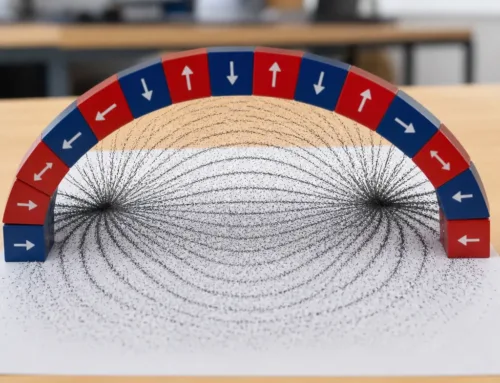
For most standard rotary applications, we utilize diametric polarization. In this setup, the magnet is polarized across its diameter rather than through its thickness.
- Anvendelse: This is the industry standard for end-of-shaft sensing.
- Performance: It provides a clean, sinusoidal magnetic field that allows the sensor to determine the absolute position with minimal signal noise.
Multipole Ring Magnets for Off-Axis Design
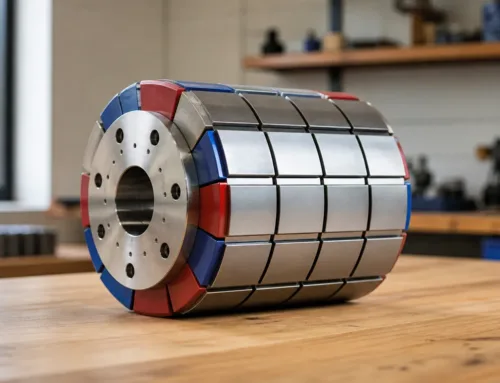
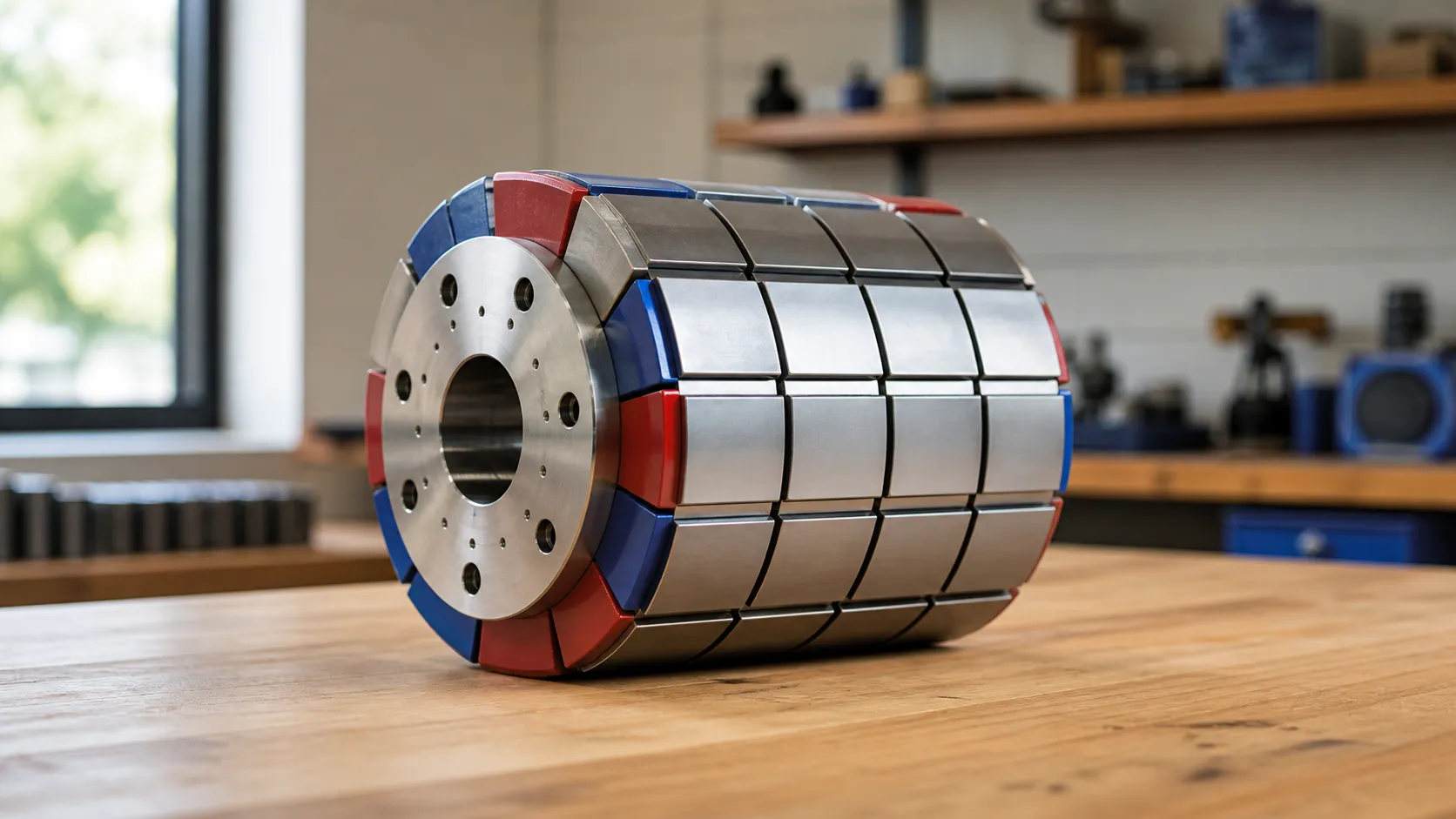
When a design requires a hollow shaft—typical in large robotic joints or heavy machinery—we transition to multipol ringmagneter. These rings feature multiple pairs of North and South poles arranged around the circumference.
- Præcision: Increasing the pole count helps maximize rotary encoder resolution.
- Alsidighed: These are often produced as bundne magneter to achieve the complex geometries and high pole densities required for off-axis radial sensing.
Radial vs. Axial Polarization for Sensor Alignment
The direction of the magnetic flux must match your sensor’s placement to maintain a stable air gap tolerance.
- Radial Polarization: The magnetic field lines point outward from the center. This is ideal for sensors mounted on the side (rim) of the rotating magnet.
- Axial Polarization: The poles are located on the flat faces of the ring. This is preferred when the sensor is positioned parallel to the shaft.
By optimizing these topologies, we significantly reduce the need for heavy angle error compensation and ensure the magnetic field homogeneity stays within your required specs for industrial-grade reliability.
Technical Selection Criteria for Magnetic Encoder Magnets
Choosing the right magnet for an encoder isn’t just about strength; it’s about how that strength holds up under real-world stress. We balance four critical technical factors to ensure your Hall-effektsensorer or AMR sensors provide reliable data without signal drift.
Thermal Stability and Remanence
Heat is the enemy of magnetic precision. Every material has a specific Temperature Coefficient of Remanence (Br), dictating how much flux density you lose as the motor heats up. For applications reaching extreme environments, we utilize højt-temperaturmagneter to prevent permanent demagnetization and maintain a stable Hærdning (Hc).
Air Gap Management and Flux Strength
The distance between the magnet and the sensor—the air gap tolerance—directly impacts your rotary encoder resolution.
- Small Air Gaps: Allow for lower-grade magnets or thinner profiles.
- Large Air Gaps: Require materials with high Remanens (Br), such as Sintered Neodymium, to project a field strong enough for the sensor to detect clearly.
Mechanical Integrity: Sintered vs. Bonded
The manufacturing method determines the magnet’s physical limits and magnetic output.
| Funktion | Sinterede magneter | Bondede Magneter |
|---|---|---|
| Magnetic Output | Highest (Max Flux) | Moderat |
| Formkompleksitet | Limited (Simple geometries) | High (Injection molded) |
| Holdbarhed | Brittle (Requires coating) | Tough (Polymer matrix) |
| Tolerance | Requires grinding | High precision (Net shape) |
Magnetic Consistency and Angle Error
To minimize angle error compensation in software, the hardware must be perfect. We prioritize magnetic field homogeneity during production. If the magnetic poles are unevenly distributed, the sensor reports “jitter,” leading to poor positioning. By ensuring consistent magnetization and demagnetization standards, we provide the uniformity needed for high-precision industrial automation.
Material Comparison for Magnetic Encoder Magnets
Choosing the right material for a magnetic encoder requires a precise balance between Remanens (Br), thermal stability, and budget. While Sintered Neodymium offers the highest flux density for compact designs, applications in extreme environments demand materials with a superior temperature coefficient.
We provide a variety of grades tailored to specific industrial requirements. For projects facing extreme heat, our high-stability Samarium Cobalt magnets ensure the magnetic field remains consistent even when temperatures spike.
Technical Performance Breakdown
| Magnet Material | Maks driftstemperatur | Flux Density (Strength) | Relative Cost | Bedste anvendelsesområde |
|---|---|---|---|---|
| Neodym (NdFeB) | 80°C – 230°C | Meget høj | Medium/High | High-resolution servo motors |
| Samarium Kobolt (SmCo) | 250°C – 350°C | Høj | Høj | Aerospace & Down-hole drilling |
| Ferrit (Keramik) | 250°C | Lav | Very Low | Automotive speed sensing |
| Bondede Magneter | 120°C – 150°C | Moderat | Mellem | Complex multi-pole ring shapes |
Engineering Selection Criteria
- Cost Efficiency: Ferrit is the go-to for high-volume, cost-sensitive consumer electronics where extreme precision isn’t the primary goal.
- Maximum Performance: Sintered Neodymium provides the strongest signal-to-noise ratio, allowing for a larger air gap tolerance in compact encoder assemblies.
- Thermal Reliability: If your encoder is mounted directly to a high-heat motor housing, SmCo is essential to prevent signal loss or “fading” caused by thermal demagnetization.
- Design Flexibility: Bondede magneter allow us to create intricate geometries and thin-walled rings that are impossible to achieve with traditional sintering.
Common Shapes and Form Factors for Magnetic Encoder Magnets
The physical geometry of a magnet dictates how it interacts with the sensor and fits into your mechanical assembly. When deciding what magnet are used in Magnetic encoder applications, the choice usually falls into three primary categories based on the sensing architecture.
Disc Magnets for End-of-Shaft Sensing
Disc magnets are the standard choice for compact motor feedback. Positioned at the end of a rotating shaft, these magnets typically utilize diametric polarization.
- Best For: Small BLDC motors and actuators.
- Key Advantage: Simple alignment with a Hall effect sensor or AMR chip placed directly opposite the magnet face.
- Materiale: Often Sintered Neodymium for high remanence (Br) in tight spaces.
Multipole Ring Magnets for Off-Axis Sensing
For applications like large robotic joints or hollow-shaft motors, a multipole ring magnet is required. These are mounted around the shaft rather than at the end.
- Sensing Style: Radial or axial sensing where the sensor “reads” the poles as they pass by.
- Præcision: High pole counts significantly improve rotary encoder resolution.
- Customization: We use injection molded ferrite or bonded NdFeB to create complex multipole patterns that maintain strict magnetic field homogeneity.
Magnetic Strips for Linear Encoders
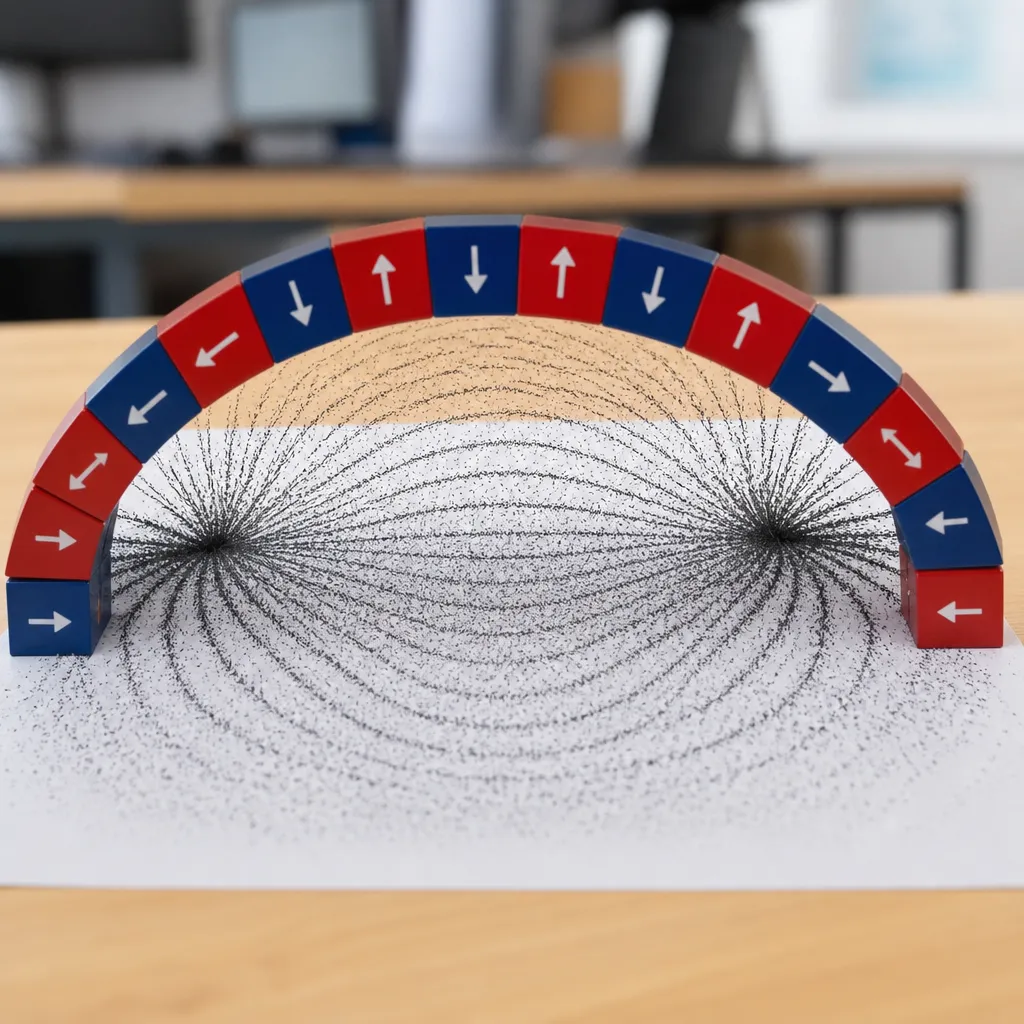
In linear motion control, magnets are provided in flexible or rigid strips. These feature alternating north-south poles along the length of the track.
- Ansøgninger: CNC stages, hydraulic cylinders, and industrial automation.
- Pålidelighed: These strips offer excellent air gap tolerance, ensuring the sensor maintains a clean signal even with slight mechanical play.
Shape and Application
| Form Factor | Primary Polarization | Common Application |
|---|---|---|
| Skive | Diametrisk | Compact motor feedback |
| Ring | Multipole (Radial/Axial) | Robotics & Hollow-shafts |
| Strip | Multi-pole Linear | Linear scales & Trackers |
In the consumer and appliance sectors, our in-home alliance manufacturing standards ensure that these diverse shapes provide the consistent flux density required for high-precision motor control. Whether it is a tiny disc for a drone motor or a massive ring for an industrial arm, we optimize the form factor to reduce the need for software-based angle error compensation.
NBAEM Custom Manufacturing for Magnetic Encoders
When determining what magnet are used in Magnetic encoder systems, the material choice is only the beginning. At NBAEM, we provide a technical edge through custom magnetic circuit simulation and rapid prototyping. We ensure your sensor hits its precision targets before you move to mass production, saving time and reducing development costs.
Advanced Testing and Field Homogeneity
High-resolution sensing requires absolute field consistency. We utilize advanced scanning technology to verify magnetic field homogeneity, effectively minimizing the angle errors that often plague lower-quality components.
- Custom Simulation: FEA analysis to optimize air gap performance and flux density.
- Precision Magnetization: Custom-built fixtures for perfect multipole and diametric alignment.
- Quality Assurance: Rigorous testing for remanence and magnetic center deviation.
Reliable Supply Chain for Manufacturers
As a specialized neodymium magnet supplier from China, we focus on long-term supply chain reliability. We understand that industrial manufacturers need more than just a component; they need a partner who guarantees material consistency across every batch. Whether you require sintered NdFeB or complex bonded shapes, our facility handles high-volume demands with the tightest mechanical tolerances in the industry.
FAQs: What Magnet are Used in Magnetic Encoder Systems?
Selecting the right magnetic component is the most critical step in ensuring sensor accuracy and longevity. Based on my experience in custom manufacturing, these are the most common questions engineers ask when determining what magnet are used in Magnetic encoder applikationer.
What is the best magnet grade for high-temperature encoders?
For environments exceeding 150°C, I typically recommend Samarium Kobolt (SmCo) or high-coercivity Sintered Neodymium. Disse sjældne jordartsmagneter are chosen for their superior Hærdning (Hc) and low temperature coefficient, ensuring the magnetic field remains stable even under extreme thermal stress.
How does the air gap affect my encoder resolution?
Den air gap tolerance directly impacts the signal-to-noise ratio of the Hall effect sensor or AMR (Anisotropic Magneto-Resistive) chip. A larger air gap results in lower Remanens (Br) at the sensor face, which can lead to jitter and reduced rotary encoder resolution. It is essential to measure magnet strength at the specific operating distance to ensure the flux density meets the sensor’s minimum requirements.
Why is diametric polarization preferred for rotary sensors?
Diametric polarization is the industry standard for end-of-shaft sensing. Unlike axial magnets, a diametrically magnetized disc provides a rotating magnetic field vector that the sensor interprets as a sine/cosine wave. This setup is vital for achieving high-accuracy absolute positioning and effective angle error compensation.
Can I use ferrite magnets for high-precision applications?
While injection molded ferrite is a fantastic, cost-effective choice for basic speed sensing or high-volume automotive pumps, it usually falls short for high-precision feedback. For applications requiring strict magnetic field homogeneity, I always advise using Sintered Neodymium. Neodymium provides the consistent flux distribution needed to minimize non-linearity and signal distortion.
- High-Temp Stability: Choose SmCo for 200°C+ environments.
- Precision Sensing: Stick to Sintered NdFeB for better homogeneity.
- Linear Applications: Utilize multipole magnetic strips for long-travel accuracy.
- Cost Efficiency: Use bonded or ferrite magnets for simple tachometer functions.
 Danish
  English
  German
  Vietnamese
  Spanish (Mexico)
  Russian
  Turkish
  Polish
  Hindi
Hindi  Thai
Thai  Malay
Malay  Korean
  Japanese
  French
  Czech
Czech  Dutch
Dutch  Finnish
  Italian
  Portuguese (Brazil)
  Portuguese (Portugal)
  Slovenian
  Ukrainian
  Hebrew
  Scottish Gaelic
  Hungarian
  Tagalog
  Spanish (Spain)
  Serbian
  Indonesian
  Slovak
  Dutch (Belgium)
  Persian
  Arabic
  Romanian
  Estonian
  Greek
Greek  Bulgarian

Efterlad en kommentar