
Have you ever designed a magnetic assembly only to find the magnet loses its strength under real-world operating conditions? You are not alone. For engineers, predicting whether a magnet will survive its application environment is a common hurdle. The culprit behind unexpected flux loss is often a misunderstanding of the magnet’s operating state. Let’s get straight to the physics so we can design with absolute confidence.
What is the Permeance Coefficient (Pc)?
In practical terms, the Permeance Coefficient (P_c) is a fundamental metric that dictates a permanent magnet’s working state. It tells us how effectively a magnet can drive magnetic flux through its own geometry and the surrounding environment.
- The Physics: It is defined as the ratio of the magnetischen Flussdichte (B_d) to the demagnetizing field strength (H_d).
- The Core Function: It establishes the exact operating point of your magnet within its specific application.
- The Bottom Line: A low Permeance Coefficient means the magnet is fighting hard against its own shape (high self-demagnetization) and is highly susceptible to irreversible flux loss.
The Definition in Magnetic Circuit Design
When we look at magnetic circuit design, the Permeance Coefficient isn’t just a theoretical number—it is a critical structural parameter.
Whether we are engineering a standalone open circuit magnet for a simple sensor or a complex, closed-loop motor assembly, the overall reluctance of the circuit directly dictates the P_c.
Key Design Factors Influencing the Operating Point:
- Air Gaps: Larger air gaps drastically increase magnetic reluctance, driving the P_c down.
- Steel Return Paths: Routing magnetic flux through steel or other ferromagnetic components lowers reluctance, increasing the P_c and stabilizing the magnet.
- Interacting Fields: Surrounding materials and external fields dynamically shift the magnet’s working state in real-time.
Visualizing the Load Line on a B-H Curve
To truly optimize an assembly, you must visualize how the magnet behaves under stress by mapping it on the B-H curve.
If you look at the Entmagnetisierungskurve—which is the second quadrant of the full magnetische Hysterese loop—the Permeance Coefficient is visually represented as a straight line radiating from the origin (0,0). In the industry, we call this the load line.
How to Read the Demagnetization Plot:
- The Intersection: The exact spot where your load line crosses the normal induction curve is your working operating point.
- Steep Slopes (High Pc): A steep load line points toward a higher maximum magnetischen Flussdichte. The magnet is operating comfortably and is highly stable.
- Shallow Slopes (Low Pc): A flat load line drops closer to the intrinsic coercivity axis. The magnet is structurally stressed.
If your load line pushes the operating point down past the “knee” of the curve, the magnet will experience permanent, irreversible demagnetization. Designing the correct P_c ensures you stay safely above that critical threshold.
How Magnet Geometry Dictates the Permeance Coefficient
In practical magnetic circuit design, the shape of your magnet directly controls its Permeance Coefficient (Pc). It is not about the raw material itself; it is entirely about the physical dimensions. We determine the operating point on the B-H curve based on the magnet’s length in the direction of magnetization compared to its cross-sectional area. When we work with an open circuit magnet, any adjustments made during precise magnet machining will instantly shift the Permeance Coefficient.
Thick vs. Thin Magnets: The Fundamental Rule
The core rule for magnet geometry is straightforward. The physical ratio of length to area dictates exactly where the magnet sits on the load line.
- Thick Magnets (High Pc): A magnet that is long relative to its pole face operates higher up on the normal induction curve. It has a high Permeance Coefficient and strongly resists self-demagnetization.
- Thin Magnets (Low Pc): A thin, flat disc operates much lower down. This specific geometry exposes the magnet to a higher internal demagnetizing field strength, making it significantly less stable.
The Grade Selection Myth: Why Higher Grades Aren’t Always Better
There is a widespread myth that simply upgrading neodymium magnet grades automatically guarantees better performance. This is false. If your magnet geometry yields a low Permeance Coefficient, choosing a “stronger” grade can actually cause premature failure in the field.
Here is why you must match the grade to the geometry rather than just looking at the top numbers:
- High Magnetic Flux Density Grades: Standard high grades (like N52) offer immense raw power but often have lower intrinsic coercivity. If your magnet is thin (low Pc), this material will demagnetize rapidly when exposed to opposing fields or heat.
- High Coercivity Grades: A lower strength grade with a higher temperature rating (like N35SH) has excellent intrinsic coercivity. It dramatically improves the maximale Betriebstemperatur, making it the superior, reliable choice for thin, low-Pc geometries.
The Link Between Pc, Temperature, and Demagnetization
Temperature changes everything in magnetics. When a magnet heats up, its ability to hold a magnetic charge drops significantly. The Permeance Coefficient tells us exactly where the magnet’s operating point sits on the Entmagnetisierungskurve.
If the Permeance Coefficient is too low, high heat will push the magnet past its threshold, causing irreversible demagnetization. We always analyze the material’s intrinsic coercivity to understand exactly how much thermal stress a specific grade can handle before failing.
Why Shape Determines Maximum Operating Temperature
It often surprises our clients, but a magnet’s physical dimensions directly dictate its maximale Betriebstemperatur. Shape isn’t just about fitting into an assembly; it is about thermal survival.
- Tall, thick magnets: These naturally hold a high Permeance Coefficient. They resist heat much better and maintain a stable, reliable magnetischen Flussdichte.
- Thin, flat magnets: These carry a low Permeance Coefficient. They are incredibly sensitive to temperature spikes and will lose their charge rapidly if they get too hot.
Understanding how a magnet’s structure reacts to both heat and physical shape is closely tied to its magnetische Anisotropie, which dictates the preferred direction of magnetization and overall stability.
External Reverse Magnetic Fields
Heat is not the only threat your components will face. An open circuit magnet regularly encounters external forces actively trying to reverse its polarity.
If your magnet is exposed to a high demagnetizing field strength—like those generated by high-speed motors, stators, or opposing magnetic arrays—it absolutely requires a higher Permeance Coefficient to survive. Solid magnetic circuit design ensures that the magnet’s load line stays securely in the safe zone, keeping its performance intact even when intense opposing fields strike.
Methods for Calculating the Permeance Coefficient
To guarantee your magnet performs exactly as intended, you need to calculate the Permeance Coefficient (Pc) accurately. Pinpointing the correct operating point on the B-H curve prevents unexpected performance drops and reduces unnecessary material costs. We generally rely on three main approaches to determine this value.
Analytical Formulas for Open Circuits
For straightforward geometric shapes, established math does the job. We use standard analytical formulas to calculate the Pc of an open circuit magnet—a magnet standing alone without interacting with steel plates or other external magnetic components.
- Cylinders and Discs: The calculation relies on the simple ratio of length to diameter.
- Blocks and Rectangles: The formula factors in the overall length, width, and the thickness parallel to the magnetization direction.
While fast and highly reliable, this method is strictly limited to magnets operating in complete isolation.
Finite Element Analysis (FEA)
When you are dealing with a complex magnetic circuit design involving steel housings, tight air gaps, or opposing fields, simple formulas fall short. We use Finite Element Analysis (FEA) software to simulate the exact physical environment.
- Präzision: Accurately maps the demagnetizing field strength across complex geometries.
- Visualization: Clearly plots the load line for assembled components rather than just isolated magnets.
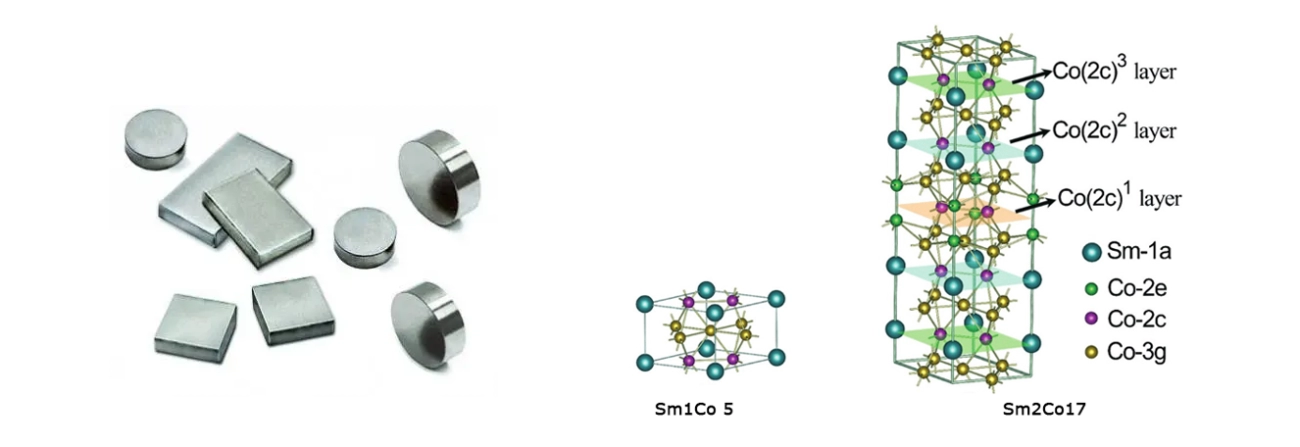
- Temperature Safety: Crucial for extreme environments. When engineering assemblies that rely on high-heat Samarium-Kobalt-Magnete, FEA ensures the operating point stays secure and the material will not permanently demagnetize under stress.
Using a Magnet Geometry Calculator
If you need a rapid estimate without running a comprehensive software simulation, a magnet geometry calculator is your most practical tool.
- Instant Feedback: Instantly outputs the baseline Permeance Coefficient using your exact dimensions.
- Smarter Sourcing: Allows you to quickly match your Pc requirement against a comprehensive Leitfaden für Seltene-Erden-Magnete, ensuring you select an adequate grade without overpaying for unnecessary intrinsic coercivity.
- Streamlined Prototyping: Ideal for initial feasibility checks before moving a design into final FEA testing and production.
Optimizing Your Magnet Design with NBAEM
Finding the right Permeance Coefficient doesn’t have to be a guessing game. At NBAEM, we partner with you to refine your magnetic circuit design, ensuring your magnets hit the ideal operating point without unnecessary costs. We streamline the process from concept to production for our global customers.
Engineering Support and Material Sourcing
Our engineering team works directly with you to map out the load line on the B-H curve, making sure your magnet remains stable under stress. We cut through the technical noise to get you exactly what you need:
- Precise Material Selection: We source everything from standard neodymium magnet grades to hochleistungsfähige SmCo-Magnete that handle extreme maximum operating temperatures.
- Design Validation: We evaluate your open circuit magnet geometries to prevent unexpected drops in magnetischen Flussdichte in the real world.
Maßgeschneiderte magnetische Baugruppen
When standard shapes don’t fit the bill, we build custom magnetic assemblies tailored to your exact specifications.
- Advanced Simulation: We use Finite Element Analysis (FEA) to predict how your custom assembly will react to any opposing demagnetizing field strength before a physical prototype is even made.
- Application-Specific Builds: Whether you are designing heavy industrial motors or precision magnets used in robotics, we guarantee the physical geometry and intrinsic coercivity align perfectly for long-term reliability.

 German
  English
  Vietnamese
  Spanish (Mexico)
  Russian
  Turkish
  Polish
  Hindi
Hindi  Thai
Thai  Malay
Malay  Korean
  Japanese
  French
  Czech
Czech  Danish
  Dutch
Dutch  Finnish
  Italian
  Portuguese (Brazil)
  Portuguese (Portugal)
  Slovenian
  Ukrainian
  Hebrew
  Scottish Gaelic
  Hungarian
  Tagalog
  Spanish (Spain)
  Serbian
  Indonesian
  Slovak
  Dutch (Belgium)
  Persian
  Arabic
  Romanian

Einen Kommentar hinterlassen