
The Physics of Magnetic Loss: Understanding the B-H Curve
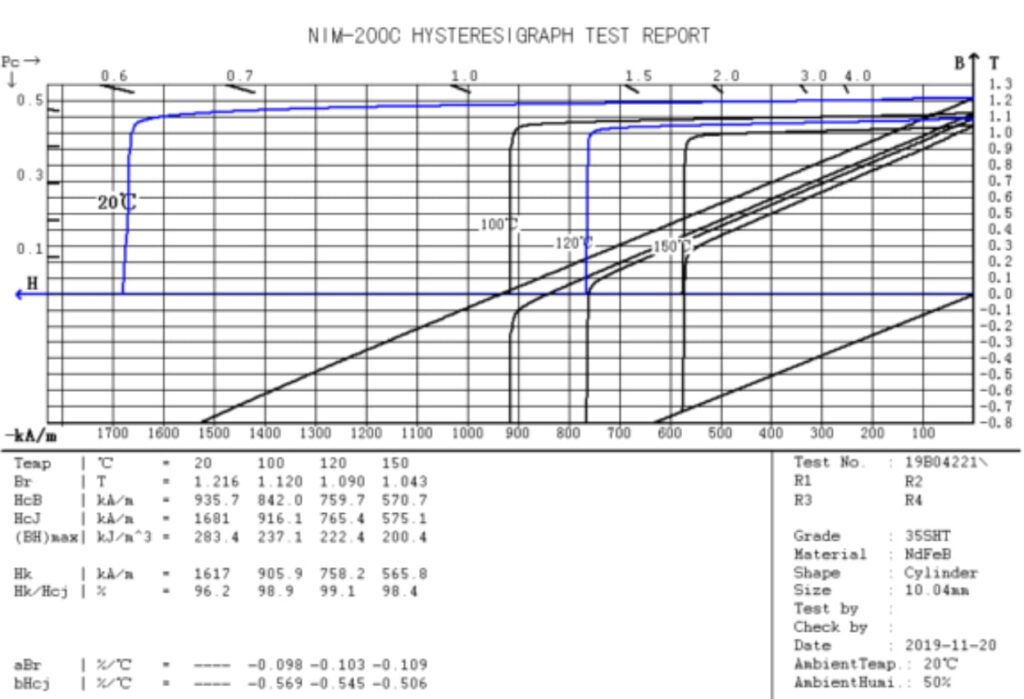
Curva BH de 35SH
Have you ever dealt with an underperforming motor and wondered exactly what can cause demagnetization in permanent magnet motors? To troubleshoot effectively, we must first look at the fundamental physics of magnetic materials. The answer lies within the B-H demagnetization curve.
Decoding the Demagnetization Curve
When analyzing motor degradation, engineers look closely at the second quadrant of the B-H curve. This specific section, known as the demagnetization curve, illustrates how a permanent magnet behaves when subjected to an opposing magnetic field. It maps out the exact thresholds and conditions under which a magnet will begin to lose its operational strength inside the motor air gap.
Key Magnetic Metrics
To accurately assess the risk of magnetic flux loss, we rely on two critical material properties:
- Remanencia (Br): This defines the residual magnetic flux density left in the material after the initial external magnetizing field is removed. Simply put, it represents the magnet’s maximum baseline strength.
- Intrinsic Coercive Force (Hci): This is the material’s ultimate resistance to demagnetization. A higher Hci dictates that the magnet can withstand significantly stronger opposing magnetic fields before permanently losing its internal polarization.
The Danger of the Knee Point
The most vulnerable feature on the B-H demagnetization curve is the “knee point.” This is the precise location where the linear section of the curve drops off sharply.
As long as a motor’s operating conditions keep the magnet above this knee point, any temporary reduction in flux is reversible. However, if extreme conditions push the operating point below the knee, the material suffers irreversible magnetic loss. Once an operating point crosses this critical threshold, the structural alignment of the magnetic domains is permanently disrupted. The motor will not recover its original torque or efficiency even after cooling down or removing the opposing load, resulting in permanent performance degradation.
What Can Cause Demagnetization in Permanent Magnet Motors?
When we build and troubleshoot high-performance drives, understanding exactly what can cause demagnetization in permanent magnet motors is critical. A permanent magnet synchronous motor (PMSM) failure often ties directly back to a few core stressors that destroy the magnetic circuit. Here are the primary culprits you need to watch out for.
1. Thermal Stress and Overheating
Heat is the leading cause of desmagnetización térmica. As internal temperatures rise, atomic kinetic energy increases, which violently scrambles the neat alignment of the magnetic domains.
We classify this heat damage into two types:
- Pérdida reversible: The magnet weakens while hot but regains full strength once cooled back to room temperature.
- Irreversible Magnetic Loss: The temperature pushes past a critical threshold. The magnet permanently loses strength and requires complete remagnetization.
You must differentiate between a magnet’s maximum operating temperature and the Curie temperature of permanent magnets (Tc), which is the absolute thermal limit where the material loses all permanent magnetism.
Samarium Cobalt vs Neodymium High Temperature Limits
| Magnet Material | Max Operating Temp | Curie Temp ($T_c$) | Environmental Strength |
| Standard NdFeB | 80°C – 150°C | 310°C – 350°C | High strength, low heat tolerance |
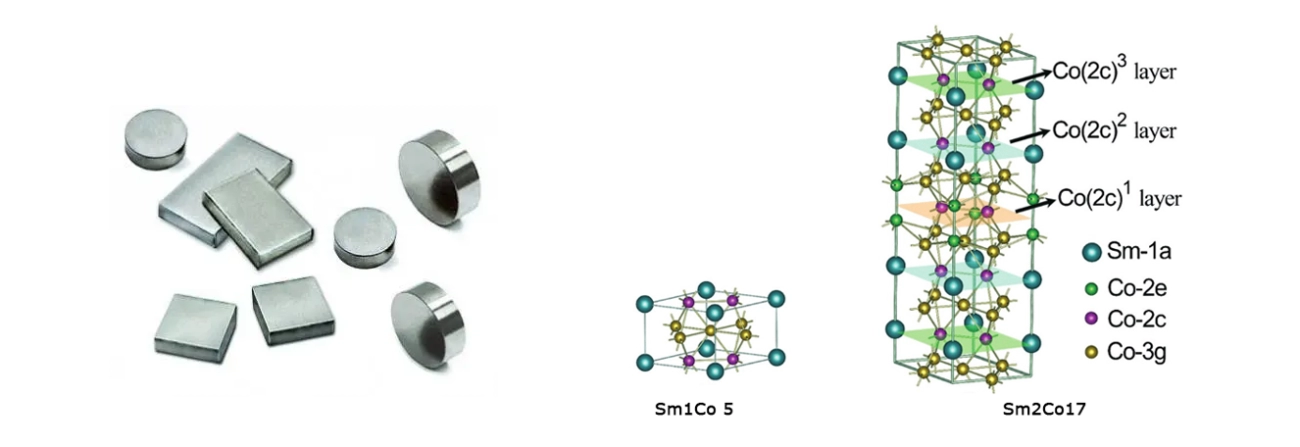
| SmCo | 250°C – 350°C | 700°C – 800°C | Lower strength, extreme heat tolerance |
Understanding de qué están hechos los imanes helps you choose the right material to avoid catastrophic thermal failure in your motor designs.
2. Opposing Magnetic Fields
During normal operation, stator windings generate an opposing magnetic field. This phenomenon, similar to the armature reaction in DC motors, creates a constant pushback against the permanent magnets.
This reverse field becomes highly destructive during abnormal operating conditions:
- Motor stalling or rotor lock
- Hard, high-torque starting
- Heavy mechanical overloads
- A sudden motor stator short circuit
These extreme events trigger massive stator currents. If these currents push the magnet past its intrinsic coercive force (Hci), the magnet demagnetizes. This risk skyrockets if the motor is already running hot.
3. Environmental Degradation and Corrosion
EV motor magnet degradation frequently stems from poor environmental protection rather than electrical faults. Neodymium (NdFeB) is highly vulnerable to oxidation and hydrogen embrittlement.
- Physical Flaking: Exposure to industrial chemicals, high humidity, and corrosive gases causes the magnet to rust and peel apart.
- Air Gap Flux Drop: Any physical volume loss from the magnet directly drops the total magnetic flux crossing the motor air gap, killing torque.
Implementing proper magnet coating and corrosion resistance (like Nickel-Copper-Nickel or tough Epoxy plating) is absolutely essential to prevent this slow decay.
4. Mechanical Stress and Assembly Impacts
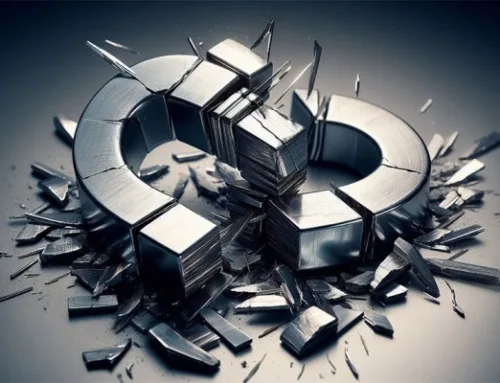
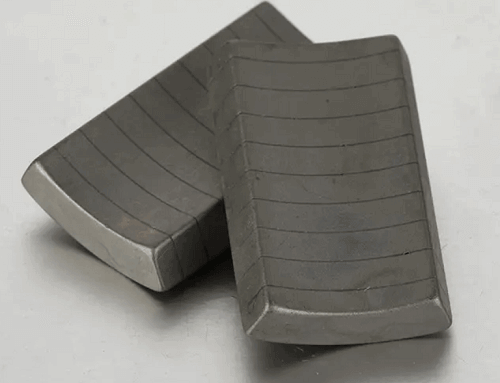
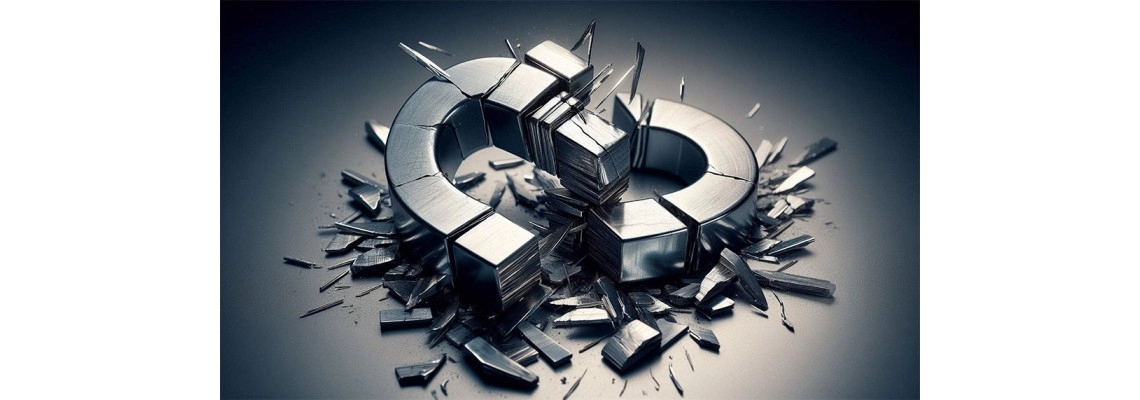
Magnets are notoriously brittle. Severe physical impacts, harsh operational vibrations, or simple mishandling during factory assembly can easily fracture materials like Ferrite or SmCo.
- Chipping: Even a minor chip reduces the total volume of the magnet.
- Circuit Disruption: Physical damage alters the carefully calculated magnetic circuit, permanently unbalancing the motor and reducing overall efficiency.
Prevent Rotor Demagnetization in Motor Design
To effectively counter what can cause demagnetization in permanent magnet motors, we have to tackle the problem directly at the engineering level. Building safeguards into the motor’s architecture is the most reliable way to prevent rotor demagnetization and maintain long-term torque output.
Here are the core design strategies we use to protect the magnetic circuit:
- Optimize Motor Cooling: Heat is the biggest threat to magnetic stability. We strongly recommend integrating liquid cooling jackets or engineering optimized airflow paths through the motor housing. Keeping the core temperature well below critical thermal limits is the absolute best way to extend how long magnets last and avoid permanent magnetic flux loss.
- Active Control Strategies: Hardware needs smart software. By implementing intelligent motor drives, we can actively limit peak phase currents. This prevents severe armature reaction in DC motors and PMSMs, particularly during high-risk scenarios like hard stall conditions, heavy overloads, or a sudden motor stator short circuit.
- Rotor Geometry Adjustments: Where you place the magnet matters. Designing rotors with deeper magnet burial—commonly utilized in interior permanent magnet synchronous motor (PMSM) designs—adds a physical layer of protection. This internal geometry effectively shields the magnets from the direct impact of opposing magnetic fields generated by the stator windings.
Choosing the Right Magnetic Materials with NBAEM
Stopping magnetic loss starts right at the source. If you want to prevent rotor demagnetization, picking the correct raw material is non-negotiable. At NBAEM, we build resilience into the motor from the ground up to ensure long-term stability.
High Coercivity NdFeB Magnets vs SmCo
Standard materials often fail under heavy loads and high heat. Upgrading your magnetic materials is the most direct way to stop thermal demagnetization in its tracks.
- NdFeB Upgrades: Transitioning to high coercivity NdFeB magnets (like our UH, EH, or AH series) raises the thermal limit significantly. Verifying the la calidad de los imanes de neodimio during sourcing is the first step to ensuring stable, long-term operation without unexpected flux loss.
- Extreme Environments: When looking at samarium cobalt vs neodymium high temperature performance, SmCo takes the absolute lead. It is the ultimate choice for aerospace applications and preventing EV motor magnet degradation under extreme, continuous heat.
Magnet Coating and Corrosion
Environmental damage silently destroys magnetic flux. Bare magnets exposed to moisture, industrial chemicals, or humidity will rapidly decay. We apply robust, industrial-grade plating—specifically Nickel-Copper-Nickel (Ni-Cu-Ni) and high-strength Epoxy—to completely lock out corrosive elements. Addressing magnet coating and corrosion early eliminates the physical flaking and volume loss that ruins the internal magnetic circuit.
The NBAEM Engineering Edge
I know exactly what it takes to build motors that survive worst-case industrial scenarios. We back our materials with over 14 years of hands-on manufacturing experience and strict ISO/TS16949 automotive-grade quality control.
- Tailored Solutions: Custom magnet designs built specifically for complex EV lamination cores and high-performance servo motors.
- Automotive Standards: Strict quality control designed to handle massive opposing magnetic fields and prevent irreversible magnetic loss.
- Proven Reliability: Review our hot-pressed magnet data sheet to see the exact thermal tolerances and coercive thresholds we consistently achieve.
By sourcing the right grades and applying the correct structural protection, you permanently eliminate the root causes of demagnetization in permanent magnet motors.
 Spanish (Spain)
  English
  German
  Vietnamese
  Spanish (Mexico)
  Russian
  Turkish
  Polish
  Hindi
Hindi  Thai
Thai  Malay
Malay  Korean
  Japanese
  French
  Czech
Czech  Danish
  Dutch
Dutch  Finnish
  Italian
  Portuguese (Brazil)
  Portuguese (Portugal)
  Slovenian
  Ukrainian
  Hebrew
  Scottish Gaelic
  Hungarian
  Tagalog
  Serbian
  Indonesian
  Slovak
  Dutch (Belgium)
  Persian
  Arabic
  Romanian
Deja un comentario