Non classé

Le rôle des aimants permanents dans les moteurs sans noyau

Comprendre les moteurs sans noyau

Coreless motors, also known as coreless DC motors or ironless motors, are a unique category of electric motors designed without the traditional iron core in their rotor. Instead, their rotor windings are tightly wound and supported on a lightweight, non-magnetic former, which significantly reduces the motor’s overall […]
Par |2025-09-18T04:55:44+00:005 mars 2025|Non classé|0 Commentaires

Aimant en ferrite contre néodyme


Les aimants en néodyme, également appelés aimants Terre Rare, sont devenus très populaires car ils sont très puissants. Ils sont beaucoup plus forts que les aimants en ferrite, même s'ils sont très petits. Mais il y a des avantages et des inconvénients à chacun, donc ils sont mieux adaptés à différentes utilisations.


Types d'Aimants

Magnets create […]

Par |17/02/2025 08:42:29+00:0017 février 2025|Non classé|5 Comments

Comment fonctionnent les aimants dans un générateur


Principes de base Comment l'électricité est générée à l'aide de aimants Qu'est-ce qu'un générateur

At its core, a generator is a device that converts mechanical energy into electrical energy. This conversion relies heavily on magnets and the interaction between magnetic fields and conductors. Simply put, when a conductor such as a wire […]

Par |18/09/2025 04:49:03+00:0017 février 2025|Non classé|1 Commentaire

Aimants dans les éoliennes

We’ve seen wind turbines become a game changer in the world of clean electricity and the transition to renewable energy. One of the key components in modern wind turbines is the permanent magnet, especially those made of rare-earth materials like neodymium-iron-boron. These magnets help make wind turbines more efficient, lower […]

Par |17/02/2025 08:19:58+00:0017 février 2025|Non classé|4 Comments

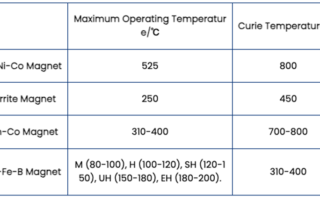
Aimants à haute température

Magnets are used in many industries from manufacturing to engineering and are often required to perform in extreme temperature conditions. Selecting the right magnet for high-temperature applications is critical to getting the best performance and durability. In this article, we’ll look at how temperature affects magnets and go over the […]

Par |2025-01-08T02:17:36+00:008 janvier 2025|Non classé|6 Comments

Comment retirer un aimant

Aimants en néodyme are some of the strongest permanent magnets available today. You find them in everything from electronic devices to industrial equipment and heavy-duty lifting tools. But because these magnets have such a strong magnetic force, you have to be really careful when you handle them. They […]

Par |2025-01-08T02:00:26+00:008 janvier 2025|Non classé|0 Commentaires

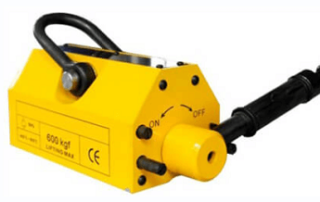
Lève-aimants permanents

Aimants en néodyme, also known as NdFeB magnets, are the most powerful permanent magnets available today. They’ve become essential in a variety of industries. You find them in electronic devices like hard drives, mobile phones, and earphones. Neodymium magnets are also a key component in industrial tools like […]

Par |27/12/2024 08:11:1827 décembre 2024|Non classé|1 Commentaire

Recyclage des aimants

Comprendre les différents types de aimants

When learning how to recycle magnets, it’s important to first understand the common types and their differences. Magnets vary based on their composition, strength, and recyclability. The main types you’ll encounter include neodymium, ferrite, samarium-cobalt, and alnico magnets. Each has unique properties that affect […]

Par |18/09/2025 04:44:39+00:0027 décembre 2024|Non classé|1 Commentaire

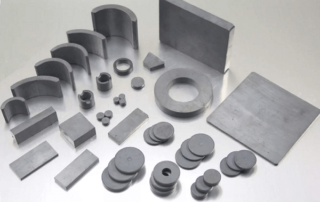
Qu'est-ce que les aimants en céramique

Aimants en céramique, also called ferrite magnets, were developed in the 1960s as a low-cost alternative to metallic magnets. They consist mainly of iron oxide and strontium carbonate. Ceramic magnets are corrosion-resistant and have a high resistance to demagnetization. They’re used in many industries because they’re cheap per […]

Par |17/09/2025 07:33:56+00:0016 décembre 2024|Non classé|1 Commentaire

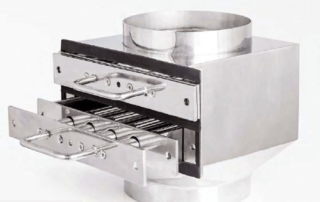
Qu'est-ce que les filtres magnétiques

Comment fonctionnent les filtres magnétiques

Les filtres magnétiques utilisent des champs magnétiques puissants pour capturer et éliminer les particules métalliques des fluides. Contrairement aux filtres conventionnels qui s'appuient sur des barrières physiques comme des mailles ou des écrans, les filtres magnétiques attirent les contaminants par attraction magnétique, empêchant leur passage dans le système.

Principes de base de la filtration magnétique

  • Attraction magnétique: Ferrous […]
Par |le 18 septembre 2025 à 04:33:10+00:0012 décembre 2024|Non classé|0 Commentaires
Haut de page