
You might already know that thermal demagnetization is the biggest threat to high-performance engineering…
But how do you prevent it without overspending on materials?
Well, you’re in for a treat because I’ve put together a complete engineer’s guide to NdFeB Magnets (UH Grade).
As a magnetic solutions expert, I know that specifying the right sintered neodymium magnets is crucial for the success of high-heat applications like high-speed EV motors, aerospace components, and industrial sensors.
In this post, you’re going to learn exactly how to evaluate Ultra High intrinsic 내자성 (Hci) and navigate the strict 180°C maximum operating temperature limit without sacrificing overall magnetic strength.
Whether you are trying to balance cost-versus-performance or looking to optimize your next custom magnetic assembly, this guide is for you.
Let’s dive right in.
Are your permanent magnets losing their strength in high-heat environments? When designing heavy-duty motors or sensors that push thermal boundaries, standard sintered neodymium magnets will inevitably fail. You need a solution engineered for superior thermal demagnetization resistance. Let me break down exactly what makes NdFeB Magnets (UH Grade) the definitive choice for extreme conditions.
Decoding NdFeB Magnets (UH Grade) Specs
NdFeB Magnet Grades Chart Breakdown
Understanding the naming convention of rare-earth permanent magnets is your first step in effective magnetic circuit optimization. Let’s look at the anatomy of a standard grade formula like N42UH:
| Naming Element | Technical Meaning | Practical Application |
|---|---|---|
| N | 네오디뮴 (NdFeB) | Identifies the base material as sintered neodymium magnets. |
| 42 | 최대 에너지 제품 (BHmax) | Represents the overall magnetic field strength (e.g., 42 MGOe). |
| UH | 온도 등급 | Indicates an “Ultra High” thermal tolerance classification. |
Ultra High Intrinsic Coercivity (Hci)
To prevent irreversible demagnetization in the field, UH grade magnets demand exceptional coercivity. We engineer these magnets to meet a strict Intrinsic Coercivity (Hci) requirement of ≥ 25,000 Oe. Designing with this grade requires a precise balance: we must maximize the Remanence (Br) and Maximum energy product (BHmax) without sacrificing the high coercivity needed to survive hostile industrial environments.
180°C Maximum Operating Temperature
The “UH” designation guarantees a 180°C maximum operating temperature, but this is not a plug-and-play metric. Real-world thermal performance relies heavily on how the magnet is integrated into your system. To prevent failure at peak heat, you must account for:
- Permeance Coefficient (Pc): The physical geometry of the magnet directly dictates its heat tolerance. Thin, flat magnets will demagnetize much faster than thick, block-like magnets at the same temperature.
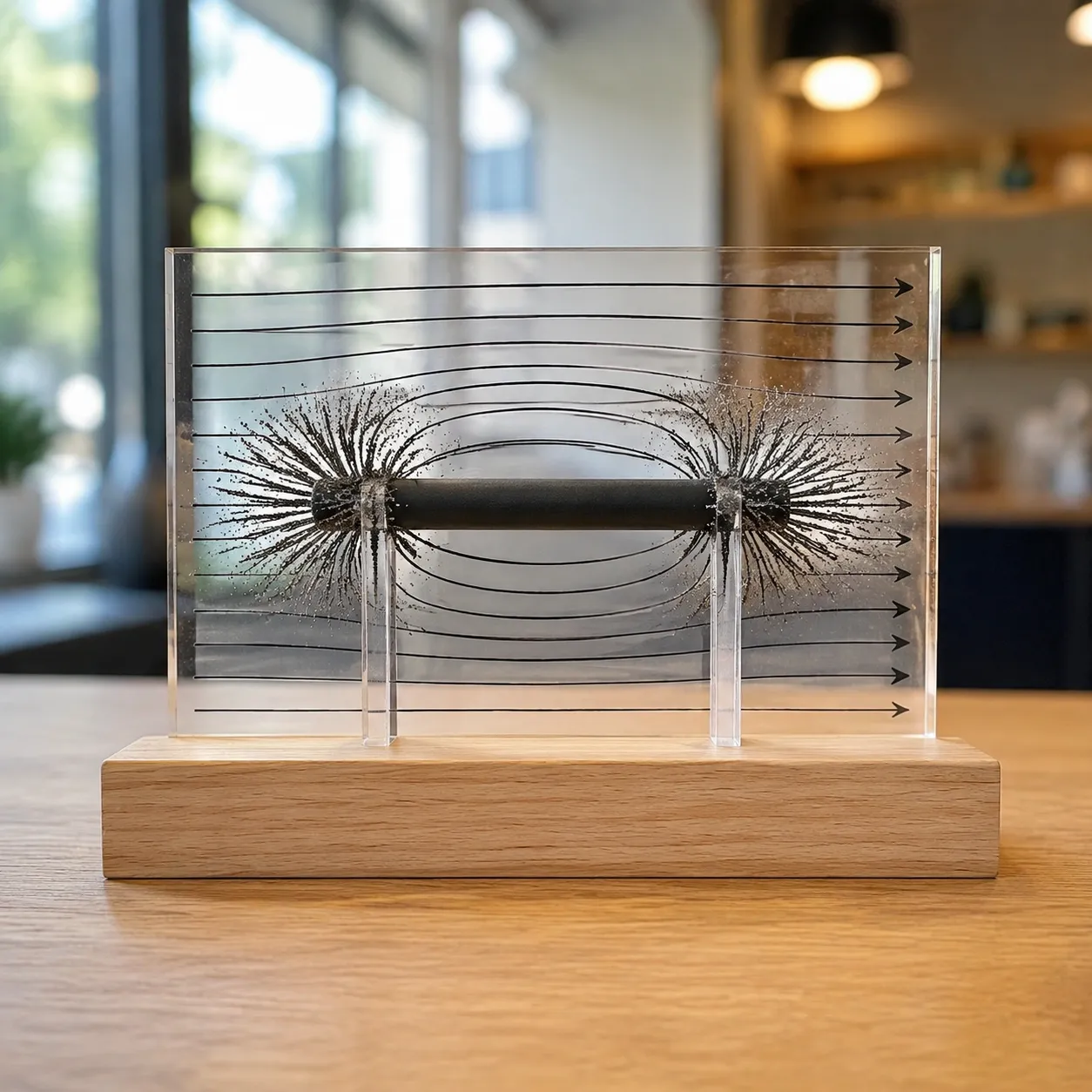
- Surrounding Architecture: Proper magnetic circuit optimization—factoring in the surrounding steel structure, operating loads, and air gaps—determines whether your magnet holds its charge at 180°C or suffers sudden degradation.
Cost vs. Performance: NdFeB Magnet Grades
Choosing the right sintered neodymium magnets comes down to balancing thermal requirements with project budgets. We help clients navigate the cost-to-performance ratio across different high-temperature grades to ensure optimal efficiency.
N42SH vs. N42UH
Temperature thresholds dictate your material choice. Upgrading grades impacts your bottom line, so precision in selection is key.
- SH Grade (Up to 150°C): Ideal for standard high-heat applications. Choosing SH over UH when operating temperatures remain reliably below 150°C is a highly effective way to save costs.
- UH Grade (150°C to 180°C): When industrial environments push past the 150°C mark, the premium for NdFeB Magnets (UH Grade) becomes non-negotiable. This grade guarantees stability and prevents irreversible demagnetization under extreme stress.
The Impact of Heavy Rare Earth Elements
Achieving ultra high intrinsic coercivity (Hci) requires specific, highly engineered material compositions.
- Dy and Tb Additions: Heavy Rare Earth Elements (HREEs) like Dysprosium (Dy) and Terbium (Tb) must be added to the base alloy to achieve UH grade coercivity.
- Market Pricing: While these elements are critical for thermal demagnetization resistance, they are scarce and directly drive up raw material costs.
Through our 14 years of magnetic engineering experience, we optimize your component design to manage these costs. Whether you are developing complex motor assemblies or specialized 자석 공구, we analyze your magnetic circuit to ensure you only pay for the HREEs your specific operating temperature actually demands.
Top Industrial Applications for NdFeB Magnets (UH Grade)
When standard magnetic materials cannot withstand the heat, NdFeB Magnets (UH Grade) step in. We engineer these rare-earth permanent magnets specifically for environments that demand high thermal demagnetization resistance. Across the global market, industries rely on this grade to maintain peak performance under extreme stress.
Here is where UH grade sintered neodymium magnets make the biggest impact:
- Electric Vehicle (EV) Motors & High-Speed Rotors: The transition to electric mobility requires components that can handle intense conditions. High-speed EV motor magnets operate in highly confined spaces, leading to extreme heat generation. UH grade magnets are critical here, as they effectively manage eddy current losses and prevent irreversible demagnetization during peak motor operation.
- Aerospace and Defense: Aerospace applications expose components to harsh, rapidly fluctuating thermal environments. Reliability is non-negotiable. The high maximum operating temperature of UH grade magnets ensures that critical navigation, communication, and control systems function flawlessly, regardless of external temperature spikes.
- Industrial Automation & Sensors: Modern manufacturing floors run hot. High-heat industrial sensors, servo motors, and magnetic couplings require stable magnetic fields to maintain precision automation. By integrating UH grade materials, we help facilities reduce downtime and improve equipment longevity. To see how these robust components integrate into broader manufacturing systems, explore the specific 산업용 자석 사용 응용 프로그램
By utilizing custom magnetic assemblies built around NdFeB Magnets (UH Grade), we help engineers optimize their magnetic circuits for safety, efficiency, and long-term reliability in the most demanding sectors.
Design and Engineering Considerations for UH Magnets

When integrating NdFeB Magnets (UH Grade) into your projects, careful engineering is required to ensure long-term reliability. Our team focuses on optimizing your magnetic circuit while addressing the physical realities of rare-earth permanent magnets.
Mandatory Protective Coatings
Sintered neodymium magnets are highly susceptible to corrosion and oxidation, particularly when exposed to the extreme environments where UH grades typically operate. To protect your components, we apply specialized surface treatments. Common and highly effective options include:
- Nickel-Copper-Nickel (Ni-Cu-Ni): A durable, industry-standard metallic finish.
- High-Temp Epoxy: Excellent for harsh environments requiring strong chemical resistance.
- 파릴렌: A pinhole-free conformal coating ideal for specialized, high-precision components.
Mechanical Brittleness
While these magnets deliver massive magnetic force, they are physically brittle. Product designers must remember that NdFeB should never be used as a load-bearing structural component. Mechanical stress, impacts, or heavy physical loads can easily chip or shatter the material. We assist clients in designing custom magnetic assemblies that properly house the magnet, combining it with durable metals or plastics to protect it from mechanical shock.
Lamination Technology
In high-speed motors and rotors, eddy currents generate significant internal heat, which can threaten thermal demagnetization resistance. To combat this, we utilize advanced lamination technology. By slicing and bonding the magnets with insulating layers, we drastically reduce eddy current losses. This engineering approach is critical for maintaining performance across various demanding 아연의 비자성 특성은 산업에서 대부분 사람들이 생각하는 것보다 더 큰 역할을 합니다. 아연이 반자성체이기 때문에 자석에 달라붙지 않으며, 이는 자기 간섭이 문제될 수 있는 특정 응용 분야에 이상적입니다. where extreme speeds and temperatures are the norm.
Why Source NdFeB Magnets (UH Grade) from NBAEM?
As a dedicated China magnetic material supplier, we know that reliable thermal demagnetization resistance is critical for your high-performance projects. Here is exactly why global manufacturers trust NBAEM for their NdFeB Magnets (UH Grade).
14 Years of Magnetic Expertise
We have been engineering rare-earth permanent magnets since 2010, giving us the hands-on experience needed to tackle complex thermal challenges.
- Dedicated R&D: Our team features over 10 specialized engineers.
- Deep Knowledge: A proven track record of optimizing sintered neodymium magnets for environments where failure is not an option.
Uncompromising Quality Standards
We build magnets to survive extreme conditions, backed by hard data and rigorous testing.
- Certifications: Fully verified with ISO 9001, ISO 14001, and ISO/TS 16949.
- Production Control: We operate under strict PPAP 레벨 3 standards to ensure zero surprises when the parts hit your assembly line.
맞춤형 자기 조립
Stop wasting time and money sourcing multiple parts from different vendors. We handle the complete integration.
- Cost Optimization: We combine raw UH magnets with the necessary metal or plastic components right here in our facility.
- Ready-to-Install: Delivering complete custom magnetic assemblies that plug directly into your manufacturing process.
Global Reach & Reliable Lead Times
A high-performance magnet is useless if it arrives late. We make sure your supply chain remains predictable.
- Safety Stock: Proactive inventory management protects your production schedule from unexpected shortages.
- Fast Turnaround: You can rely on standard 4-5 week lead times for custom-engineered solutions delivered directly to your global facilities.

 Korean
  English
  German
  Vietnamese
  Spanish (Mexico)
  Russian
  Turkish
  Polish
  Hindi
Hindi  Thai
Thai  Malay
Malay  Japanese
  French
  Czech
Czech  Danish
  Dutch
Dutch  Finnish
  Italian
  Portuguese (Brazil)
  Portuguese (Portugal)
  Slovenian
  Ukrainian
  Hebrew
  Scottish Gaelic
  Hungarian
  Tagalog
  Spanish (Spain)
  Serbian
  Indonesian
  Slovak
  Dutch (Belgium)
  Persian
  Arabic
  Romanian
  Estonian
  Greek
Greek  Bulgarian

댓글 남기기