
You have probably tried to slice a magnet in half to isolate a single pole, only to discover you just created two smaller magnets.
It is a classic physics headache.
While a true monopole magnet remains one of science’s greatest theoretical mysteries, the industrial demand for a one-sided magnetic field is very real.
So, is it actually possible to manipulate magnetic flux to act like a monopole?
The short answer: Yes, but not in the way you might think.
In this guide, I’m going to cut through the noise. We will explore the fascinating theory behind Dirac monopoles, debunk the myths, and reveal the engineering secret—the Halbach array—that allows NBAEM to deliver “monopole-like” performance for real-world applications.
Ready to unlock the mystery?
Let’s dive in.
What Is a Monopole Magnet?
If you have ever played with magnets, you know the fundamental rule: every magnet has two sides. In the world of physics, we call these conventional magnets “dipoles.” This means they always possess a North pole and a South pole, inseparable like two sides of the same coin. But have you ever wondered if it is possible to isolate just one? That is the core concept of a monopole magnet.
A single pole magnet, or magnetic monopole, is a hypothetical particle that would act as an isolated North or South pole. Think of it like an electric charge; you can easily have a single electron (negative charge) or a proton (positive charge) sitting by itself. Magnetic monopole theory suggests that magnetism should work the same way, yet in practice, it is entirely different.
The Problem with Cutting a Magnet
One of the easiest ways to understand this is to imagine taking a standard bar magnet and slicing it in half.
- Expectation: You might think you would get one piece that is purely North and another that is purely South.
- Reality: You actually end up with two smaller, complete magnets. Each new piece instantly develops its own North and South pole.
You can keep cutting that magnet down until you reach the atomic level, and you will still be looking at dipoles. This happens because of a fundamental principle known as Gauss’s law for magnetism.
Gauss’s Law and Magnetic Charges
In simple terms, Gauss’s law ($\nabla \cdot \mathbf{B} = 0$) tells us that the net magnetic flux through any closed surface is zero. Unlike electric field lines which start on positive charges and end on negative ones, magnetic field lines always form continuous, closed loops. They have no beginning and no end. Because of this, “magnetic charges” simply do not exist in classical physics, making the hunt for a true monopole magnet one of the most intriguing challenges in science.
Key Takeaways on Magnetic Structures
- Dipoles: The standard form of all known magnets (North + South).
- Monopoles: A theoretical isolated pole (North OR South) that has not yet been observed in nature.
- Field Lines: Magnetic lines form loops, whereas electric lines have distinct start and end points.
The Theoretical Foundation of Monopole Magnet
While we deal with practical magnetic assemblies every day, the magnetic monopole theory represents one of the most fascinating “what ifs” in physics. In the real world, we deal with dipoles, but theoretical physics suggests that isolated poles could exist.
Paul Dirac and Charge Quantization
In 1931, physicist Paul Dirac fundamentally changed how we view magnetism. He didn’t just guess; he used mathematical proofs to show that if even a single Dirac monopole magnet exists anywhere in the universe, it would explain why electric charge is quantized (why it comes in discrete packets rather than a continuous flow).
- The Prediction: Dirac proved that the existence of magnetic charge is consistent with quantum mechanics.
- The Implication: Finding a monopole would finally explain the discrete nature of the electron’s charge.
Symmetry in Maxwell’s Equations
For physicists, the current laws of electromagnetism feel incomplete. Maxwell equations symmetry is currently broken because we have electric charges (positive and negative) but no magnetic charges.
- Current State: Electric fields have sources (charges), but magnetic field lines always form closed loops.
- Restored Balance: A monopole would provide the missing magnetic charge, creating perfect symmetry between electricity and magnetism in the equations.
Predictions from Grand Unified Theories (GUTs)
Modern physics has doubled down on this concept. Grand Unified Theories (GUTs) and superstring theory predict that monopoles should have been created during the Big Bang. While we manipulate field directionality through magnetic anisotropy in our manufactured magnets, these theories suggest that massive, high-energy monopoles are likely wandering the cosmos, waiting to be detected.
Next Step
Would you like me to detail the specific experiments currently searching for these monopoles at CERN and IceCube?
The Ongoing Scientific Search for Monopoles
We have spent decades hunting for these elusive particles, and while we haven’t caught a “wild” one yet, the search has pushed modern physics to its limits. The magnetic monopole theory suggests they should exist to balance our understanding of the universe, so scientists are throwing everything they have at the problem, from massive colliders to Antarctic detectors.
High-Energy Experiments and Cosmic Rays
The frontline of this search is happening at facilities like CERN. Experiments such as ATLAS and MoEDAL utilize particle accelerators to smash atoms in heavy-ion collisions, analyzing the debris for the unique magnetic signature a monopole would leave behind. We aren’t just looking underground, though. The IceCube observatory uses square kilometers of Antarctic ice to scan for cosmic rays, searching for evidence of monopoles that might have traveled across the galaxy.
Emergent Monopoles in Condensed Matter
While a fundamental, free-floating particle remains missing, we have successfully observed “emergent” monopoles in solid materials. These are quasiparticles—disturbances in a magnetic field that behave exactly like a monopole within the material’s lattice:
- Spin Ice Monopoles: In rare earth titanates, the magnetic moments align in a frustrated “spin ice” structure, creating mobile magnetic charges.
- Exotic Materials: Similar monopole-like behaviors have been spotted in materials like hematite and manganese germanide.
Despite their theoretical appeal and these laboratory successes with quasiparticles, a true elementary monopole remains one of physics’ greatest missing pieces. We know what they should look like, but nature is keeping them well-hidden.
Would you like me to explain why true monopole magnets don’t exist in practice and debunk the common myths surrounding them?
The Reality: Why You Can’t Buy a Single Pole Magnet
Let’s be clear right off the bat: you cannot go online and order a true monopole magnet. Despite what you might see in clickbait videos or sci-fi movies, a magnet with an isolated North or South pole does not exist in the commercial market.
The “One-Sided” Magnet Illusion
What you can buy are assemblies that behave somewhat like a single pole magnet, but this is a mechanical trick, not a break in physics. We call these one-sided magnets.
Here is how the illusion works:
- Shielding: We take a standard dipole magnet and place it inside a steel cup or adhere it to a steel backing.
- Redirection: The steel acts as a shunt. It doesn’t eliminate the pole on the back; it redirects the magnetic field lines from the back to the front.
- Result: You get magnetic field cancellation on the “shielded” side and a concentrated, stronger field on the working face.
To the user, it feels like the magnetism has vanished from one side. In reality, the loop is just closed tighter. Whether you are buying standard neodymium blocks or reviewing a high-spec hot-pressed magnet data sheet, every magnet produced today is fundamentally a dipole with inseparable North and South poles.
Debunking DIY Perpetual Motion
I often see DIY enthusiasts and fringe inventors chasing the monopole magnet dream to build perpetual motion machines. The theory is that if you could isolate a pole, you could create a motor that spins forever without energy input.
Unfortunately, these setups rely on the misunderstanding of shielding. Placing a piece of iron behind a magnet does not delete the pole; it just hides it. As soon as you move the magnet, the physics of the dipole catches up with you, creating drag that stops the motion. True monopoles remain a theoretical particle, not a hardware store item.
Practical Alternatives: Achieving One-Sided Flux
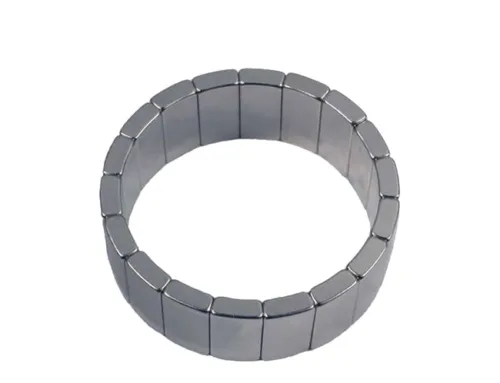
Since a true monopole magnet remains theoretical, we rely on the Halbach array as the most effective real-world alternative. In our industry, this is the closest we get to a functional one-sided magnet. Instead of searching for an isolated pole, we use smart geometry to manipulate the magnetic field.
A Halbach array works by arranging permanent magnet segments in a spatially rotating pattern. The magnetization direction of each consecutive magnet is rotated by 90 degrees. This specific orientation creates a constructive interference on one side and destructive interference on the other. essentially resulting in magnetic field cancellation on the “non-working” side.
Key Benefits of Halbach Assemblies
- Boosted Power: We typically see a 1.4 to 2x increase in flux density compared to standard layouts.
- Self-Shielding: The array naturally minimizes leakage, reducing the need for heavy iron back-plates.
- Compact Design: You get stronger performance without increasing volume.
Standard Magnet vs. Halbach Configuration
| Feature | Standard Magnet | Halbach Array |
|---|---|---|
| Flux Symmetry | Symmetric (Equal N/S pull) | Asymmetric (One-sided flux) |
| Peak Field | Standard Baseline | Augmented (Up to 2x stronger) |
| Field Leakage | High stray fields | Near-zero on the back side |
| Primary Cost | Lower material cost | Higher assembly complexity |
By utilizing this one-sided flux behavior, we can direct magnetic energy exactly where it is needed—improving the efficiency of motors, sensors, and holding assemblies without wasting energy on the back side.
Would you like me to detail the specific manufacturing challenges and cost implications of building custom Halbach arrays next?
Advantages of Halbach Array “Monopole-Like” Magnets

While a true monopole magnet remains theoretical, the Halbach array acts as the ultimate neodymium monopole alternative for engineers. By intelligently manipulating the orientation of the magnetic domains, we create a powerful one-sided magnet effect that delivers tangible benefits over standard magnetization methods.
Here is why these high-performance magnetic assemblies are changing the game in modern manufacturing:
- Boosted Efficiency: The primary advantage is magnetic flux concentration. By stacking the magnetic field lines on the working face, we achieve significantly higher torque density. This allows for stronger motors without increasing the physical size or weight of the magnet.
- Reduced Interference: On the non-working side, the array creates almost total magnetic field cancellation. This “self-shielding” property means you don’t need heavy iron backplates to protect nearby sensitive electronics or sensors.
- Targeted Power: From high-speed electric vehicle rotors to magnets used in renewable energy wind turbines, this one-sided flux design ensures that magnetic potential is directed exactly where it is needed, with zero waste.
Would you like me to detail specific industrial applications where these assemblies are currently replacing standard magnets?
Key Applications of One-Sided Magnetic Assemblies
While a true monopole magnet remains a theoretical concept in physics, the engineering world relies heavily on “one-sided” flux assemblies to solve complex problems. By utilizing magnetic flux concentration, we can direct the magnetic field exactly where it is needed—on the working face—while virtually canceling it on the back. This capability is transforming high-tech industries.
Here is where these high-performance magnetic assemblies are making the biggest impact:
- Electric Vehicle (EV) Motors: Efficiency is everything in EVs. By using Halbach arrays in rotors and stators, we increase torque density and reduce weight. This ensures the magnetic force is focused entirely on the interaction gap, rather than leaking into the motor housing.
- Green Energy: In the renewable sector, specialized magnets in wind turbines utilize these one-sided field configurations to generate electricity more efficiently, even at lower wind speeds.
- Maglev Transportation: Magnetic levitation trains require immense, focused lift and guidance forces. One-sided assemblies provide the necessary strong field on the track side to suspend the train without heavy power consumption.
- Medical Technology: MRI scanners and particle accelerators demand highly uniform and potent magnetic fields. Controlling the flux path prevents interference with sensitive surrounding electronics.
- Industrial Separation: In food processing and recycling, magnetic separators use one-sided fields to pull ferrous contaminants out of product lines with high precision.
Whether it is for lightweight drones or massive industrial machinery, our diverse magnetic applications rely on this technology to achieve compact, powerful, and energy-efficient designs that standard dipole magnets simply cannot match.
NBAEM’s Custom Halbach Array Solutions
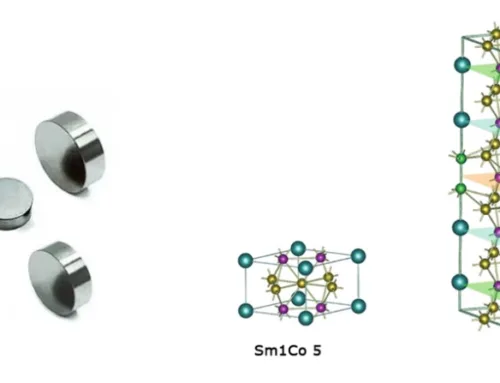
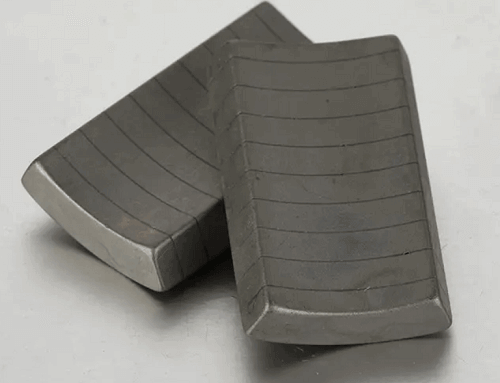
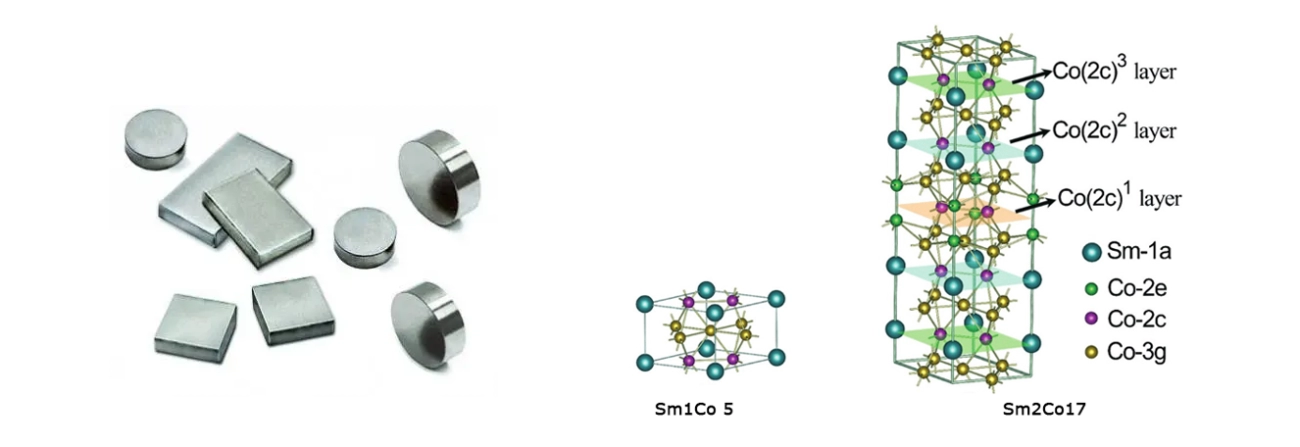
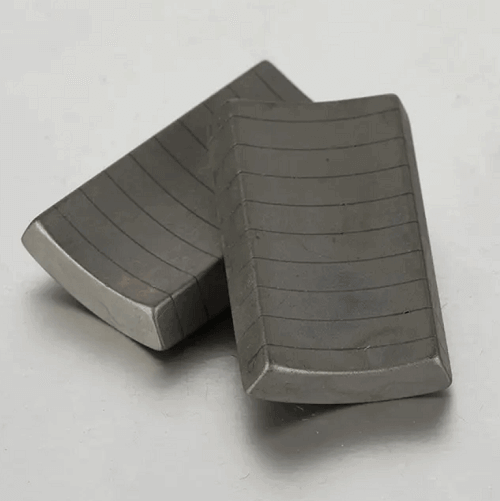
Since a true monopole magnet remains a theoretical concept, we focus on engineering the most effective real-world alternative: the Halbach array. At NBAEM, we specialize in designing and manufacturing high-precision NdFeB Halbach assembly units and Samarium Cobalt configurations that concentrate magnetic flux exactly where your application needs it.
We don’t just supply raw magnets; we provide engineered solutions backed by advanced magnetic simulation. Whether you are building high-efficiency motors or precision medical devices, our team ensures the magnetic field cancellation and amplification occur precisely as calculated.
Capabilities and Customization
We tailor every high-performance magnetic assembly to meet strict industrial requirements. Our manufacturing process allows for deep customization:
- High-Grade Materials: We utilize top-tier sintered Neodymium (N35–N54) for maximum strength and robust Samarium Cobalt for stability. You can check the thermal properties in our samarium cobalt magnet data sheet to see how these materials perform under stress.
- Extreme Resilience: We offer customization for high-temperature resistance, with solutions capable of operating reliably up to 300°C.
- Precision Engineering: Every custom Halbach magnet is manufactured to tight tolerances to ensure optimal flux distribution and mechanical fit.
- Quality Assurance: Our production lines are fully ISO/IATF certified. We implement rigorous testing protocols to guarantee that every assembly delivers consistent performance.
Would you like me to help you draft the summarizing the future of magnetic technology?Please contact us to get more information.

 English
  German
  Vietnamese
  Spanish (Mexico)
  Russian
  Turkish
  Polish
  Hindi
Hindi  Thai
Thai  Malay
Malay  Korean
  Japanese
  French
  Czech
Czech  Danish
  Dutch
Dutch  Finnish
  Italian
  Portuguese (Brazil)
  Portuguese (Portugal)
  Slovenian
  Ukrainian
  Hebrew
  Scottish Gaelic
  Hungarian
  Tagalog
  Spanish (Spain)
  Serbian
  Indonesian
  Slovak
  Dutch (Belgium)
  Persian
  Arabic
  Romanian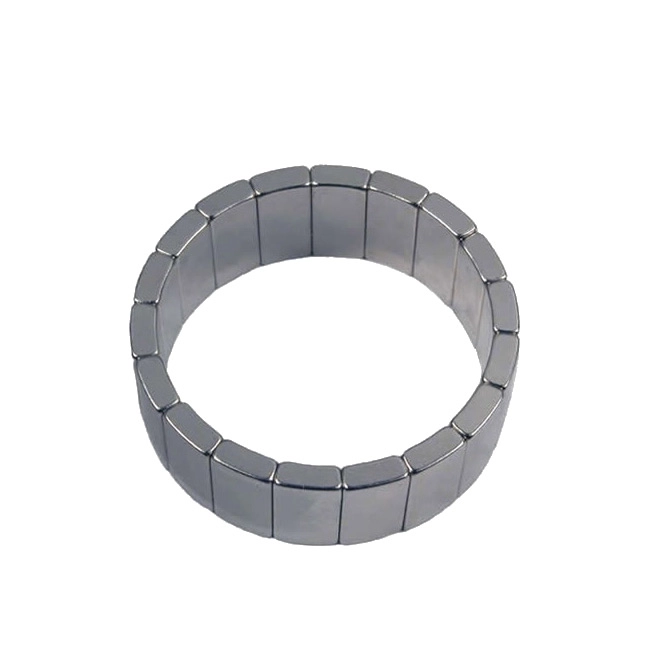

Leave A Comment