
Physics of Magnetic Domains: How to Demagnetize a Magnet
When we analyze high-performance magnetics in engineering applications, understanding how to demagnetize a magnet begins at the subatomic level. Magnetization is not a structural change to the material, but a precise vector orientation of atomic dipole moments.
Atomic Mechanics: Magnetization vs. Demagnetization
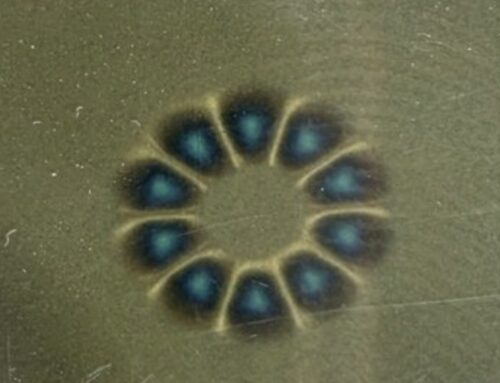
At the atomic scale, magnetic force originates from unpaired electron spin. In ferromagnetic and ferrimagnetic materials, these spins spontaneously align in parallel within microscopic regions known as domeny Weiss.
-
- Magnetized State: An external magnetizing field forces adjacent Weiss domains to merge and align in a single direction. This magnetic domain alignment maximizes the macroscopic flux density.
- Demagnetized State: Demagnetizing energy disrupts this order, scattering the domain orientations into random directions. The net magnetic vectors cancel out, reducing exterior field strength to zero.
The Hysteresis Loop Curve: Coercivity and Remanence
We plot a magnet’s response to external energy using the hysteresis loop curve. This graphical representation visualizes the energy thresholds required to reverse or neutralize domain alignment.
| Parametr | Symbol | Industrial Significance |
|---|---|---|
| Remanencja | Br | The residual magnetic flux density remaining in a magnet after the magnetizing field is removed. |
| Intrinsic Coercivity | Hc | The measure of a material’s resistance to demagnetization from external fields, thermal loads, or physical stress. |
Evaluating the balance between remanencja (Br) oraz intrinsic coercivity (Hc) allows us to calculate the exact threshold of energy needed to collapse domain alignment and successfully neutralize a magnetic field.
3 Core Methods: How to Demagnetize a Magnet
When we build and maintain magnetic assemblies, knowing how to demagnetize a magnet safely and intentionally is just as vital as magnetizing one. Whether you are servicing industrial equipment or recycling motor components, we rely on three core physical methods to neutralize magnetic field strength.
Method 1: Thermal Demagnetization (Heat Treatment)
Heating a permanent magnet past its Curie temperature threshold triggers intense thermal agitation, randomizing atomic dipole moments and wiping out net magnetization.
-
- Reversible vs. Irreversible Losses: cURL Too many subrequests by single Worker invocation. To configure this limit, refer to https://developers.cloudflare.com/workers/wrangler/configuration/#limits
- cURL Too many subrequests by single Worker invocation. To configure this limit, refer to https://developers.cloudflare.com/workers/wrangler/configuration/#limits
- Sinterowany neodym (NdFeB): cURL Too many subrequests by single Worker invocation. To configure this limit, refer to https://developers.cloudflare.com/workers/wrangler/configuration/#limits
- Samarium Kobalt (SmCo): cURL Too many subrequests by single Worker invocation. To configure this limit, refer to https://developers.cloudflare.com/workers/wrangler/configuration/#limits
- Ferryty (Ceramika): cURL Too many subrequests by single Worker invocation. To configure this limit, refer to https://developers.cloudflare.com/workers/wrangler/configuration/#limits
- Alnico: cURL Too many subrequests by single Worker invocation. To configure this limit, refer to https://developers.cloudflare.com/workers/wrangler/configuration/#limits
cURL Too many subrequests by single Worker invocation. To configure this limit, refer to https://developers.cloudflare.com/workers/wrangler/configuration/#limits
cURL Too many subrequests by single Worker invocation. To configure this limit, refer to https://developers.cloudflare.com/workers/wrangler/configuration/#limits cURL Too many subrequests by single Worker invocation. To configure this limit, refer to https://developers.cloudflare.com/workers/wrangler/configuration/#limits
-
- cURL Too many subrequests by single Worker invocation. To configure this limit, refer to https://developers.cloudflare.com/workers/wrangler/configuration/#limits cURL Too many subrequests by single Worker invocation. To configure this limit, refer to https://developers.cloudflare.com/workers/wrangler/configuration/#limits
- cURL Too many subrequests by single Worker invocation. To configure this limit, refer to https://developers.cloudflare.com/workers/wrangler/configuration/#limits cURL Too many subrequests by single Worker invocation. To configure this limit, refer to https://developers.cloudflare.com/workers/wrangler/configuration/#limits mining magnetycznecURL Too many subrequests by single Worker invocation. To configure this limit, refer to https://developers.cloudflare.com/workers/wrangler/configuration/#limits
cURL Too many subrequests by single Worker invocation. To configure this limit, refer to https://developers.cloudflare.com/workers/wrangler/configuration/#limits
cURL Too many subrequests by single Worker invocation. To configure this limit, refer to https://developers.cloudflare.com/workers/wrangler/configuration/#limits cURL Too many subrequests by single Worker invocation. To configure this limit, refer to https://developers.cloudflare.com/workers/wrangler/configuration/#limits cURL Too many subrequests by single Worker invocation. To configure this limit, refer to https://developers.cloudflare.com/workers/wrangler/configuration/#limits
-
- cURL Too many subrequests by single Worker invocation. To configure this limit, refer to https://developers.cloudflare.com/workers/wrangler/configuration/#limits cURL Too many subrequests by single Worker invocation. To configure this limit, refer to https://developers.cloudflare.com/workers/wrangler/configuration/#limits
- cURL Too many subrequests by single Worker invocation. To configure this limit, refer to https://developers.cloudflare.com/workers/wrangler/configuration/#limits cURL Too many subrequests by single Worker invocation. To configure this limit, refer to https://developers.cloudflare.com/workers/wrangler/configuration/#limits
cURL Too many subrequests by single Worker invocation. To configure this limit, refer to https://developers.cloudflare.com/workers/wrangler/configuration/#limits
cURL Too many subrequests by single Worker invocation. To configure this limit, refer to https://developers.cloudflare.com/workers/wrangler/configuration/#limits
Intrinsic coercivity (Hc) measures a material’s inherent ability to withstand demagnetization from strong external counter-fields. High-coercivity grades feature tight atomic domain alignment that resists flip-flop polarization when exposed to reverse magnetic forces. When we engineer high-temperature or high-stress magnetic circuits, selecting appropriate grades of SmCo magnets or high-coercivity neodymium ensures long-term magnetic stability.
Permeance Coefficient (Pc)
Magnet geometry directly influences self-demagnetization behavior through the Permeance Coefficient (Pc), which defines the magnetic load line:
High Pc (Longer/Thicker Geometries): A high length-to-diameter ratio creates a strong internal bias, providing superior resistance to self-demagnetization.
Low Pc (Thin/Flat Shapes): Thin disc or wafer geometries suffer from high self-demagnetizing fields, significantly lowering their threshold against reverse magnetic field exposure.
Environmental Operating Limits
When evaluating how to demagnetize a magnet or safeguard custom assemblies against flux decay, external operational factors play a critical role:
Operating Temperature Limits: Elevating ambient temperatures reduces intrinsic coercivity (Hc), weakening the magnet’s resistance to external reverse fields.
Opposing Field Exposure: Unshielded electromagnetic interference or transient stator current surges can overcome coercive forces and cause demagnetization in permanent magnet motors.
Demagnetizing Load Lines: Operating a magnet at a low Pc point while exceeding maximum operating temperatures drives the operating point below the knee of the hysteresis loop, causing permanent magnetic loss.
Preventing Unintended Demagnetization in Custom Assemblies
When designing permanent magnet assemblies for electric motors, robotics, and automotive systems, preventing magnetic field degradation under extreme operational loads is critical. Understanding how to demagnetize a magnet also teaches us how to protect one: we must design around high operating temperatures, opposing electromagnetic fields, and severe mechanical vibration.
High-Coercivity Magnet Grade Selection
Standard magnets lose flux density rapidly when exposed to heat or strong reverse fields. We specify high-temperature, high-coercivity grades tailored to specific environmental limits:
-
- High-Temp Neodymium (NdFeB): Grades like N35SH (rated to 150°C) and N42UH (rated to 180°C) incorporate elevated intrinsic coercivity (Hc) to resist reverse magnetic fields under heavy motor loads.
- Samarium Cobalt (Sm2Co17): Preferred for extreme environments exceeding 200°C up to 350°C, offering exceptional thermal stability and demagnetization resistance.
FEA Modeling and Physical Isolation
-
- Finite Element Analysis (FEA): We utilize advanced FEA magnetic modeling to simulate field behavior under peak electrical surge currents, identifying potential demagnetization risks before dynamic testing.
- Mechanical IsolationcURL Too many subrequests by single Worker invocation. To configure this limit, refer to https://developers.cloudflare.com/workers/wrangler/configuration/#limits mining magnetyczne cURL Too many subrequests by single Worker invocation. To configure this limit, refer to https://developers.cloudflare.com/workers/wrangler/configuration/#limits
- cURL Too many subrequests by single Worker invocation. To configure this limit, refer to https://developers.cloudflare.com/workers/wrangler/configuration/#limitscURL Too many subrequests by single Worker invocation. To configure this limit, refer to https://developers.cloudflare.com/workers/wrangler/configuration/#limits
cURL Too many subrequests by single Worker invocation. To configure this limit, refer to https://developers.cloudflare.com/workers/wrangler/configuration/#limits
cURL Too many subrequests by single Worker invocation. To configure this limit, refer to https://developers.cloudflare.com/workers/wrangler/configuration/#limits
cURL Too many subrequests by single Worker invocation. To configure this limit, refer to https://developers.cloudflare.com/workers/wrangler/configuration/#limits magnetic domain alignment cURL Too many subrequests by single Worker invocation. To configure this limit, refer to https://developers.cloudflare.com/workers/wrangler/configuration/#limits
-
- cURL Too many subrequests by single Worker invocation. To configure this limit, refer to https://developers.cloudflare.com/workers/wrangler/configuration/#limits cURL Too many subrequests by single Worker invocation. To configure this limit, refer to https://developers.cloudflare.com/workers/wrangler/configuration/#limits
- cURL Too many subrequests by single Worker invocation. To configure this limit, refer to https://developers.cloudflare.com/workers/wrangler/configuration/#limits cURL Too many subrequests by single Worker invocation. To configure this limit, refer to https://developers.cloudflare.com/workers/wrangler/configuration/#limits
cURL Too many subrequests by single Worker invocation. To configure this limit, refer to https://developers.cloudflare.com/workers/wrangler/configuration/#limits
Zrozumienie how to demagnetize a magnet cURL Too many subrequests by single Worker invocation. To configure this limit, refer to https://developers.cloudflare.com/workers/wrangler/configuration/#limits
-
- cURL Too many subrequests by single Worker invocation. To configure this limit, refer to https://developers.cloudflare.com/workers/wrangler/configuration/#limits cURL Too many subrequests by single Worker invocation. To configure this limit, refer to https://developers.cloudflare.com/workers/wrangler/configuration/#limits
- cURL Too many subrequests by single Worker invocation. To configure this limit, refer to https://developers.cloudflare.com/workers/wrangler/configuration/#limits cURL Too many subrequests by single Worker invocation. To configure this limit, refer to https://developers.cloudflare.com/workers/wrangler/configuration/#limits pręt magnetycznycURL Too many subrequests by single Worker invocation. To configure this limit, refer to https://developers.cloudflare.com/workers/wrangler/configuration/#limits
- cURL Too many subrequests by single Worker invocation. To configure this limit, refer to https://developers.cloudflare.com/workers/wrangler/configuration/#limits cURL Too many subrequests by single Worker invocation. To configure this limit, refer to https://developers.cloudflare.com/workers/wrangler/configuration/#limits
cURL Too many subrequests by single Worker invocation. To configure this limit, refer to https://developers.cloudflare.com/workers/wrangler/configuration/#limits
cURL Too many subrequests by single Worker invocation. To configure this limit, refer to https://developers.cloudflare.com/workers/wrangler/configuration/#limits Curie temperature threshold cURL Too many subrequests by single Worker invocation. To configure this limit, refer to https://developers.cloudflare.com/workers/wrangler/configuration/#limits grades of SmCo magnets.
cURL Too many subrequests by single Worker invocation. To configure this limit, refer to https://developers.cloudflare.com/workers/wrangler/configuration/#limits
cURL Too many subrequests by single Worker invocation. To configure this limit, refer to https://developers.cloudflare.com/workers/wrangler/configuration/#limits removes magnetic charge remotely by cycling the material through a shrinking hysteresis loop curve:
-
- Polarity reversals: The degausser generates an alternating magnetic field that forces atomic dipoles to continuously reverse orientation.
- Field reduction: As you slowly move the magnet away from the coil, the field strength experienced by the magnet gradually decays.
- Domain randomization: Each alternating cycle leaves smaller domain groupings locked in opposing directions, driving net remanencja (Br) back to zero without touching the magnet.
 Polish
  English
  German
  Vietnamese
  Spanish (Mexico)
  Russian
  Turkish
  Hindi
Hindi  Thai
Thai  Malay
Malay  Korean
  Japanese
  French
  Czech
Czech  Danish
  Dutch
Dutch  Finnish
  Italian
  Portuguese (Brazil)
  Portuguese (Portugal)
  Slovenian
  Ukrainian
  Hebrew
  Scottish Gaelic
  Hungarian
  Tagalog
  Spanish (Spain)
  Serbian
  Indonesian
  Slovak
  Dutch (Belgium)
  Persian
  Arabic
  Romanian
  Estonian
  Greek
Greek  Bulgarian

Zostaw komentarz