
The Gold Standard: Sintered Neodymium NdFeB in Packaging
When you open a high-end gift box and feel that satisfying “snap,” you aren’t just feeling a closure; you are experiencing the power of Sintered Neodymium Magnets. In the modern packaging industry, we don’t rely on bulky, old-school ceramic magnets anymore. The industry has shifted almost entirely to NdFeB (Neodymium Iron Boron) because it is the strongest permanent magnet material commercially available.
At NBAE, we see firsthand that Sintered Neodymium is the only viable choice for premium applications. It delivers the necessary holding power without compromising the structural integrity or design elegance of the box.
Why Neodymium Rules the Unboxing Experience
Designers crave clean lines and invisible mechanics. You don’t want a clunky latch ruining the aesthetic of a luxury rigid box. Magnesy neodymowe rule this space because they offer an unmatched strength-to-size ratio.
We can embed these magnets directly into the cardboard or under a paper liner, making the closure mechanism completely invisible. This creates a seamless “magic” effect where the lid secures itself automatically. For brands, this tactile experience is crucial—it signals quality the moment the customer interacts with the package.
Understanding BHmax: High Energy Product Explained
If you look at our technical specs, you will see a value called BHmax (Maximum Energy Product). In plain English, this measures the magnetic energy density of the material.
- Higher BHmax = More power in a smaller volume.
- Lower BHmax = You need a larger, heavier magnet to get the same grip.
Because Magnesy rzadkich ziem have an incredibly high BHmax compared to ferrite, we can achieve strong locking forces with significantly less material. This efficiency is what makes high-performance packaging possible.
Why Tiny Discs Can Hold Heavy Lids
It often surprises our clients that a tiny disc magnet—sometimes as thin as 1mm—can securely hold a heavy lid. This is the direct result of high magnetic properties like Remanence (Br) and Coercivity (Hcj).
When you choose the right magnet for package applications, size doesn’t dictate strength; material grade does. A small, high-grade NdFeB disc provides enough pull force to keep cosmetic cases, tech boxes, and jewelry packaging securely closed during transit, all while maintaining a sleek, ultra-thin profile.
Choosing the Right Grade: N35 vs. N42 vs. N52
Selecting the correct grade of Sintered Neodymium Magnets is the most critical decision in packaging design. The “N” number represents the Maximum Energy Product (BHmax) of the magnet—essentially, how much magnetic energy is packed into its volume. While we manufacture a full range of grades, the packaging sector typically relies on specific tiers to balance performance and cost.
N35: The industry standard for cost-efficiency
For the vast majority of Magnetic Box Closures, NdFeB N35 Grade is the go-to solution. It offers the perfect equilibrium between holding power and price. If you are producing standard gift boxes, rigid boxes, or magnetic folders in high volumes, N35 provides a reliable snap without inflating your budget. It is strong enough to hold standard paperboard lids secure but isn’t overkill for lightweight applications.
N52: Maximum hold for ultra-thin luxury boxes
When designing Luxury Packaging Solutions, aesthetics often demand that the magnet be as invisible as possible. This is where Magnesy rzadkich ziem graded N52 shine. N52 is currently the strongest commercially available grade for this application. It allows us to produce significantly smaller, thinner magnets that deliver the same Siła przyciągania as larger N35 counterparts. This is ideal for ultra-thin box profiles where a bulky magnet would ruin the sleek lines of the design.
Balancing pull force with your budget constraints
Moving from N35 to N52 increases the cost due to the higher concentration of heavy rare earth elements required. We advise clients to calculate the exact force needed to keep the package closed against the tension of the material. Over-specifying the grade wastes money, while under-specifying leads to product returns. Understanding the physics behind magnetization and demagnetization helps in selecting a grade that maintains a consistent closure over the lifespan of the packaging. We often recommend testing N42 as a middle-ground option if N35 is slightly too weak but N52 exceeds the target price point.
Essential Shapes and Dimensions for Box Design
Selecting the correct physical geometry is crucial for seamless integration. At NBAE, we customize dimensions to fit specific packaging design materials, ensuring the closure mechanism is both effective and invisible to the end consumer. The shape determines not just the holding force, but how easily the magnet can be hidden within the box structure.
Disc Magnets: The 10mm x 1mm Standard
The thin disc is the undisputed king of magnetic box closures. The most requested size we manufacture for this sector is the 10mm diameter by 1mm thickness.
- Stealth Profile: It is thin enough to be buried under the paper liner without creating a visible bump, maintaining the sleek look of luxury packaging solutions.
- Snap Factor: Despite the small size, Sintered Neodymium Magnets in this form factor provide a satisfying “click” that signals quality to the buyer.
- Uniwersalność: This size is the go-to for cosmetic boxes, folding cartons, and lightweight gift packaging.
Block and Rectangular Magnets
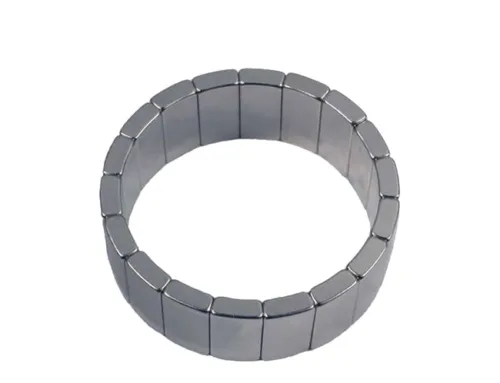
Gdy magnet for package applications needs to secure a wider flap or a heavier lid, simple discs might not offer enough surface area. Rectangular blocks create a longer magnetic field, providing a more secure grip for larger formats. These are often placed in pairs or matched with steel strikers to balance cost and performance in rigid box manufacturing.
Countersunk Options for Rigid Boxes
For premium wooden boxes or heavy-duty plastic cases where adhesive backing is insufficient, we recommend countersunk magnets. These feature a central hole allowing for screw mounting, ensuring the magnet never detaches over time. Achieving these precise shapes requires specialized magnet machining to prevent cracking during the drilling process, ensuring every piece meets our strict tolerance standards for automated assembly.
Critical Technical Specs: Coatings and Durability
Raw Neodymium iron boron oxidizes quickly. To ensure your packaging lasts as long as the product inside, we apply specific surface treatments. When determining what magnets are used in package industry applications, the choice of coating is just as critical as the magnetic grade. This decision depends on whether the magnet is visible to the consumer and the environmental conditions the package will face.
Ni-Cu-Ni (Nickel): The Standard Silver Finish
This is the industry default for a reason. Our NiCuNi Coating consists of three layers—Nickel, Copper, and Nickel. It provides a shiny, silver finish that looks premium on Luxury Packaging Solutions. It is durable enough for repeated opening and closing, making it ideal for gift boxes where the magnet face is exposed. Whether you are using a standard disc or a custom block, we can apply this finish to any różne kształty magnesów to match your design requirements.
Epoxy Coating: The Black Solution for Humidity and Aesthetics
For cosmetic cases or packaging stored in humid conditions, we recommend Epoxy. This black coating offers superior corrosion resistance compared to metal platings. It is also an excellent aesthetic choice for dark-colored packaging designs where a silver magnet would distract from the branding.
Zinc Plating: A Cost-Effective Hidden Alternative
When you are embedding the magnet for package closures between paperboard layers, aesthetics become irrelevant. Zinc plating offers sufficient protection against oxidation at a lower price point than Nickel. It allows you to maintain a strong magnetic hold while optimizing production costs for high-volume orders.
Comparison of Common Packaging Magnet Coatings:
| Typ powłoki | Wygląd | Odporność na korozję | Koszt | Best Application |
|---|---|---|---|---|
| Nikiel (Ni-Cu-Ni) | Shiny Silver | Wysoki | Średni | Visible closures, high-end retail boxes |
| Black Epoxy | Matte Black | Very High (Moisture) | Wysoki | Cosmetic boxes, dark designs |
| Cynk (Zn) | Blue-White | Średni | Niska | Hidden/embedded magnets |
Magnetization and Polarity: Getting the ‘Click’ Right
Achieving that premium “snap” in luxury packaging isn’t just about raw strength; it is about how we direct the magnetic field. At NBAE, we engineer the magnetization direction to ensure your box closures feel secure and function flawlessly every time.
Axial Magnetization: Why it’s essential for closures
For the vast majority of packaging applications, specifically flat boxes and cases, Magnetyzacja osiowa is the required standard. This means the magnetic poles are located on the large flat surfaces (the faces) rather than the sides. When utilizing our strong sintered Neodymium magnets, axial orientation directs the magnetic flux through the thickness of the disc or block. This concentration of force on the contact face is what delivers the maximum pull force necessary to hold a heavy lid shut against the tension of the cardboard or hinge.
Matched pairs vs. Steel Strikers: Cost-saving tactics
Designers often face a choice between using two magnets or one magnet paired with a steel disc. Here is how we break down the decision for our global clients:
- Magnet-to-Magnet (Matched Pairs): This method uses a North pole on the lid and a South pole on the base. It provides the strongest possible grip and a distinct, audible “click” that signals quality. It is ideal for high-end rigid boxes.
- Magnet-to-Steel (Steel Strikers): This involves placing a magnet on the flap and a simple steel disc (striker) on the box body. This significantly reduces costs since steel is cheaper than Neodymium. It also eliminates polarity issues during assembly, as the magnet will attract the steel regardless of orientation.
Managing polarity during assembly to avoid repulsion
If you opt for the magnet-to-magnet approach, polarity management becomes critical. If a worker installs two North poles facing each other, the packaging will repel and fail to close. To solve this on the production line, we supply magnet for package solutions with specific markings or pre-applied adhesives on opposing poles (e.g., Red adhesive for North, Blue adhesive for South). This visual guide ensures that your assembly team installs the hidden magnetic fasteners correctly every time, preventing costly rework and ensuring a perfect magnetic circuit.
Integration Techniques: Hiding the Magnet
When we manufacture a magnet for package solutions, the goal is often invisibility. In the luxury sector, the closure mechanism should be felt, not seen. We work with packaging engineers to ensure our magnesy neodymowe integrate seamlessly into the box structure without compromising the design aesthetic.
Here are the standard methods we see used in Rigid Box Manufacturing:
- The Sandwich Method: This is the most common technique for creating Hidden Magnetic Fasteners. The magnet is placed into a routed cavity within the cardboard core (greyboard) and then completely covered by the printed paper liner. Because our sintered Neodymium offers a high strength-to-size ratio, it maintains a strong hold even through the paper layer.
- Adhesive Backed Magnets: To simplify your assembly line, we can supply magnets with pre-applied 3M adhesive backing. This peel-and-stick solution reduces production time and eliminates the mess of applying liquid glue manually.
- Flush Mounting: For designs where the magnet needs to touch a steel striker directly for maximum force, precision is key. We manufacture to tight tolerances so the magnet sits perfectly flush with the packaging surface, ensuring a premium finish that doesn’t scratch the opposing side.
Beyond the Box: Industrial Packaging Machinery Magnets
The role of magnets in the package industry extends far beyond the consumer’s unboxing experience; it starts right on the factory floor. We supply high-performance magnetic materials that power the very machines responsible for creating, filling, and moving packaging.
Magnets in automation: Pick and place robotics
Modern packaging lines rely on speed and precision. In robotic automation, weight is the enemy. We utilize Sintered Neodymium Magnets in robotic end-effectors and grippers because they offer the highest power-to-weight ratio. This allows robotic arms to move faster and lift heavier loads without requiring bulky equipment. Whether it is a custom block for a gripper or a specialized motor magnet, the goal is efficiency. You can find a różne kształty magnesów to fit specific robotic assembly requirements, ensuring seamless integration into high-speed lines.
Magnetic grates for contaminant separation
Safety is non-negotiable, especially in food and pharmaceutical packaging. Before a product is sealed, it often passes through filtration systems. We engineer Zestawy magnetyczne na zamówienie—specifically magnetic grates and bars—that sit inside hoppers and chutes.
- Material: Usually high-grade NdFeB for maximum capture efficiency.
- Function: Traps ferrous contaminants and fine metal dust.
- Rezultat: Protects consumer safety and prevents damage to downstream processing equipment.
Frequently Asked Questions About Packaging Magnets
What is the best magnet grade for magnetic gift boxes?
For the vast majority of luxury packaging solutions, NdFeB N35 grade is the industry standard. It offers the perfect balance between holding power and cost-efficiency. While higher grades exist, N35 provides sufficient “snap” for standard rigid boxes without unnecessary expense. If you are working with extremely thick cardboard or require a tiny footprint, we might recommend upgrading to N42, but for general applications, N35 is the reliable workhorse.
How do I calculate the pull force needed for my packaging?
Pull force calculation isn’t just about the magnet; it is about the “air gap.” In packaging, the air gap is the thickness of the paper or fabric covering the magnet. As the distance increases, magnetic force drops largely.
- Identify the Gap: Measure the thickness of the liner covering the magnet.
- Determine Tension: Estimate the force required to keep the flap down against the natural spring of the cardboard fold.
- Consult Data: Reviewing technical charts, such as what is a BH curve, helps engineers understand the relationship between magnetic energy product and actual holding power in specific applications.
Can magnets damage electronics inside the package?
This is a common concern. Small sintered neodymium magnets used in packaging closures generally do not generate a magnetic field strong enough to damage modern smartphones, flash drives, or solid-state electronics. However, we advise keeping magnetic box closures away from:
- Credit cards with magnetic strips (risk of demagnetization).
- Mechanical watches.
- Sensitive medical devices (like pacemakers).
What is the difference between N35 and N52 magnets?
The difference lies in the Maximum Energy Product (BHmax), which translates to strength per unit of volume.
- N35: Standard strength, widely available, most affordable. Ideal when you have space for a standard-sized disc (e.g., 10mm x 1mm).
- N52: The strongest grade of magnesy rzadkich ziem commercially available. An N52 magnet can be significantly smaller than an N35 magnet yet deliver the same holding force. This is crucial for ultra-thin packaging designs where you need hidden magnetic fasteners that are virtually invisible.
 Polish
  English
  German
  Vietnamese
  Spanish (Mexico)
  Russian
  Turkish
  Hindi
Hindi  Thai
Thai  Malay
Malay  Korean
  Japanese
  French
  Czech
Czech  Danish
  Dutch
Dutch  Finnish
  Italian
  Portuguese (Brazil)
  Portuguese (Portugal)
  Slovenian
  Ukrainian
  Hebrew
  Scottish Gaelic
  Hungarian
  Tagalog
  Spanish (Spain)
  Serbian
  Indonesian
  Slovak
  Dutch (Belgium)
  Persian
  Arabic
  Romanian
Zostaw komentarz