
You might be looking for black magnets to lower your production costs, or perhaps you need a high-end, rust-resistant magnetic surface treatment for a harsh industrial environment.
But here is what most sourcing guides won’t tell you: the term “black magnet” actually covers two entirely different material technologies.
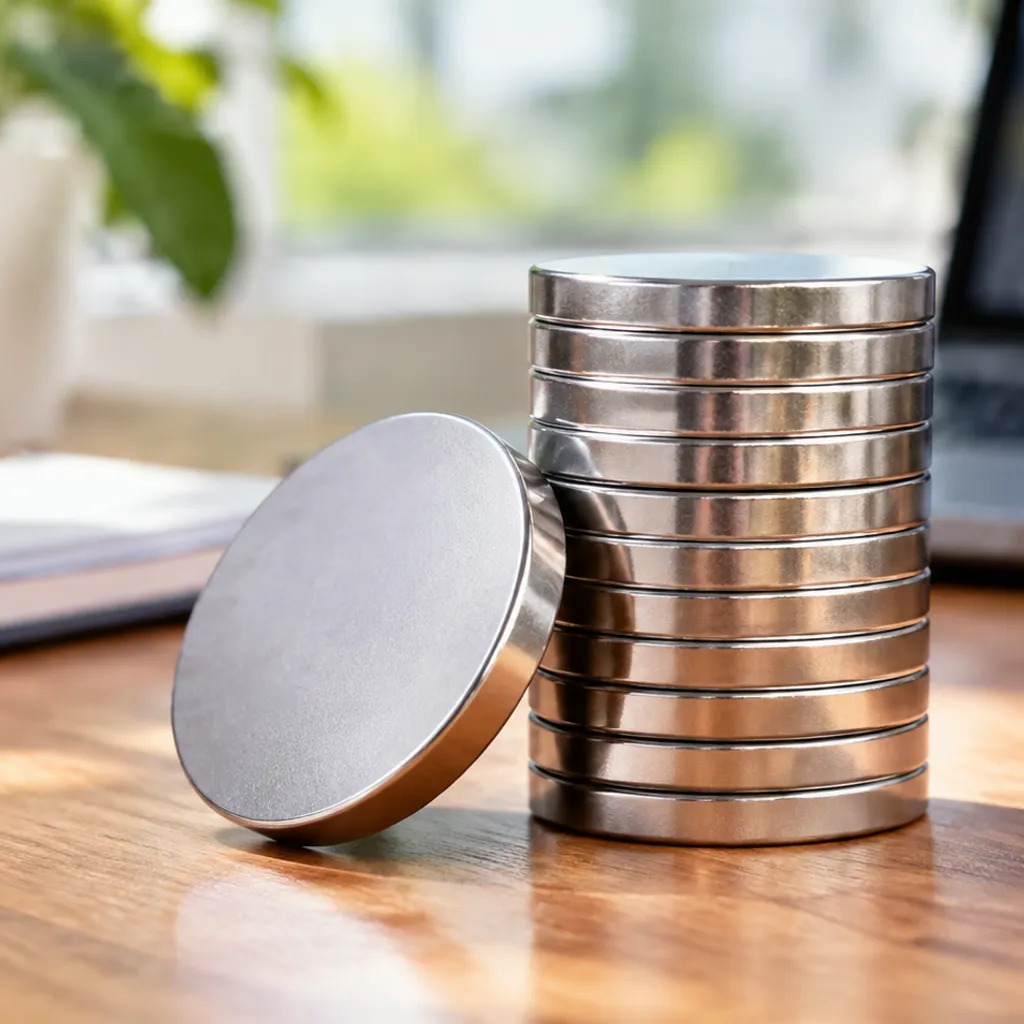
Depending on your engineering specs, you are either looking for raw sintered ferrite magnets—which are naturally charcoal-grey—or high-strength neodymium NdFeB material encapsulated in a protective black epoxy coating.
Choosing the wrong one means risking premature permanent magnet demagnetization or overpaying for performance you don’t need.
This guide cuts through the fluff to break down the exact chemical compositions, thermal boundaries, and Korrosionsbeständigkeit ratings of both systems. If you want to optimize your product lifecycle and lock in the right specs with your Magnetmateriallieferant, here is exactly what you need to know.
Sintered Ferrite: The Naturally Black Magnet
When you think of a classic black magnet, you are likely picturing sintered ferrite. Unlike other magnetic materials that require external paint or plating to look dark, these ceramic permanent magnets are naturally black due to their unique chemical makeup and high-temperature manufacturing.
Chemical Composition
We manufacture these magnets by blending a large proportion of iron oxide (rust) with specific chemical compounds of either strontium or barium. This raw mix creates barium and strontium ferrite, a heavy chemical structure that gives the material its signature dark gray to pitch-black color and unique ceramic traits.
The Sintering Process
Creating these black magnets requires a precise, multi-step thermal and mechanical process:
- cURL Too many subrequests by single Worker invocation. To configure this limit, refer to https://developers.cloudflare.com/workers/wrangler/configuration/#limits cURL Too many subrequests by single Worker invocation. To configure this limit, refer to https://developers.cloudflare.com/workers/wrangler/configuration/#limits
- cURL Too many subrequests by single Worker invocation. To configure this limit, refer to https://developers.cloudflare.com/workers/wrangler/configuration/#limits cURL Too many subrequests by single Worker invocation. To configure this limit, refer to https://developers.cloudflare.com/workers/wrangler/configuration/#limits
- cURL Too many subrequests by single Worker invocation. To configure this limit, refer to https://developers.cloudflare.com/workers/wrangler/configuration/#limits cURL Too many subrequests by single Worker invocation. To configure this limit, refer to https://developers.cloudflare.com/workers/wrangler/configuration/#limits
- Sintern: cURL Too many subrequests by single Worker invocation. To configure this limit, refer to https://developers.cloudflare.com/workers/wrangler/configuration/#limits
cURL Too many subrequests by single Worker invocation. To configure this limit, refer to https://developers.cloudflare.com/workers/wrangler/configuration/#limits
- Kosteneffizienz: cURL Too many subrequests by single Worker invocation. To configure this limit, refer to https://developers.cloudflare.com/workers/wrangler/configuration/#limits
- cURL Too many subrequests by single Worker invocation. To configure this limit, refer to https://developers.cloudflare.com/workers/wrangler/configuration/#limits cURL Too many subrequests by single Worker invocation. To configure this limit, refer to https://developers.cloudflare.com/workers/wrangler/configuration/#limits Korrosionsbeständigkeit cURL Too many subrequests by single Worker invocation. To configure this limit, refer to https://developers.cloudflare.com/workers/wrangler/configuration/#limits
- cURL Too many subrequests by single Worker invocation. To configure this limit, refer to https://developers.cloudflare.com/workers/wrangler/configuration/#limits cURL Too many subrequests by single Worker invocation. To configure this limit, refer to https://developers.cloudflare.com/workers/wrangler/configuration/#limits cURL Too many subrequests by single Worker invocation. To configure this limit, refer to https://developers.cloudflare.com/workers/wrangler/configuration/#limitscURL Too many subrequests by single Worker invocation. To configure this limit, refer to https://developers.cloudflare.com/workers/wrangler/configuration/#limits
Gängige Anwendungen
cURL Too many subrequests by single Worker invocation. To configure this limit, refer to https://developers.cloudflare.com/workers/wrangler/configuration/#limits cURL Too many subrequests by single Worker invocation. To configure this limit, refer to https://developers.cloudflare.com/workers/wrangler/configuration/#limitscURL Too many subrequests by single Worker invocation. To configure this limit, refer to https://developers.cloudflare.com/workers/wrangler/configuration/#limits
cURL Too many subrequests by single Worker invocation. To configure this limit, refer to https://developers.cloudflare.com/workers/wrangler/configuration/#limits
cURL Too many subrequests by single Worker invocation. To configure this limit, refer to https://developers.cloudflare.com/workers/wrangler/configuration/#limits black magnets cURL Too many subrequests by single Worker invocation. To configure this limit, refer to https://developers.cloudflare.com/workers/wrangler/configuration/#limits cURL Too many subrequests by single Worker invocation. To configure this limit, refer to https://developers.cloudflare.com/workers/wrangler/configuration/#limits cURL Too many subrequests by single Worker invocation. To configure this limit, refer to https://developers.cloudflare.com/workers/wrangler/configuration/#limits
cURL Too many subrequests by single Worker invocation. To configure this limit, refer to https://developers.cloudflare.com/workers/wrangler/configuration/#limits
cURL Too many subrequests by single Worker invocation. To configure this limit, refer to https://developers.cloudflare.com/workers/wrangler/configuration/#limits
- Black Epoxy Coating: Provides exceptional Korrosionsbeständigkeit, moisture barriers, and protection against salt spray. It is the gold standard for harsh operating environments.
- Black Nickel: Offers a sleek, dark metallic finish with excellent wear resistance and mechanical durability for high-impact applications.
Unmatched Performance Metrics
These advanced cURL Too many subrequests by single Worker invocation. To configure this limit, refer to https://developers.cloudflare.com/workers/wrangler/configuration/#limits deliver the absolute maximum holding force possible in a compact footprint. By wrapping a high-energy neodymium core in an environmentally secure shell, these magnets maintain critical structural integrity and prevent degradation over time.
Understanding how these materials perform under stress is essential for precision engineering. To get a complete picture of how magnetic materials respond to external fields, engineers frequently analyze the demagnetization behavior and BH curve of the alloy before finalizing their coating selection.
High-Tech Applications
Thanks to their extreme power density and resilient shielding, these coated systems are vital components in modern, high-precision industries:
- Brushless DC (BLDC) Motors: Ensuring high efficiency and reliability in automated systems.
- Precision Sensors: Delivering stable magnetic fields for automotive and industrial tracking.
- Verbraucherelektronik: Providing strong, compact latching and alignment mechanisms in smartphones and wearables.
- Luft- und Raumfahrtaktoren: Meeting strict weight-to-power ratios and surviving extreme ambient conditions.
Technical Comparison: Choosing the Right Black Magnet System
Beim Beschaffen eines black magnet for your project, choosing the right material system is critical for long-term performance and cost efficiency. For applications like Magnete, die in Unterhaltungselektronik verwendet werden, selecting between a ceramic permanent magnet and an advanced coated rare earth system dictates your entire design architecture.
The engineering procurement data-matrix below outlines the key performance criteria to help you specify the correct magnetic surface treatment, coercive field strength, and thermal limits for your application.
| Performance Criteria | Sintered Ferrite Magnets (Ceramic) | Black Epoxy/Nickel Coated Neodymium (NdFeB) |
|---|---|---|
| Magnetic Flux Density (Br) | Low to Medium ($\approx 0.4$ T) | Very High ($\approx 1.1 – 1.4$ T) |
| Coercive Field Strength (Hcb) | Mäßig | Außerordentlich hoch |
| Maximale Betriebstemperatur | Up to 250°C (High-temperature magnetic stability) | 80°C to 200°C (Grade dependent) |
| Korrosionsbeständigkeit | Inherent (Naturally immune to oxidation) | High (Dependent on the protective black epoxy coating) |
| Kosteneffizienz | High (Economical for high-volume production) | cURL Too many subrequests by single Worker invocation. To configure this limit, refer to https://developers.cloudflare.com/workers/wrangler/configuration/#limits |
| Primäranwendung | cURL Too many subrequests by single Worker invocation. To configure this limit, refer to https://developers.cloudflare.com/workers/wrangler/configuration/#limits | cURL Too many subrequests by single Worker invocation. To configure this limit, refer to https://developers.cloudflare.com/workers/wrangler/configuration/#limits |
While sintered ferrite magnets cURL Too many subrequests by single Worker invocation. To configure this limit, refer to https://developers.cloudflare.com/workers/wrangler/configuration/#limits neodymium NdFeB material cURL Too many subrequests by single Worker invocation. To configure this limit, refer to https://developers.cloudflare.com/workers/wrangler/configuration/#limits
cURL Too many subrequests by single Worker invocation. To configure this limit, refer to https://developers.cloudflare.com/workers/wrangler/configuration/#limits
Beim Beschaffen eines black magnet cURL Too many subrequests by single Worker invocation. To configure this limit, refer to https://developers.cloudflare.com/workers/wrangler/configuration/#limits
cURL Too many subrequests by single Worker invocation. To configure this limit, refer to https://developers.cloudflare.com/workers/wrangler/configuration/#limits
cURL Too many subrequests by single Worker invocation. To configure this limit, refer to https://developers.cloudflare.com/workers/wrangler/configuration/#limits Magnetbearbeitung cURL Too many subrequests by single Worker invocation. To configure this limit, refer to https://developers.cloudflare.com/workers/wrangler/configuration/#limits cURL Too many subrequests by single Worker invocation. To configure this limit, refer to https://developers.cloudflare.com/workers/wrangler/configuration/#limitscURL Too many subrequests by single Worker invocation. To configure this limit, refer to https://developers.cloudflare.com/workers/wrangler/configuration/#limits
- cURL Too many subrequests by single Worker invocation. To configure this limit, refer to https://developers.cloudflare.com/workers/wrangler/configuration/#limits cURL Too many subrequests by single Worker invocation. To configure this limit, refer to https://developers.cloudflare.com/workers/wrangler/configuration/#limits
- cURL Too many subrequests by single Worker invocation. To configure this limit, refer to https://developers.cloudflare.com/workers/wrangler/configuration/#limits cURL Too many subrequests by single Worker invocation. To configure this limit, refer to https://developers.cloudflare.com/workers/wrangler/configuration/#limits
cURL Too many subrequests by single Worker invocation. To configure this limit, refer to https://developers.cloudflare.com/workers/wrangler/configuration/#limits
cURL Too many subrequests by single Worker invocation. To configure this limit, refer to https://developers.cloudflare.com/workers/wrangler/configuration/#limits cURL Too many subrequests by single Worker invocation. To configure this limit, refer to https://developers.cloudflare.com/workers/wrangler/configuration/#limits cURL Too many subrequests by single Worker invocation. To configure this limit, refer to https://developers.cloudflare.com/workers/wrangler/configuration/#limits
- Thermische Stabilität: cURL Too many subrequests by single Worker invocation. To configure this limit, refer to https://developers.cloudflare.com/workers/wrangler/configuration/#limits
- cURL Too many subrequests by single Worker invocation. To configure this limit, refer to https://developers.cloudflare.com/workers/wrangler/configuration/#limits cURL Too many subrequests by single Worker invocation. To configure this limit, refer to https://developers.cloudflare.com/workers/wrangler/configuration/#limits
cURL Too many subrequests by single Worker invocation. To configure this limit, refer to https://developers.cloudflare.com/workers/wrangler/configuration/#limits
cURL Too many subrequests by single Worker invocation. To configure this limit, refer to https://developers.cloudflare.com/workers/wrangler/configuration/#limits black magnet we supply undergoes rigorous quality control to meet international benchmarks:
- RoHS & REACH Certified: Free from hazardous substances, ensuring safe integration into consumer electronics and automotive systems.
- Strict Industrial Tolerances: Consistent magnetic output and dimensional accuracy across high-volume production batches.
NBAEM: Your Advanced Magnetic Material Supplier
At NBAEM, we bridge the gap between raw material processing and custom precision engineering. As a leading manufacturer, we specialize in delivering high-volume sintered ferrite magnets and ultra-precise black epoxy or nickel-coated rare earth systems tailored to your exact specifications.
Sintered & Coated Solutions
We streamline production to provide reliable, high-performance permanent magnets designed for global industrial demands:
- High-Volume Sintered Ferrites: Cost-effective, oxidation-resistant, and ideal for rugged, high-temperature operations.
- Advanced Coated Rare Earth Systems: Maximum holding force wrapped in protective Magnetbeschichtung options like black epoxy to survive harsh environments.
Tailored Engineering Support
We don’t just supply raw materials; we deliver engineered solutions. Our team provides end-to-end support, from initial prototyping of complex multi-pole rotors to scaling massive industrial production runs. Whether your project requires custom geometries or specific magnetic alignments, we ensure your components meet strict global tolerance standards.
Frequently Asked Questions About Black Magnets
Are black magnets stronger than silver magnets?
Not automatically. The color reflects the material or its coating, not its inherent magnetic pull. A naturally black ceramic permanent magnet (sintered ferrite) is significantly weaker than a silver-colored, raw rare earth magnet. However, if you take that same powerful Neodymium NdFeB material and apply a protective black epoxy coating, it retains its extreme strength while gaining a black finish. For a deeper breakdown of how these materials stack up against each other, read our guide on Ferritmagnet vs Neodym.
Can black epoxy coatings chip or wear off over time?
Yes, under harsh conditions. While an industrial black epoxy coating provides exceptional corrosion resistance and shields against moisture, it is still a physical layer. High-impact collisions, constant abrasion, or sharp friction can chip the surface. If the underlying rare-earth material is exposed to moisture, it will degrade. For applications with heavy physical wear, proper housing or alternative magnetic surface treatments should be engineered.
What is the maximum operating temperature for a black magnet?
It depends entirely on the base material system:
- Sintered Ferrite Magnets: Exceptional high-temperature magnetic stability, reliably operating up to 250°C without losing performance.
- Black-Coated Neodymium: Standard grades handle up to 80°C, though specialized high-coercivity grades can reach 200°C.
Exceeding these thermal thresholds can lead to permanent magnet demagnetization. If your system undergoes extreme thermal or mechanical stress, understanding the balance between temperature, environment, and proper Magnetisierung und Entmagnetisierung von Permanentmagnet-Konfigurationen setups is critical for maintaining long-term field stability.
 German
  English
  Vietnamese
  Spanish (Mexico)
  Russian
  Turkish
  Polish
  Hindi
Hindi  Thai
Thai  Malay
Malay  Korean
  Japanese
  French
  Czech
Czech  Danish
  Dutch
Dutch  Finnish
  Italian
  Portuguese (Brazil)
  Portuguese (Portugal)
  Slovenian
  Ukrainian
  Hebrew
  Scottish Gaelic
  Hungarian
  Tagalog
  Spanish (Spain)
  Serbian
  Indonesian
  Slovak
  Dutch (Belgium)
  Persian
  Arabic
  Romanian
  Estonian
  Greek
Greek  Bulgarian
Einen Kommentar hinterlassen