
Understanding Different Types of Magnets
When learning how to recycle magnets, it’s important to first understand the common types and their differences. Magnets vary based on their composition, strength, and recyclability. The main types you’ll encounter include neodymium, ferrite, samarium-cobalt, and alnico magnets. Each has unique properties that affect recycling methods.
| Τύπος μαγνήτη | Σύνθεση | Δύναμη | Recyclability | Κοινές χρήσεις |
|---|---|---|---|---|
| Νεονύμιο (NdFeB) | Νεόδμιο, σίδηρος, βόριο | Πολύ δυνατός | Moderate to high, but requires special processes | Electronics, motors, magnets |
| Σιδηρομαγνητικά | Iron oxide and ceramic materials | Μέτριο | Easier to recycle due to stable material | Ηχεία, μαγνήτες ψυγείων |
| Σαμάριο-κοβαλτ | Samarium and cobalt | High, heat resistant | Difficult, rare earth elements require careful handling | Αεροδιαστημική, στρατιωτική |
| Αλνικό | Αλουμίνιο, νικέλιο, κοβάλτιο | Μέτριο έως υψηλό | Simple mechanical recycling possible | Αισθητήρες, μικρόφωνα |
Recycling methods differ because each type varies in material makeup and how the magnet responds to processes like demagnetization and chemical treatment. For example, neodymium magnets contain rare earth metals that need recovery through specialized methods, while ferrite magnets are more stable and easier to process mechanically.
Knowing the magnet type helps determine the best recycling approach and ensures valuable materials are properly recovered, reducing environmental impact.
Why Recycle Magnets
Recycling magnets is important for several reasons. First, it helps reduce landfill waste. Magnets often contain hazardous materials like heavy metals and toxic coatings that can harm the environment if thrown away improperly. By recycling, we keep these risks out of the soil and water.
Second, there are solid economic benefits. Many magnets, especially rare earth magnets like neodymium, contain valuable materials that can be recovered and reused. Recycling these elements reduces the need for mining new raw materials, which is costly and environmentally damaging.
Challenges in Magnet Recycling
Recycling magnets isn’t as simple as tossing them in a bin. Several hurdles make the process tricky:
Material Complexity
- Adhesives and coatings: Magnets often come glued or coated for protection, making it hard to separate magnetic material cleanly.
- Magnetic alloys: Different magnet types—like neodymium, ferrite, and alnico—have complex mixtures of metals and rare earth elements, complicating extraction and recycling.
Safety Hazards
- Injury risk: Powerful magnets can snap together suddenly, causing pinches or cuts.
- Toxic dust and coatings: Grinding magnets releases fine dust that may contain harmful substances, requiring careful handling and protective gear.
Technical Challenges
- Separation process: Extracting magnet materials from casings, plastics, or electronic parts needs specialized equipment and methods like mechanical separation or thermal treatment.
- Preserving material quality: The goal is to recover rare earth elements without degrading their magnetic properties, which isn’t easy with current technology.
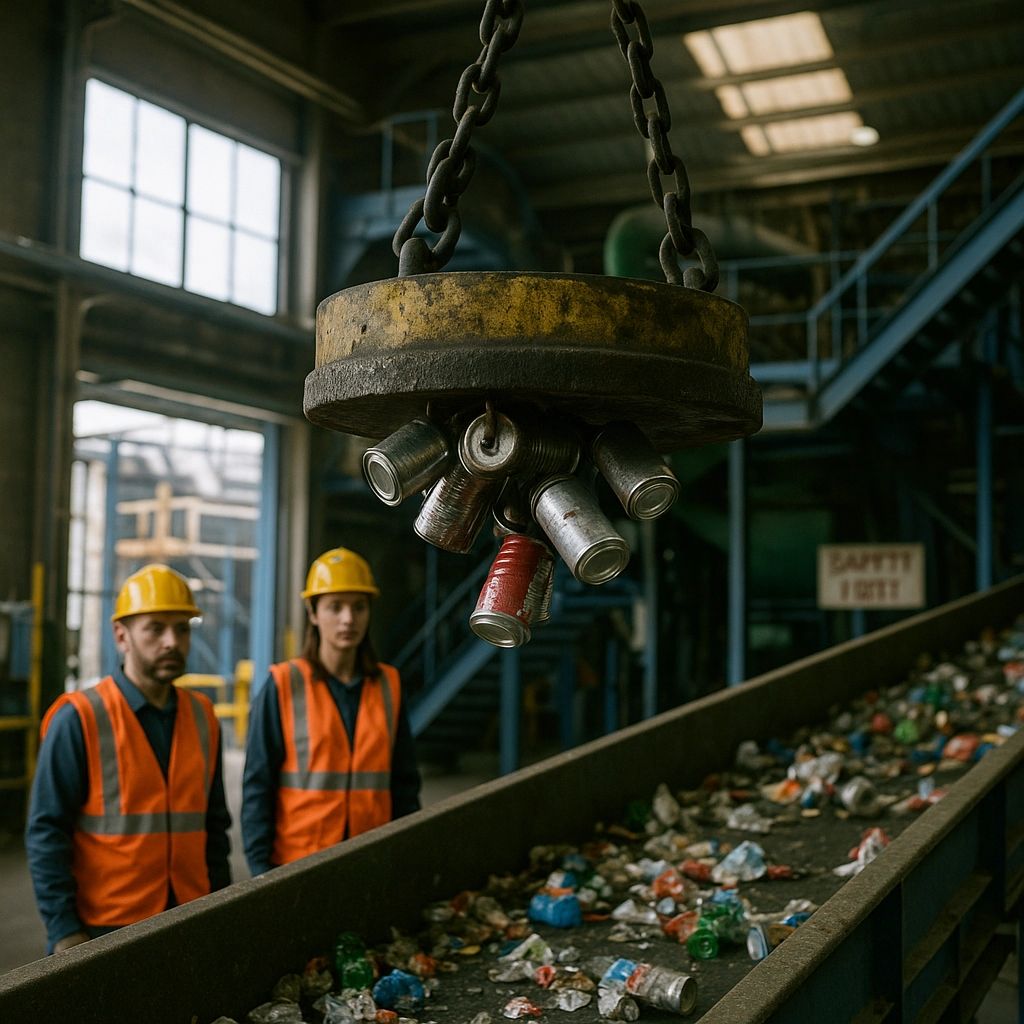
These obstacles mean that magnet recycling usually requires industrial facilities with the right tools and expertise rather than simple DIY solutions.
cURL Too many subrequests by single Worker invocation. To configure this limit, refer to https://developers.cloudflare.com/workers/wrangler/configuration/#limits
cURL Too many subrequests by single Worker invocation. To configure this limit, refer to https://developers.cloudflare.com/workers/wrangler/configuration/#limits cURL Too many subrequests by single Worker invocation. To configure this limit, refer to https://developers.cloudflare.com/workers/wrangler/configuration/#limitscURL Too many subrequests by single Worker invocation. To configure this limit, refer to https://developers.cloudflare.com/workers/wrangler/configuration/#limits
cURL Too many subrequests by single Worker invocation. To configure this limit, refer to https://developers.cloudflare.com/workers/wrangler/configuration/#limits cURL Too many subrequests by single Worker invocation. To configure this limit, refer to https://developers.cloudflare.com/workers/wrangler/configuration/#limits cURL Too many subrequests by single Worker invocation. To configure this limit, refer to https://developers.cloudflare.com/workers/wrangler/configuration/#limits cURL Too many subrequests by single Worker invocation. To configure this limit, refer to https://developers.cloudflare.com/workers/wrangler/configuration/#limits cURL Too many subrequests by single Worker invocation. To configure this limit, refer to https://developers.cloudflare.com/workers/wrangler/configuration/#limits
cURL Too many subrequests by single Worker invocation. To configure this limit, refer to https://developers.cloudflare.com/workers/wrangler/configuration/#limits
- cURL Too many subrequests by single Worker invocation. To configure this limit, refer to https://developers.cloudflare.com/workers/wrangler/configuration/#limits cURL Too many subrequests by single Worker invocation. To configure this limit, refer to https://developers.cloudflare.com/workers/wrangler/configuration/#limits
- cURL Too many subrequests by single Worker invocation. To configure this limit, refer to https://developers.cloudflare.com/workers/wrangler/configuration/#limits cURL Too many subrequests by single Worker invocation. To configure this limit, refer to https://developers.cloudflare.com/workers/wrangler/configuration/#limits
- cURL Too many subrequests by single Worker invocation. To configure this limit, refer to https://developers.cloudflare.com/workers/wrangler/configuration/#limits cURL Too many subrequests by single Worker invocation. To configure this limit, refer to https://developers.cloudflare.com/workers/wrangler/configuration/#limits
cURL Too many subrequests by single Worker invocation. To configure this limit, refer to https://developers.cloudflare.com/workers/wrangler/configuration/#limits
cURL Too many subrequests by single Worker invocation. To configure this limit, refer to https://developers.cloudflare.com/workers/wrangler/configuration/#limits
cURL Too many subrequests by single Worker invocation. To configure this limit, refer to https://developers.cloudflare.com/workers/wrangler/configuration/#limits
cURL Too many subrequests by single Worker invocation. To configure this limit, refer to https://developers.cloudflare.com/workers/wrangler/configuration/#limits
cURL Too many subrequests by single Worker invocation. To configure this limit, refer to https://developers.cloudflare.com/workers/wrangler/configuration/#limits
cURL Too many subrequests by single Worker invocation. To configure this limit, refer to https://developers.cloudflare.com/workers/wrangler/configuration/#limits
cURL Too many subrequests by single Worker invocation. To configure this limit, refer to https://developers.cloudflare.com/workers/wrangler/configuration/#limits
cURL Too many subrequests by single Worker invocation. To configure this limit, refer to https://developers.cloudflare.com/workers/wrangler/configuration/#limits
cURL Too many subrequests by single Worker invocation. To configure this limit, refer to https://developers.cloudflare.com/workers/wrangler/configuration/#limits
Overall, suppliers like NBAEM are key partners in promoting sustainable magnet use and recycling across industries in the U.S., making it easier for businesses and individuals to recycle magnets responsibly.
Future Trends in Magnet Recycling and Sustainable Magnet Technologies
Magnet recycling is evolving fast, especially for rare earth magnets like neodymium, which are tough to recycle but valuable. Advances in recycling technology are making it easier to recover these materials efficiently, cutting down waste and reducing reliance on mining new resources.
We’re also seeing new magnet materials designed with recycling in mind—these eco-friendly magnets break down more easily or use fewer harmful components. This shift helps simplify the recycling process and lessens environmental impact.
NBAEM is playing a key role here by pushing innovative methods that improve magnet reuse and reduce waste. Their sustainability initiatives focus on creating high-quality recycled magnets and setting up take-back programs, supporting a circular magnet economy tailored for the U.S. market and beyond.

 Greek
 English
 German
 Vietnamese
 Spanish (Mexico)
 Russian
 Turkish
 Polish
 Hindi
 Thai
 Malay
 Korean
 Japanese
 French
 Czech
 Danish
 Dutch
 Finnish
 Italian
 Portuguese (Brazil)
 Portuguese (Portugal)
 Slovenian
 Ukrainian
 Hebrew
 Scottish Gaelic
 Hungarian
 Tagalog
 Spanish (Spain)
 Serbian
 Indonesian
 Slovak
 Dutch (Belgium)
 Persian
 Arabic
 Romanian
 Estonian
 Bulgarian
[…] Materials: Many magnets use recycled metals. Learn about magnet recycling benefits for eco-friendly […]