
Are you trying to understand the difference between Μέγιστη Λειτουργική Θερμοκρασία και Θερμοκρασία Curie when it comes to magnetic materials? You’re not alone. Whether you’re an engineer, buyer, or designer working with magnets in industries like motors, sensors, or electronics, knowing these temperature limits is critical for making smart choices.
Why? Because these temperatures directly affect magnetic performance, reliability, and the lifespan of your components. Push a magnet beyond its μέγιστη θερμοκρασία λειτουργίας, and you risk permanent damage or reduced efficiency. Cross the Θερμοκρασία Curie, and the magnet loses its magnetic properties altogether—often irreversibly.
In this article, you’ll discover what sets these two key temperature points apart, how they influence your magnetic material selection, and how NBAEM’s high-quality magnets are engineered to meet your toughest thermal demands. Ready to dive in?
What is Maximum Operating Temperature
Maximum Operating Temperature (MOT) is the highest temperature at which a magnetic material can function reliably without significant loss of its magnetic properties. Simply put, it’s the temperature limit you should not exceed to keep the magnet working well over time.
This temperature matters a lot for product longevity and reliability. When a magnet operates at or below its MOT, it maintains strength, stability, and performance. But if the temperature goes beyond this limit, the magnet can start losing magnetization, leading to performance issues and even permanent damage.
Typical MOT values depend on the type of magnetic material:
- Neodymium magnets: Usually have MOTs between 80°C to 150°C, depending on the grade and composition.
- Ferrite magnets: More heat resistant, often with MOTs as high as 250°C to 300°C.
- Samarium-cobalt magnets: Known for higher MOTs, sometimes up to 350°C.
Several factors influence the MOT:
- Material composition and grade
- Manufacturing quality and coatings
- Magnetic field strength and load conditions
- Environmental factors like moisture and mechanical stress
Exceeding the Maximum Operating Temperature leads to gradual performance degradation. This means magnetic strength drops, the magnet becomes unstable, and its overall life cycle shortens. The damage might be irreversible if the temperature remains high for extended periods, reducing reliability and causing costly failures in applications like motors, sensors, or electronics.
Understanding the MOT helps engineers and users select the right magnet type and design proper thermal management to avoid failure under real-world operating conditions.
What is Curie Temperature

The Curie temperature is the point at which a magnetic material loses its permanent magnetism. It’s a fundamental property tied to the physics of magnetism. Below this temperature, materials like neodymium or ferrite are ferromagnetic, meaning their atomic magnetic moments line up and create strong magnetic fields. Once the material hits the Curie temperature, it undergoes a phase transition and becomes paramagnetic. In this state, the atoms’ magnetic moments are randomly oriented, causing the material to lose its magnetic strength.
Typical Curie temperatures vary by material. For example, neodymium magnets have a Curie temperature around 310 to 400°C, depending on their exact composition, while ferrite magnets usually reach around 450°C to 460°C. Once a magnet crosses this temperature, its magnetic properties don’t come back. This loss is permanent—exceeding the Curie temperature essentially kills the magnet’s ability to function as a magnet.
Understanding the Curie temperature is crucial for industries using magnetic materials, as it sets an absolute thermal limit beyond which magnetic performance cannot be restored.
Comparing Maximum Operating Temperature vs Curie Temperature
Η Μέγιστη Λειτουργική Θερμοκρασία και Θερμοκρασία Curie are both crucial when working with magnetic materials, but they mean very different things.
- Μέγιστη Λειτουργική Θερμοκρασία is the highest temperature a magnet can safely handle without losing performance or suffering damage over time.
- Θερμοκρασία Curie is the point where the magnet’s material loses its ferromagnetic properties altogether—it stops being magnetic.
Why Maximum Operating Temperature is below Curie Temperature
Manufacturers set the maximum operating temperature well below the Curie temperature. That’s because below the Curie point, magnets still work but may start to lose strength if pushed too high or for too long. Staying below the maximum operating temperature ensures the magnet lasts longer without performance degradation or irreversible damage.
cURL Too many subrequests by single Worker invocation. To configure this limit, refer to https://developers.cloudflare.com/workers/wrangler/configuration/#limits
cURL Too many subrequests by single Worker invocation. To configure this limit, refer to https://developers.cloudflare.com/workers/wrangler/configuration/#limits
-
cURL Too many subrequests by single Worker invocation. To configure this limit, refer to https://developers.cloudflare.com/workers/wrangler/configuration/#limits
cURL Too many subrequests by single Worker invocation. To configure this limit, refer to https://developers.cloudflare.com/workers/wrangler/configuration/#limits
cURL Too many subrequests by single Worker invocation. To configure this limit, refer to https://developers.cloudflare.com/workers/wrangler/configuration/#limits
- cURL Too many subrequests by single Worker invocation. To configure this limit, refer to https://developers.cloudflare.com/workers/wrangler/configuration/#limits
- cURL Too many subrequests by single Worker invocation. To configure this limit, refer to https://developers.cloudflare.com/workers/wrangler/configuration/#limits
cURL Too many subrequests by single Worker invocation. To configure this limit, refer to https://developers.cloudflare.com/workers/wrangler/configuration/#limits
cURL Too many subrequests by single Worker invocation. To configure this limit, refer to https://developers.cloudflare.com/workers/wrangler/configuration/#limits

cURL Too many subrequests by single Worker invocation. To configure this limit, refer to https://developers.cloudflare.com/workers/wrangler/configuration/#limits
-
cURL Too many subrequests by single Worker invocation. To configure this limit, refer to https://developers.cloudflare.com/workers/wrangler/configuration/#limits
cURL Too many subrequests by single Worker invocation. To configure this limit, refer to https://developers.cloudflare.com/workers/wrangler/configuration/#limits
cURL Too many subrequests by single Worker invocation. To configure this limit, refer to https://developers.cloudflare.com/workers/wrangler/configuration/#limits μαγνήτες υψηλής θερμοκρασίαςcURL Too many subrequests by single Worker invocation. To configure this limit, refer to https://developers.cloudflare.com/workers/wrangler/configuration/#limits
cURL Too many subrequests by single Worker invocation. To configure this limit, refer to https://developers.cloudflare.com/workers/wrangler/configuration/#limits
cURL Too many subrequests by single Worker invocation. To configure this limit, refer to https://developers.cloudflare.com/workers/wrangler/configuration/#limits
cURL Too many subrequests by single Worker invocation. To configure this limit, refer to https://developers.cloudflare.com/workers/wrangler/configuration/#limits
Customization is a key part of what we do. NBAEM can adjust magnet grades and coatings to match your specific thermal requirements, helping you get the right balance between cost and performance. This is especially helpful for motors, sensors, and electronics that operate under tough conditions.
For instance, one client in the automotive sector relied on our high-temperature neodymium magnets for an electric motor prototype. With our tailored solution, they maintained magnet strength up to 120°C, well above standard limits, improving overall motor efficiency and durability.
In short, NBAEM’s approach combines material science and flexible production to meet the unique needs of customers in the U.S. market who demand high-performance magnets under heat stress.

 Greek
 English
 German
 Vietnamese
 Spanish (Mexico)
 Russian
 Turkish
 Polish
 Hindi
 Thai
 Malay
 Korean
 Japanese
 French
 Czech
 Danish
 Dutch
 Finnish
 Italian
 Portuguese (Brazil)
 Portuguese (Portugal)
 Slovenian
 Ukrainian
 Hebrew
 Scottish Gaelic
 Hungarian
 Tagalog
 Spanish (Spain)
 Serbian
 Indonesian
 Slovak
 Dutch (Belgium)
 Persian
 Arabic
 Romanian
 Estonian
 Bulgarian

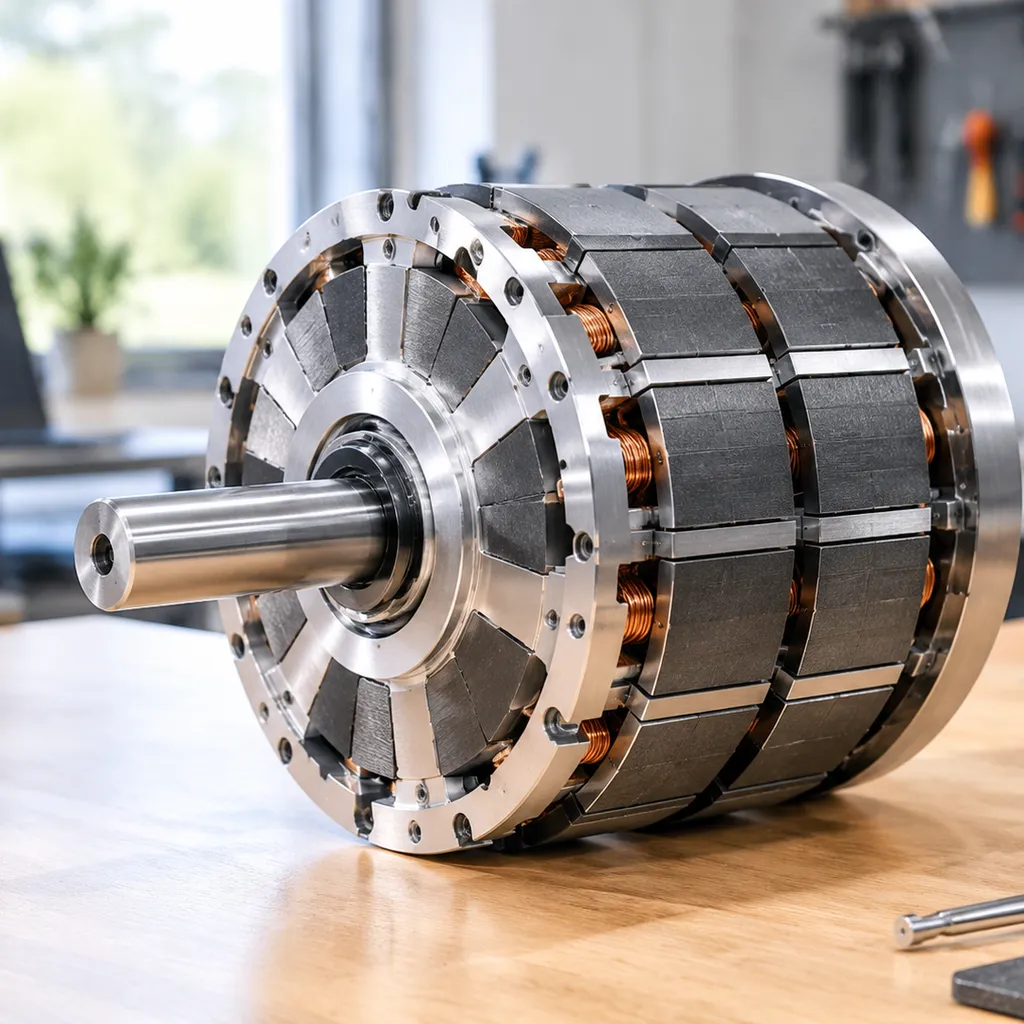
[…] Over-temperature Operation: Exceeding the maximum operating temperature (MOT) can cause irreversible loss of magnetism, especially in NdFeB magnets. Running magnets above their thermal limits leads to permanent drops in remanence (Br) and coercivity (Hc). Always check the magnet’s temperature rating and consider the Curie temperature to avoid performance degradation. For detailed info on temperature effects, see our guide on maximum operating temperature vs Curie temperature. […]