
Struggling to hit your target holding force or torque without drastically oversizing your magnet? The efficiency of your device doesn’t just depend on buying a higher-grade material; it relies entirely on how effectively you route that magnetic energy. Let’s break down the foundational concepts you need to master to stop wasting flux and start optimizing performance.
Core Principles of Magnetic Circuit Design
When I sit down to evaluate a new engineering project, I always start with the foundational physics. The most practical way to visualize magnetic circuit design is by comparing it to standard electrical circuits.
The Magnetic Analogy to Ohm’s Law
Instead of Voltage, Current, and Resistance (V=IR), we deal with their magnetic counterparts. Balancing these three elements is how we optimize magnetic reluctance and permeance to get the most out of our assemblies.
- Magnetomotive Force (MMF): Think of this as your “voltage.” It is the driving force generated by the permanent magnet.
- Magnetic Flux: This is your “current.” It represents the total magnetic field traveling through your circuit to perform the actual work.
- Reluctance: This is the “resistance.” It is the opposition that your circuit materials (like air or steel) offer against the flow of magnetic flux.
Air Gap Magnetic Field Optimization
The air gap is the functional workspace of your circuit—it is where the sensor sits, the voice coil moves, or the motor rotor turns. However, from a design perspective, air is a terrible conductor of magnetic flux.
- The Primary Bottleneck: Air has a massive reluctance compared to steel yokes or magnetic core laminations. The air gap will consume the vast majority of the MMF in your entire system.
- Engineering the Gap: Proper air gap magnetic field optimization requires keeping the gap as physically small as mechanical tolerances allow, while calculating the exact cross-sectional area needed to prevent the surrounding iron from saturating.
Magnetic Leakage Flux Reduction
Theoretical textbook equations often assume that 100% of the flux travels neatly through the core and across the gap. In reality, magnetic fields are incredibly lazy and messy.
- Flux Leakage: A significant percentage of flux will “short circuit” and jump across the air between the magnet’s poles rather than traveling all the way through your intended circuit path.
- Fringing Effects: When flux lines finally reach the air gap, they repel each other and bulge outward into the surrounding space. This spreads the field over a larger area, sharply reducing the flux density right where you need it most.
- Reality-Based Calculations: A reliable magnetic flux calculation must incorporate empirical leakage and fringing factors. If you ignore these realities, your physical prototype will severely underperform. Prioritizing magnetic leakage flux reduction through smart geometry changes is what separates a functional design from an optimized, cost-effective product.
Magnetic Circuit Design: Permanent Magnet Material Selection
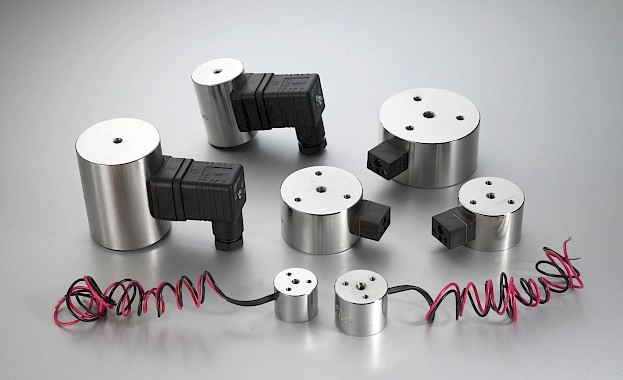
The heart of your magnetic circuit design dictates its final performance. When we handle permanent magnet material selection, we always compare materials based on three critical metrics: Br (Remanence) for magnetic strength, Hcj (Coercivity) for resistance to demagnetization, and BHmax (Maximum Energy Product) for overall power output.
Choosing the wrong material easily derails a project. Here is how we break down the primary options:
- Sintered Neodymium (NdFeB): This is the undisputed champion for maximum strength in compact spaces. When your design demands massive holding force or torque in a tight footprint, engineering high-quality custom neodymium magnets is the most direct path to success.
- Samarium Cobalt (SmCo): Neodymium degrades in extreme heat. We rely on SmCo for demanding Samarium cobalt high-temperature applications. It delivers essential thermal stability and natural corrosion resistance where other magnets fail.
- Ferrite & AlNiCo: Never ignore the classics. These are highly cost-effective alternatives for specific high-volume production runs or high-temperature legacy applications where extreme strength is not the primary requirement.
Soft Magnetic Materials
A powerful magnet is useless if the circuit creates a bottleneck. You must choose the correct magnetic core laminations and yokes to carry the flux without the material saturating. We frequently integrate advanced soft magnetic composites into the assembly to effectively guide the magnetic field, minimize leakage, and ensure the entire circuit operates efficiently.
Step-by-Step Magnetic Circuit Design Optimization
To extract the maximum performance from your application, we follow a strict and logical optimization process. Guesswork simply doesn’t cut it when you need reliable holding force or torque. Here is how we systematically optimize a magnetic circuit design:
- Step 1: Defining the Operating Point
We always start by analyzing the demagnetization curve. Pinpointing the correct B-H curve operating point is the foundation of a stable design. This ensures the magnet runs at its maximum energy product and eliminates the risk of irreversible demagnetization when the system is put under load. - Step 2: Shaping and Sizing
The physical geometry of your components dictates exactly where the magnetic energy travels. By altering the dimensions and selecting a different shape of magnet, we can aggressively steer and focus the flux into the poles. This structural tuning is the key to achieving true air gap magnetic field optimization without wasting material. - Step 3: FEA Simulation
We never move straight to physical prototyping. Instead, we rely heavily on 2D and 3D finite element analysis (FEA) magnetics. Running these simulations allows us to clearly visualize the magnetic flux and surface gauss across the entire assembly. By mapping the circuit digitally, we immediately spot saturation bottlenecks and leakage issues, allowing us to tweak the design before spending money on manufacturing tooling.
Advanced Engineering: Halbach Arrays and Complex Assemblies
When standard magnetic circuit design isn’t enough to meet strict performance targets, we rely on advanced structures to maximize efficiency.
Halbach Array Configuration
A Halbach array is a strategic arrangement of permanent magnets that manipulates the direction of the magnetic field. By precisely rotating the magnetization direction of each magnet in the sequence, this setup achieves two critical things:
- Field Augmentation: It heavily concentrates and amplifies the magnetic field on the working side of the array.
- Field Cancellation: It naturally cancels out the magnetic flux on the back side, often eliminating the need for bulky steel shielding.
This configuration gives us maximum power exactly where we need it. To verify the precise output of this concentrated face, knowing how to measure magnet strength accurately is a fundamental part of our validation process.
Magnetic Assembly Engineering
We never design a magnet in a vacuum. True optimization comes from integrated magnetic assembly engineering, which means designing the magnet, the yoke, and the housing simultaneously.
- Unified Systems: The housing is rarely just a container; it frequently acts as a vital path for the flux.
- Preventing Bottlenecks: Simultaneous design ensures the steel doesn’t saturate. This holistic approach often allows us to achieve the desired holding force using a smaller, more cost-effective magnet.
Whether we are building compact precision motors or engineering massive generators that utilize magnets in wind turbines, treating the entire assembly as a single, optimized magnetic circuit is the only way to guarantee reliable performance.
Overcoming Common Design and Manufacturing Challenges
In magnetic circuit design, moving from a computer simulation to a physical product always reveals real-world hurdles. To guarantee reliable performance on the production floor, we tackle three main roadblocks head-on.
Thermal Degradation
Heat is the biggest enemy of permanent magnets. If your design ignores operating temperatures, you risk total failure in the field.
- Temperature Coefficients: Always account for the natural drop in magnetic output as system heat rises.
- Preventing Loss: You must run a proper demagnetization curve analysis during the design phase. This ensures your magnet won’t suffer from irreversible thermal demagnetization when the machine runs hot.
Mechanical Tolerances
You have to balance extremely tight magnetic requirements with realistic manufacturing limits.
- Manufacturing Realities: Custom neodymium magnets, injection-molded parts, and machined yokes all have tiny dimensional variations.
- Precision Fit: A bad physical fit directly changes your critical air gap. We focus on highly precise magnetic assembly engineering to manage these mechanical tolerances, ensuring the parts go together perfectly without disrupting the magnetic flux.
Cost vs. Performance
Throwing the strongest, most expensive magnet at a problem is bad engineering. Over-specifying your magnet grade inflates production costs fast.
- Work Smarter: Clever magnetic circuit design focuses on routing flux efficiently rather than relying purely on raw material strength.
- Material Optimization: By optimizing the core geometry and reducing leakage, we often achieve the exact same holding force or motor torque using a lower-grade, more cost-effective material. Optimize the circuit first, then pick the magnet.
FAQs About Magnetic Circuit Design
Routing Magnetic Flux Efficiently
What is the most critical factor?
The secret is keeping the circuit’s reluctance as low as possible. This means choosing the right magnetic core laminations and keeping your air gaps tight. If your core saturates, the flux leaks out, tanking your efficiency. We always focus on properly shaping yokes and poles to guide the flux exactly where it needs to go without creating magnetic bottlenecks.
Air Gap Reluctance Calculation
How do I calculate it accurately?
You start with the basic math—gap length divided by the area and permeability. However, real-world air gap magnetic field optimization requires you to account for fringing effects. Magnetic flux naturally spreads out as it jumps the gap. To get an accurate reluctance number, you must calculate the effective area, which we usually do by adding the gap length to the physical dimensions of your pole face.
FEA vs. Physical Prototyping
Can FEA completely replace a physical prototype?
Not entirely. Using finite element analysis (FEA) magnetics is a massive timesaver for visualizing flux density and fixing major design flaws before cutting any metal. But FEA assumes a perfect, virtual world. You still need physical prototypes to account for real-world manufacturing tolerances, mechanical assembly stresses, and practical magnetic leakage flux reduction. FEA gets your design 90% of the way there; the physical prototype validates the final 10%.
Neodymium vs. Samarium Cobalt
How do I choose the right material for my application?
It comes down to your operating environment and thermal limits. If you need massive holding force in a very tight space at standard temperatures, custom neodymium magnets are the clear winner. But if your system runs hot (above 150°C) or operates in highly corrosive conditions, Samarium Cobalt is mandatory to prevent irreversible demagnetization. Knowing exactly what magnets are made of and their physical limits is the foundation of smart permanent magnet material selection. If you are ever unsure which grade matches your specific operating point, you can always contact us to review your engineering specs.


 Persian
  English
  German
  Vietnamese
  Spanish (Mexico)
  Russian
  Turkish
  Polish
  Hindi
Hindi  Thai
Thai  Malay
Malay  Korean
  Japanese
  French
  Czech
Czech  Danish
  Dutch
Dutch  Finnish
  Italian
  Portuguese (Brazil)
  Portuguese (Portugal)
  Slovenian
  Ukrainian
  Hebrew
  Scottish Gaelic
  Hungarian
  Tagalog
  Spanish (Spain)
  Serbian
  Indonesian
  Slovak
  Dutch (Belgium)
  Arabic
  Romanian
  Estonian
  Greek
Greek 


Leave A Comment