
Every transformative modern technology—from EV drivetrains to precision medical sensors—relies on an invisible powerhouse: the magnetic area.
But here is the catch: what engineers and technical buyers casually call a magnetic area is actually a highly complex, dynamic champ magnétique. If you miscalculate its boundaries, or pair it with the wrong matériaux ferromagnétiques, your entire system’s efficiency can collapse.
Optimizing this functional magnetic force zone isn’t just about spatial layout; it requires a precise calculation of densité de flux magnétique and strategic material selection. Whether you need the raw power of aimants en terres rares comme Aimants en néodyme (NdFeB) or the extreme thermal endurance of Aimants Samarium Cobalt (SmCo), choosing the right substrate changes everything.
In this guide, we will break down the exact physics that shape a champ magnétique, map out how different magnétiques permanents alter your field geometry, and show you how to engineer the perfect zone of influence for your application.
Let’s dive right in.
Ever wondered why a magnet pulls strongly at one exact spot, but barely registers a few inches away? We hear from engineers every day who struggle to predict exactly how their magnetic force zone will behave in real-world applications. When you are designing a product, you can’t rely on guesswork. You need to know exactly how your magnetic area expands, contracts, and interacts with surrounding components.
Let’s break down the actual physics of mapping this zone and look at the core metrics that dictate performance.
Mapping the Zone
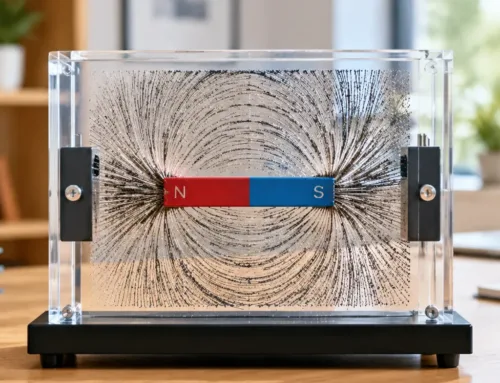
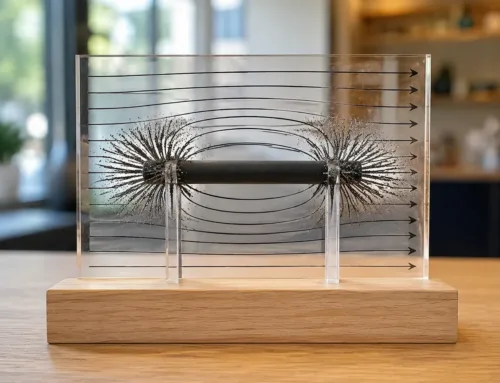
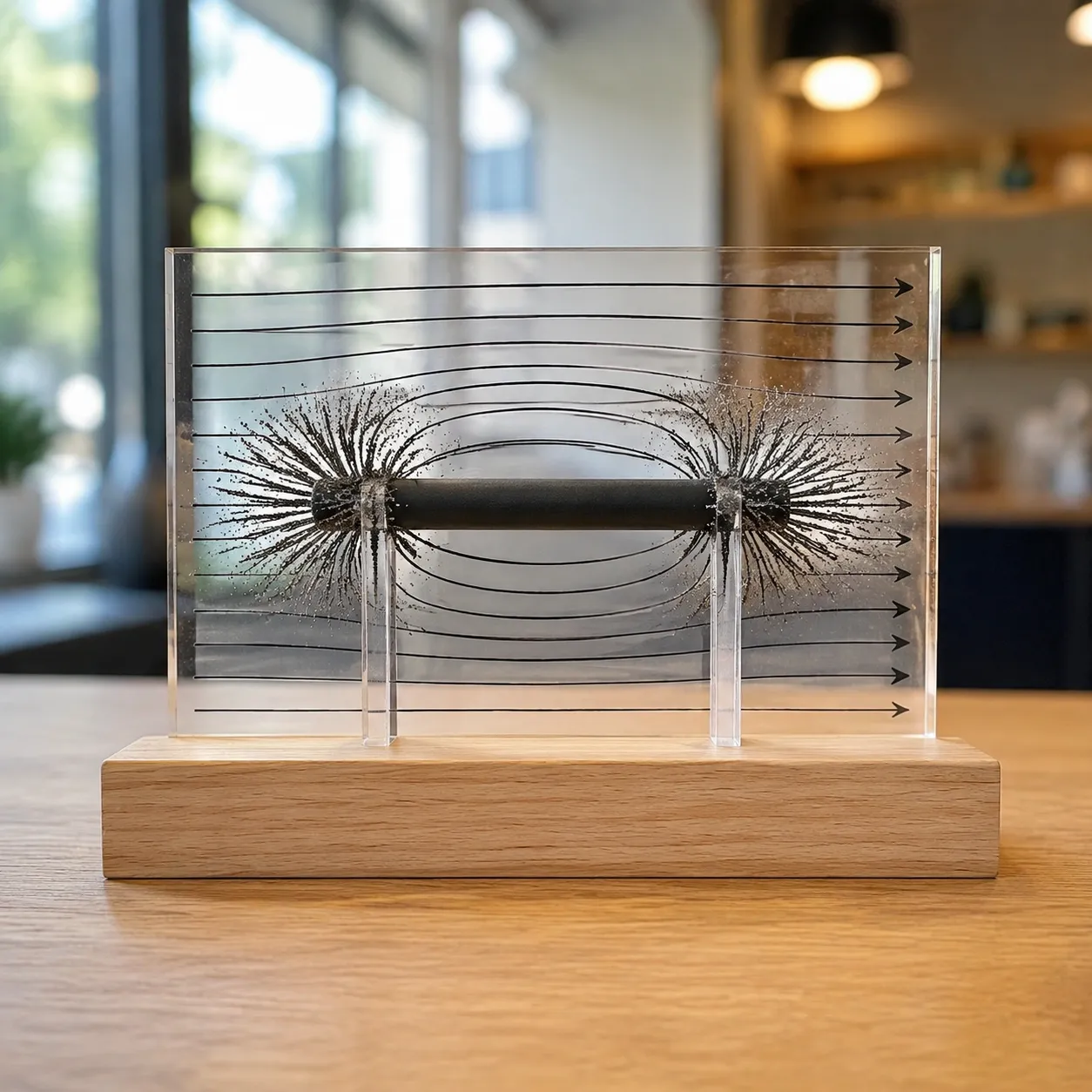
To visualize a magnetic area, we map out the invisible les lignes de champ magnétique that loop from the north to the south pole. This area isn’t a uniform cloud; it is a dynamic gradient. The closer the lines are to each other, the stronger the physical pull. When we design custom systems, mapping this 3D space allows us to predict exactly where a component will engage or release.
[Image of magnetic field lines around a permanent magnet]
Key Metrics That Define a Magnetic Area
You cannot manage what you do not measure. When we evaluate a magnetic area for industrial applications, we focus on three non-negotiable metrics:
- Magnetic Flux Density: Measured in Gauss or Tesla, this tells us the actual concentration of magnetic energy passing through a specific surface area.
- Force du champ magnétique : This defines the magnet’s inherent ability to resist external demagnetizing forces and maintain its reach.
- Force de maintien : The physical peak weight the magnet can pull when making direct contact with matériaux ferromagnétiques.
| Metric | What It Measures | Why It Matters to Your Design |
|---|---|---|
| Flux Density (Gauss) | Field concentration | Determines sensor triggers and precision control. |
| Field Strength (A/m) | Core magnetic power | Ensures long-term reliability in harsh environments. |
| Holding Force (lbs/kg) | Pure mechanical pull | Dictates the heavy-lifting capacity of the system. |
The Role of Distance
Distance is the ultimate dealbreaker in magnetic design. Magnetic strength does not drop off in a straight, predictable line. Instead, it follows the inverse-square law.
- The Near Field: Incredibly high intensity, but drops off exponentially with the slightest air gap.
- The Far Field: Flattened delivery where minor adjustments in distance have less drastic impacts on performance.
If you miscalculate your operational gap by even a fraction of a millimeter, your la force du champ magnétique can plummet by half, rendering your device useless. Understanding this drop-off curve is the secret to engineering reliable, predictable magnetic products.
How Material Composition Shapes the Magnetic Area
The reach, strength, and overall footprint of a magnetic area depend heavily on the raw ingredients inside the magnet. By selecting specific permanent magnetic materials, we can engineer the exact magnetic force zone required for different industrial applications.
1. Rare Earth Magnets: Maximum Intensity in Minimal Space
When an application demands a high-intensity magnetic area but faces strict space constraints, rare earth magnets are the definitive choice.
- Aimants en Néodyme (NdFeB) : These provide the highest magnetic flux density available today. They project a dense, incredibly powerful magnetic area close to the magnet face, making them essential for compact sensors, high-efficiency motors, and advanced electronics.
- Samarium Cobalt (SmCo) Magnets: While slightly less powerful than neodymium, SmCo magnets maintain a stable magnetic area in extreme environments, offering excellent demagnetization resistance and reliable performance at elevated temperatures.
2. Traditional Magnetic Materials: Cost-Effective, Wide-Area Coverage
Not every project requires extreme localized intensity. For many large-scale industrial magnet applications, traditional materials offer a more practical way to shape the magnetic area.
- Aimants en ferrite (céramique) : These materials generate a wide, deeply penetrating magnetic area at a fraction of the cost. They are highly resistant to corrosion and excel in capturing ferrous contaminants across broad conveyor belts.
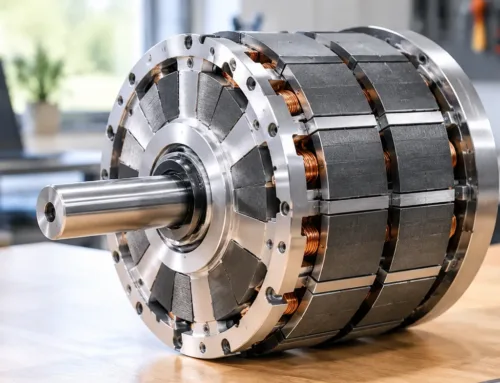
- Aimants en Alnico : Known for their high magnetic field strength along their axis, alnico alloys are ideal for specialized applications like permanent magnet generators where temperature stability is critical.
| Type d'aimant | Magnetic Field Strength | Efficacité économique | Résistance à la température |
|---|---|---|---|
| Néodyme (NdFeB) | Ultra-High | Modéré | Faible à Moyen |
| Cobalt-Samarium (SmCo) | Élevée | Premium | Très élevé |
| Ferrite (Céramique) | Faible à modéré | Excellent | Élevée |
| Alnico | Moyenne à Élevée | Modéré | Ultra-High |
Choosing the right material ensures the resulting magnetic area matches both your spatial constraints and your performance targets perfectly.
Industrial Factors Influencing the Performance of a Magnetic Area
A magnetic area does not operate in a vacuum. In heavy industrial environments, maintaining a stable magnetic force zone depends heavily on external physical factors. If you do not account for geometry, heat, and opposing fields, your magnetic performance will suffer.
Geometric Design & Shape
The physical shape of a permanent magnet dictates how its les lignes de champ magnétique spread across a target space. Standard blocks, discs, and rings project entirely different field profiles.
- Sharp Corners: Can cause localized field concentration but are prone to chipping.
- Rounded Profiles: Help optimize densité de flux magnétique across a uniform surface area.
- Thickness vs. Width: A thicker magnet pushes the magnetic area further out, while a wider magnet creates a broader but shallower field.
Temperature & Thermal Stability
Heat is the ultimate enemy of magnetic efficiency. Every material has a specific threshold where it begins to lose its grip.
| Type d'aimant | Maximum Operating Temp | Key Risk Factor |
|---|---|---|
| Aimants en néodyme (NdFeB) | Up to 80°C – 230°C | Severe flux loss if baseline rating is exceeded |
| Cobalt-Samarium (SmCo) | Up to 300°C – 350°C | Excellent for aimants à haute température applications |
Exceeding these temperatures degrades the la force du champ magnétique. If you push past the température de Curie, the damage becomes permanent, completely destroying the magnetic force zone.
Demagnetization Vulnerability
In industrial machinery, magnets regularly face harsh external opposition. Powerful electrical surges, physical impacts, and opposing magnetic fields can compromise a magnet’s internal alignment. Choosing magnétiques permanents with high demagnetization resistance ensures your system maintains its field integrity over years of continuous operation.
Engineering Solutions: How to Optimize and Direct a Magnetic Area
When we design systems for industrial magnet applications, raw power isn’t enough. You have to control where that power goes. Optimizing and directing a magnetic area requires precise engineering to ensure the magnetic field lines are concentrated exactly where they are needed, minimizing waste and maximizing efficiency.
Focusing the Field
Uncontrolled magnetic flux density bleeds into the surrounding environment, lowering efficiency. To counter this, we use highly permeable ferromagnetic materials as steel backings or enclosures. This creates a low-reluctance pathway that bends and redirects the magnetic area, focusing the force zone directly toward the target.
By shaping the poles or utilizing specialized assemblies like Halbach arrays, we can manipulate the magnetic field strength—effectively doubling the force on one side while canceling it out on the other.
Air Gap Minimization
The greatest enemy of a strong magnetic area is the air gap. Magnetic force drops off drastically over distance. To maintain a high-intensity magnetic force zone, the working gap between the permanent magnetic materials and the target must be kept to an absolute minimum.
- Impact of Air Gaps: Even a fraction of a millimeter of unnecessary air gap can cause a massive drop in effective magnetic flux density.
- Engineering Fix: We use precision-machined housings and tight tolerance controls to ensure tight mechanical alignment, preserving peak field strength.
Custom Simulation
We don’t rely on guesswork. Before physical production begins, we utilize advanced Finite Element Analysis (FEA) to model the entire magnetic area.
| Simulation Benefit | Industrial Advantage |
|---|---|
| Flux Mapping | Visualizes exactly how magnetic field lines travel through components. |
| Thermal Prediction | Ensures the design stays stable well below the critical Curie temperature. |
| Material Optimization | Balances the use of high-performance neodymium magnets (NdFeB) with structural costs. |
This custom simulation process allows us to predict demagnetization resistance and optimize the geometry before manufacturing even begins, ensuring a reliable, high-performance solution tailored to your exact application.
Commercial Sourcing: Partnering with NBAEM for Precision Magnetic Solutions
Introducing NBAEM
At NBAEM, we manufacture and supply high-performance permanent magnetic materials designed to meet strict industrial specifications. We control the entire production process to ensure every custom magnet delivers a predictable, highly stable magnetic area for your specific application. From prototyping to high-volume distribution, we provide global industries with dependable magnetic solutions that keep automated systems, sensors, and drive mechanisms running efficiently.
Why Global Engineers Choose NBAEM
Global engineering teams require consistency, tight tolerances, and materials that survive harsh operating environments. We eliminate the guesswork by matching your exact technical needs with the right material chemistry. Whether you need to compare a aimant en ferrite vs néodyme for cost-to-weight efficiency, or require specialty compounding, we deliver optimized solutions.
Our production advantages include:
- Custom Geometric Precision: Tailored shapes to focus your magnetic force zone exactly where it is needed.
- Advanced Machining: Specialized slicing, drilling, and grinding for complex designs without damaging material integrity.
- Thermal Stability: Magnetic solutions engineered to resist demagnetization in high-temperature environments.
| Caractéristique | Engineering Benefit | Global Industry Application |
|---|---|---|
| Advanced NdFeB Grades | Maximum energy density, compact magnetic area | Electric vehicles, robotics, aerospace |
| Tailored SmCo Solutions | High Curie temperature, excellent corrosion resistance | Marine sensors, heavy industrial pumps |
| In-House CNC Machining | Micron-level tolerances, zero edge chipping | Medical devices, precision instrumentation |
We streamline the sourcing journey with clear technical data, reliable supply chains, and direct engineering support, ensuring your localized production lines face zero downtime.

 French
  English
  German
  Vietnamese
  Spanish (Mexico)
  Russian
  Turkish
  Polish
  Hindi
Hindi  Thai
Thai  Malay
Malay  Korean
  Japanese
  Czech
Czech  Danish
  Dutch
Dutch  Finnish
  Italian
  Portuguese (Brazil)
  Portuguese (Portugal)
  Slovenian
  Ukrainian
  Hebrew
  Scottish Gaelic
  Hungarian
  Tagalog
  Spanish (Spain)
  Serbian
  Indonesian
  Slovak
  Dutch (Belgium)
  Persian
  Arabic
  Romanian
  Estonian
  Greek
Greek  Bulgarian


Laissez un commentaire