
Is cobalt magnetic? Absolutely—cobalt is one of the rare metals that’s naturally ferromagnetic at room temperature, standing alongside iron and nickel. What sets cobalt apart? Its temperatur Curie tops the list at 1121 °C, meaning it stays magnetic far longer under extreme heat. Whether you’re curious about its strength, how it stacks against neodymium magnets, or its role in high-temp applications, this guide cuts through the noise to give you the clear, expert facts you need. Let’s get into why cobalt’s magnetic properties still matter today.

apakah kobalt magnetis
The Science: Why Cobalt Is Ferromagnetic
Yes, cobalt is magnetic—specifically, it is ferromagnetic. But why? The answer lies deep in its atomic structure and magnetic domains.
Electron Configuration and Unpaired 3d Electrons
- Cobalt has the electron configuration:
[Ar] 3d⁷ 4s² - Out of the seven 3d electrons, several remain unpaired.
- These unpaired electrons have spins that act like tiny magnets.
- When many spins align in the same direction, they create a strong net magnetic field.
Magnetic Domains and Spontaneous Magnetization
- Cobalt atoms group into small regions called magnetic domains.
- Inside each domain, electron spins align uniformly.
- Though domains are randomly oriented in an unmagnetized piece, when aligned, these domains produce spontaneous magnetization, giving cobalt its magnetic power.
Ferromagnetic vs Paramagnetic vs Diamagnetic
| Properti | Ferromagnetic (Cobalt) | Paramagnetik | Diamaagnetik |
|---|---|---|---|
| Electron spin alignment | Strong, spontaneous | Weak, only with field | Opposes external field |
| Perilaku magnetik | Permanent magnetism | Temporary magnetism | Very weak repulsion |
| Common examples | Cobalt, iron, nickel | Aluminium, platinum | Copper, gold, bismuth |
In short, cobalt’s unpaired electrons and domain structure cURL Too many subrequests by single Worker invocation. To configure this limit, refer to https://developers.cloudflare.com/workers/wrangler/configuration/#limits
cURL Too many subrequests by single Worker invocation. To configure this limit, refer to https://developers.cloudflare.com/workers/wrangler/configuration/#limits
cURL Too many subrequests by single Worker invocation. To configure this limit, refer to https://developers.cloudflare.com/workers/wrangler/configuration/#limits
cURL Too many subrequests by single Worker invocation. To configure this limit, refer to https://developers.cloudflare.com/workers/wrangler/configuration/#limits
| Bahan | cURL Too many subrequests by single Worker invocation. To configure this limit, refer to https://developers.cloudflare.com/workers/wrangler/configuration/#limits | Penggunaan Umum |
|---|---|---|
| cURL Too many subrequests by single Worker invocation. To configure this limit, refer to https://developers.cloudflare.com/workers/wrangler/configuration/#limits | 1.79 | cURL Too many subrequests by single Worker invocation. To configure this limit, refer to https://developers.cloudflare.com/workers/wrangler/configuration/#limits |
| Iron (Fe) | 2.15 | cURL Too many subrequests by single Worker invocation. To configure this limit, refer to https://developers.cloudflare.com/workers/wrangler/configuration/#limits |
| Nickel (Ni) | 0.6 | cURL Too many subrequests by single Worker invocation. To configure this limit, refer to https://developers.cloudflare.com/workers/wrangler/configuration/#limits |
| cURL Too many subrequests by single Worker invocation. To configure this limit, refer to https://developers.cloudflare.com/workers/wrangler/configuration/#limits | ~1.0 | cURL Too many subrequests by single Worker invocation. To configure this limit, refer to https://developers.cloudflare.com/workers/wrangler/configuration/#limits |
| Samarium-Kobalt (SmCo) | 0.9 – 1.1 | cURL Too many subrequests by single Worker invocation. To configure this limit, refer to https://developers.cloudflare.com/workers/wrangler/configuration/#limits |
| Neodymium (NdFeB) | 1.2 – 1.4 | cURL Too many subrequests by single Worker invocation. To configure this limit, refer to https://developers.cloudflare.com/workers/wrangler/configuration/#limits |
In terms of cURL Too many subrequests by single Worker invocation. To configure this limit, refer to https://developers.cloudflare.com/workers/wrangler/configuration/#limitscURL Too many subrequests by single Worker invocation. To configure this limit, refer to https://developers.cloudflare.com/workers/wrangler/configuration/#limits
- Samarium-Kobalt (SmCo) cURL Too many subrequests by single Worker invocation. To configure this limit, refer to https://developers.cloudflare.com/workers/wrangler/configuration/#limits
- Neodimium magnets (NdFeB) cURL Too many subrequests by single Worker invocation. To configure this limit, refer to https://developers.cloudflare.com/workers/wrangler/configuration/#limits
- magnet AlnicocURL Too many subrequests by single Worker invocation. To configure this limit, refer to https://developers.cloudflare.com/workers/wrangler/configuration/#limits
cURL Too many subrequests by single Worker invocation. To configure this limit, refer to https://developers.cloudflare.com/workers/wrangler/configuration/#limits
cURL Too many subrequests by single Worker invocation. To configure this limit, refer to https://developers.cloudflare.com/workers/wrangler/configuration/#limits cURL Too many subrequests by single Worker invocation. To configure this limit, refer to https://developers.cloudflare.com/workers/wrangler/configuration/#limits dan cURL Too many subrequests by single Worker invocation. To configure this limit, refer to https://developers.cloudflare.com/workers/wrangler/configuration/#limits.
cURL Too many subrequests by single Worker invocation. To configure this limit, refer to https://developers.cloudflare.com/workers/wrangler/configuration/#limits
cURL Too many subrequests by single Worker invocation. To configure this limit, refer to https://developers.cloudflare.com/workers/wrangler/configuration/#limits 1:5 dan 2:17 cURL Too many subrequests by single Worker invocation. To configure this limit, refer to https://developers.cloudflare.com/workers/wrangler/configuration/#limits extremely high temperature resistance, able to operate reliably up to around 350 °C, making them some of the best high-temperature permanent magnets available. They also resist corrosion well, so they don’t require extra coatings.
Advantages:
- Outstanding temperature stability
- High corrosion resistance
- Strong magnetic performance stable at elevated temperatures
Disadvantages:
- Brittle and prone to chip or crack if mishandled
- More expensive than other magnets
- Usually not as strong as neodymium (NdFeB) magnets in raw magnetic power
Alnico (Al-Ni-Co) Magnets
Alnico magnets, made from aluminum, nickel, and cobalt, have been around since the early 20th century. Though they don’t match the magnetic strength of SmCo or neodymium magnets, Alnico magnets offer moderate strength and are famous for their excellent temperature stability, withstanding heat even better than many other magnet types before SmCo magnets became popular.
Key traits:
- Good temperature stability (better than most except SmCo)
- Durable and mechanically tougher than SmCo
- Moderate magnetic strength
- Historically important before rare-earth magnets took over
Both types fill important niches depending on your needs—whether it’s extreme heat tolerance or balanced strength with durability. If you’re after magnets with exceptional heat resistance, samarium-cobalt is typically the go-to choice, especially in aerospace or specialized industrial uses.
For those wanting an option with solid performance and less brittleness, Alnico magnets remain relevant despite newer technologies.
If you’re exploring cobalt magnets for industrial or green energy uses, it’s worth comparing these options on a site specializing in magnets for green energy to see what best fits the application.
Temperature and Magnetism: Cobalt’s Superpower
Cobalt’s biggest magnetic advantage is its incredibly high Curie temperature—the point where it loses its magnetism. Pure cobalt holds strong magnetically up to about 1121 °C, far above iron or nickel. This means cobalt-based magnets can keep their magnetic power even in extreme heat.
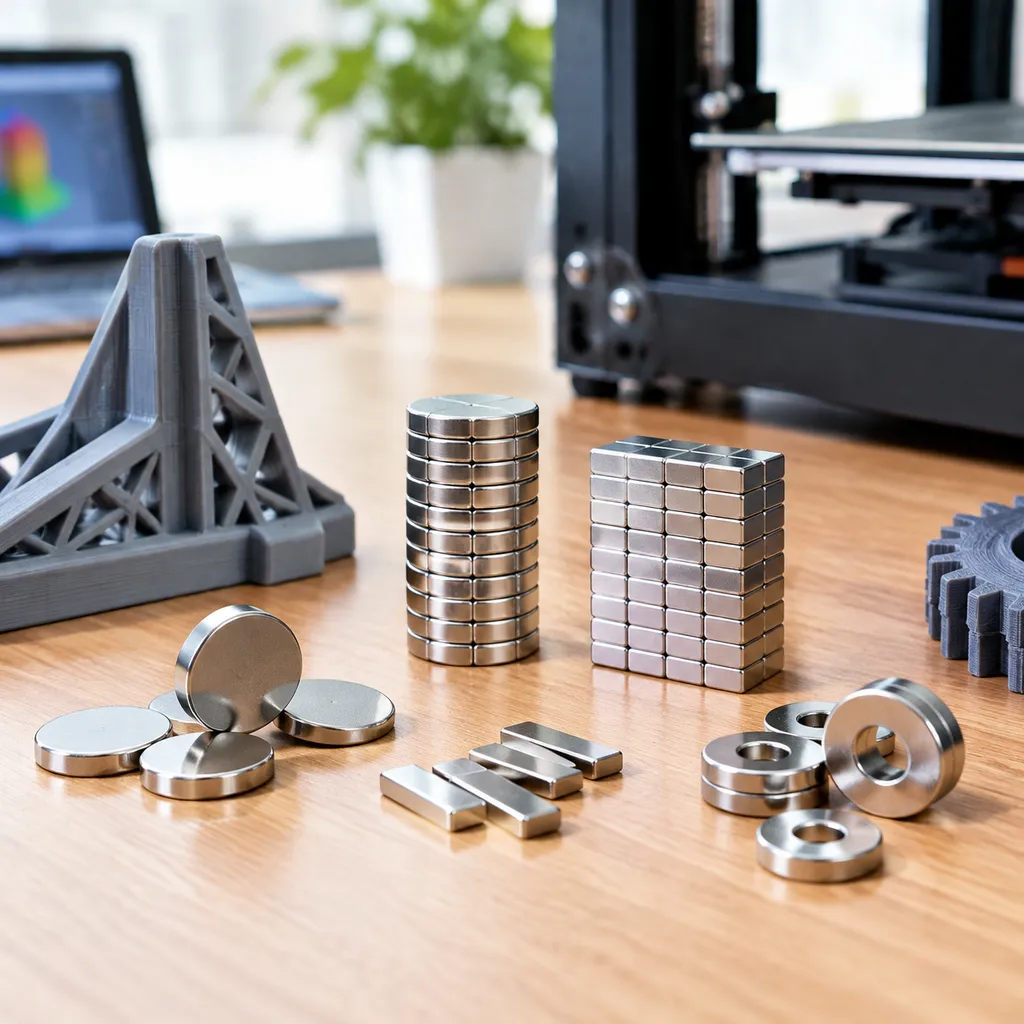
Samarium-Cobalt (SmCo) magnets, which combine cobalt with rare earth elements, have a lower Curie temperature around 300-350 °C. While that’s much lower than pure cobalt, it’s still way higher than typical neodymium magnets. Because of this, SmCo magnets are prized in industries like aerospace and space exploration where magnets must perform reliably at high temperatures, such as in jet engines.
Thanks to this thermal resilience, SmCo magnets remain a go-to choice for harsh, hot environments where others would fail. This makes cobalt’s magnetic properties extremely valuable beyond just raw strength or size.
cURL Too many subrequests by single Worker invocation. To configure this limit, refer to https://developers.cloudflare.com/workers/wrangler/configuration/#limits cURL Too many subrequests by single Worker invocation. To configure this limit, refer to https://developers.cloudflare.com/workers/wrangler/configuration/#limits.
cURL Too many subrequests by single Worker invocation. To configure this limit, refer to https://developers.cloudflare.com/workers/wrangler/configuration/#limits
cURL Too many subrequests by single Worker invocation. To configure this limit, refer to https://developers.cloudflare.com/workers/wrangler/configuration/#limits
cURL Too many subrequests by single Worker invocation. To configure this limit, refer to https://developers.cloudflare.com/workers/wrangler/configuration/#limits
cURL Too many subrequests by single Worker invocation. To configure this limit, refer to https://developers.cloudflare.com/workers/wrangler/configuration/#limits
cURL Too many subrequests by single Worker invocation. To configure this limit, refer to https://developers.cloudflare.com/workers/wrangler/configuration/#limits
cURL Too many subrequests by single Worker invocation. To configure this limit, refer to https://developers.cloudflare.com/workers/wrangler/configuration/#limits
cURL Too many subrequests by single Worker invocation. To configure this limit, refer to https://developers.cloudflare.com/workers/wrangler/configuration/#limits
cURL Too many subrequests by single Worker invocation. To configure this limit, refer to https://developers.cloudflare.com/workers/wrangler/configuration/#limits
cURL Too many subrequests by single Worker invocation. To configure this limit, refer to https://developers.cloudflare.com/workers/wrangler/configuration/#limits cURL Too many subrequests by single Worker invocation. To configure this limit, refer to https://developers.cloudflare.com/workers/wrangler/configuration/#limitscURL Too many subrequests by single Worker invocation. To configure this limit, refer to https://developers.cloudflare.com/workers/wrangler/configuration/#limits
cURL Too many subrequests by single Worker invocation. To configure this limit, refer to https://developers.cloudflare.com/workers/wrangler/configuration/#limits
cURL Too many subrequests by single Worker invocation. To configure this limit, refer to https://developers.cloudflare.com/workers/wrangler/configuration/#limits ferromagnetic cURL Too many subrequests by single Worker invocation. To configure this limit, refer to https://developers.cloudflare.com/workers/wrangler/configuration/#limits
cURL Too many subrequests by single Worker invocation. To configure this limit, refer to https://developers.cloudflare.com/workers/wrangler/configuration/#limits
cURL Too many subrequests by single Worker invocation. To configure this limit, refer to https://developers.cloudflare.com/workers/wrangler/configuration/#limits cURL Too many subrequests by single Worker invocation. To configure this limit, refer to https://developers.cloudflare.com/workers/wrangler/configuration/#limitscURL Too many subrequests by single Worker invocation. To configure this limit, refer to https://developers.cloudflare.com/workers/wrangler/configuration/#limits magnet permanen.
cURL Too many subrequests by single Worker invocation. To configure this limit, refer to https://developers.cloudflare.com/workers/wrangler/configuration/#limits cURL Too many subrequests by single Worker invocation. To configure this limit, refer to https://developers.cloudflare.com/workers/wrangler/configuration/#limits.
cURL Too many subrequests by single Worker invocation. To configure this limit, refer to https://developers.cloudflare.com/workers/wrangler/configuration/#limits
cURL Too many subrequests by single Worker invocation. To configure this limit, refer to https://developers.cloudflare.com/workers/wrangler/configuration/#limits
- Aerospace & Defense: cURL Too many subrequests by single Worker invocation. To configure this limit, refer to https://developers.cloudflare.com/workers/wrangler/configuration/#limits
- Medical Devices (MRI): SmCo magnets provide stable, strong magnetic fields needed in MRI machines, ensuring clear imaging quality without magnetic degradation over time.
- High-Temperature Motors and Generators: These magnets perform reliably in motors and generators exposed to high heat, such as those used in electric vehicles or industrial equipment.
- Oil & Gas Downhole Tools: The harsh environments deep underground demand magnets that can take intense heat and corrosion — cobalt-based magnets fit the bill perfectly.
This practical versatility is why cobalt magnets still hold a strong position despite newer materials emerging.
Future Trends: Will We Still Need Cobalt in Magnets?
The future of cobalt in magnets is a hot topic as researchers push to reduce or even eliminate cobalt use in rare-earth magnets. This is mainly driven by the metal’s cost and ethical sourcing concerns. New materials with less or no cobalt are emerging, aiming to match or exceed the magnetic performance of traditional cobalt-based magnets.
However, the reality today is that samarium-cobalt (SmCo) magnets remain irreplaceable in specific high-demand applications. Their exceptional temperature resistance and stability keep them at the forefront for aerospace, defense, and other industries where reliability under extreme conditions is a must.
While the magnet market evolves, cobalt’s unique magnetic properties and thermal endurance ensure it will still play a critical role—especially in niches where alternatives can’t yet compete. For an in-depth look at permanent magnet uses, including the role of high-temperature magnets, check out this detailed overview of new applications of permanent magnets.
 Indonesian
 English
 German
 Vietnamese
 Spanish (Mexico)
 Russian
 Turkish
 Polish
 Hindi
 Thai
 Malay
 Korean
 Japanese
 French
 Czech
 Danish
 Dutch
 Finnish
 Italian
 Portuguese (Brazil)
 Portuguese (Portugal)
 Slovenian
 Ukrainian
 Hebrew
 Scottish Gaelic
 Hungarian
 Tagalog
 Spanish (Spain)
 Serbian
 Slovak
 Dutch (Belgium)
 Persian
 Arabic
 Romanian
 Estonian
 Greek
 Bulgarian

Tinggalkan Komentar