
Halbach Array vs Normal Array: Direct Performance Compare
When you pit a Halbach array against a conventional magnet layout, the performance gap in the magnetic air gap becomes clear instantly. By precisely rotating the magnetization direction of each magnet segment, a Halbach array funnels nearly all available magnetic force to one single working face. This clever self-shielding design results in a massive boost to the active magnetic flux density—frequently increasing it by up to 44% compared to standard alternating pole configurations.
Standard arrays simply cannot compete on raw efficiency without help. Because a normal array radiates magnetic fields equally from both sides, it suffers from massive two-sided stray fields. To fix this and redirect that wasted energy back toward the target, conventional setups depend heavily on a thick, heavy back iron. This heavy steel backing plate acts as a necessary return path for the magnetic circuit, adding dead weight to your design.
| Metrica di Prestazione | Array di Halbach | Normal Array |
|---|---|---|
| Densità di Flusso Magnetico | Up to 44% higher on the strong face | Standard (requires back iron to maximize) |
| Stray Field Leakage | Near zero on the weak face | High on both sides without shielding |
| Requisito di ferro posteriore | Completely optional / Eliminable | Absolutely critical |
| Air Gap Efficiency | Extremely concentrated and strong | Dispersed and weaker at identical distances |
By eliminating the need for this bulky steel backing, a high-quality Array di Halbach drastically shortens the magnetic circuit. It crams a significantly stronger magnetic field into the exact same physical space, widening the performance gap across any given flux gap. If your application demands maximum torque or lifting power within tight spatial constraints, relying on a conventional magnetic layout means leaving a huge amount of performance on the table.
What’s the Big Deal with Halbach Arrays?
When we design high-performance magnetic systems, the biggest frustration is wasted energy. Standard magnetic layouts naturally radiate magnetic fields equally in both directions. This means you are essentially wasting half of your power on a stray field that loops out the back of the assembly, doing absolutely nothing useful for your motor or actuator.
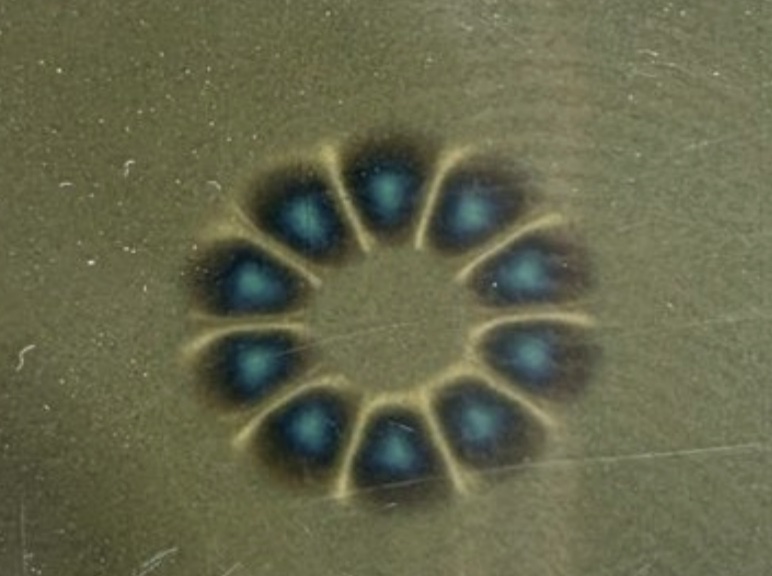
To fix this, we use a spatially rotating magnetization pattern known as a Halbach array. By rotating the orientation of individual magnetic segments by 90 degrees relative to each other, the magnetic fields constructively interfere on one side while canceling each other out on the opposite side.
Standard Array: [N] [S] [N] [S] <– Fields escape both top and bottom
Halbach Array: [→] [↑] [←] [↓] <– Fields cancel on bottom, double on top
This clever arrangement delivers distinct operational advantages:
-
- One Working Face: The magnetic flux is deliberately funneled and concentrated onto a single side, creating a hyper-focused, ultra-strong la densità del flusso magnetico.
- Self-Shielding Design: Because the fields cancel out on the non-working side, the array requires virtually zero heavy steel backing to contain rogue fields.
- Maximum Efficiency: Instead of splitting your magnetic force across two-sided stray fields, you redirect 100% of the useful field exactly where it is needed in the flux gap.
Weight and Build: Which Setup Saves Your Back and Budget?
When we design high-performance motors or magnetic assemblies, weight is money. In the showdown of Halbach Array vs Normal Array, the physical footprint and total mass of your setup can make or break your project’s budget and efficiency.
cURL Too many subrequests by single Worker invocation. To configure this limit, refer to https://developers.cloudflare.com/workers/wrangler/configuration/#limits
cURL Too many subrequests by single Worker invocation. To configure this limit, refer to https://developers.cloudflare.com/workers/wrangler/configuration/#limits
-
- cURL Too many subrequests by single Worker invocation. To configure this limit, refer to https://developers.cloudflare.com/workers/wrangler/configuration/#limits cURL Too many subrequests by single Worker invocation. To configure this limit, refer to https://developers.cloudflare.com/workers/wrangler/configuration/#limits
- cURL Too many subrequests by single Worker invocation. To configure this limit, refer to https://developers.cloudflare.com/workers/wrangler/configuration/#limits cURL Too many subrequests by single Worker invocation. To configure this limit, refer to https://developers.cloudflare.com/workers/wrangler/configuration/#limits cURL Too many subrequests by single Worker invocation. To configure this limit, refer to https://developers.cloudflare.com/workers/wrangler/configuration/#limits.
- cURL Too many subrequests by single Worker invocation. To configure this limit, refer to https://developers.cloudflare.com/workers/wrangler/configuration/#limits cURL Too many subrequests by single Worker invocation. To configure this limit, refer to https://developers.cloudflare.com/workers/wrangler/configuration/#limits
cURL Too many subrequests by single Worker invocation. To configure this limit, refer to https://developers.cloudflare.com/workers/wrangler/configuration/#limits
cURL Too many subrequests by single Worker invocation. To configure this limit, refer to https://developers.cloudflare.com/workers/wrangler/configuration/#limits
-
- cURL Too many subrequests by single Worker invocation. To configure this limit, refer to https://developers.cloudflare.com/workers/wrangler/configuration/#limits cURL Too many subrequests by single Worker invocation. To configure this limit, refer to https://developers.cloudflare.com/workers/wrangler/configuration/#limits
- cURL Too many subrequests by single Worker invocation. To configure this limit, refer to https://developers.cloudflare.com/workers/wrangler/configuration/#limits cURL Too many subrequests by single Worker invocation. To configure this limit, refer to https://developers.cloudflare.com/workers/wrangler/configuration/#limits
- cURL Too many subrequests by single Worker invocation. To configure this limit, refer to https://developers.cloudflare.com/workers/wrangler/configuration/#limits cURL Too many subrequests by single Worker invocation. To configure this limit, refer to https://developers.cloudflare.com/workers/wrangler/configuration/#limits cURL Too many subrequests by single Worker invocation. To configure this limit, refer to https://developers.cloudflare.com/workers/wrangler/configuration/#limits cURL Too many subrequests by single Worker invocation. To configure this limit, refer to https://developers.cloudflare.com/workers/wrangler/configuration/#limits
cURL Too many subrequests by single Worker invocation. To configure this limit, refer to https://developers.cloudflare.com/workers/wrangler/configuration/#limits
cURL Too many subrequests by single Worker invocation. To configure this limit, refer to https://developers.cloudflare.com/workers/wrangler/configuration/#limits
-
- cURL Too many subrequests by single Worker invocation. To configure this limit, refer to https://developers.cloudflare.com/workers/wrangler/configuration/#limits cURL Too many subrequests by single Worker invocation. To configure this limit, refer to https://developers.cloudflare.com/workers/wrangler/configuration/#limits
- Veicoli Elettrici (EV): cURL Too many subrequests by single Worker invocation. To configure this limit, refer to https://developers.cloudflare.com/workers/wrangler/configuration/#limits
- cURL Too many subrequests by single Worker invocation. To configure this limit, refer to https://developers.cloudflare.com/workers/wrangler/configuration/#limits cURL Too many subrequests by single Worker invocation. To configure this limit, refer to https://developers.cloudflare.com/workers/wrangler/configuration/#limits
The Nightmare of Halbach Assembly (And Why Normal Arrays Win Here)
Building a Halbach array vs normal array project brings you face-to-face with a massive manufacturing hurdle: severe magnetic repulsion. While a standard array uses a straightforward alternating pole geometry, a Halbach array forces magnets together at 90-degree angles. They do not want to sit next to each other. During assembly, these magnets will actively fight you, twisting and flying out of alignment with incredible force.
The True Cost of Forcing Magnets Together
Overcoming these magnetic forces requires heavy investment in specialized tooling and precise manufacturing processes:
-
- Insane Mechanical Repulsion: Forcing identical or orthogonal poles together means the magnets violently repel each other during the curing and bonding process.
- Expensive Specialized Fixtures: You cannot build these by hand. You need heavy-duty, non-magnetic clamping fixtures to lock each piece in place while the structural adhesive sets.
- High Automation Barriers: Scaling up production requires automated robotic assembly lines capable of handling extreme physical resistance, which rapidly pushes up your initial setup costs.
Why Conventional Arrays Stay the Budget Favorite
If you want a painless, drop-in assembly process, conventional alternating layouts are the clear winner. Standard arrays feature magnets that naturally pull into place or require basic, low-cost alignment slots.
When your project demands simple manufacturing without specialized industrial jigs, sticking to conventional arrays saves massive amounts of time and frustration. If you are experimenting with simpler magnet placements or prototyping basic sensors, utilizing standard magneti rotondi con foro e senza foro provides a predictable, budget-friendly setup that keeps production moving without the mechanical headaches of a complex Halbach build.
Temperature and Thermal Limits: Halbach Array vs Normal Array
Managing heat is where the debate between a Halbach array vs normal array gets critical. While Halbach configurations offer incredible magnetic efficiency, they have a major vulnerability: a high susceptibility to self-demagnetization under thermal stress. Because the magnets are forced into conflicting orientations, they constantly fight against each other’s fields, making them highly unstable as temperatures rise.
Thermal Breakdown Behavior Above 80°C
Standard neodymium magnets used in these configurations often face thermal breakdown behavior above 80°C. In a conventional alternating pole geometry, a temperature spike might just cause a temporary drop in performance. In a Halbach setup, however, that same heat combined with internal stress can permanently erase the magnetic alignment.
-
- Internal Stress: Strong opposing internal demagnetization fields continuously push the material to its limits.
- Perdita Irreversibile: Exceeding the working temperature limit triggers permanent performance degradation.
- Cooling Demands: Halbach arrays require aggressive thermal management or active cooling in tight spaces.
Choosing High-Coercivity Magnet Alloys for Harsh Environments
To prevent catastrophic failure in high-load applications like EVs or aerospace, we must carefully select the right raw materials. For environments that regularly push past standard limits, switching to magneti SmCo ad alte prestazioni or specialized high-coercivity NdFeB grades is non-negotiable.
| Magnet Material Type | Temperatura massima di funzionamento | Resistenza alla smagnetizzazione | Ideal Array Choice |
|---|---|---|---|
| Standard NdFeB | 80°C – 120°C | Basso a Medio | Normal Array |
| High-Coercivity NdFeB | 150°C – 200°C | Alta | cURL Too many subrequests by single Worker invocation. To configure this limit, refer to https://developers.cloudflare.com/workers/wrangler/configuration/#limits |
| cURL Too many subrequests by single Worker invocation. To configure this limit, refer to https://developers.cloudflare.com/workers/wrangler/configuration/#limits | cURL Too many subrequests by single Worker invocation. To configure this limit, refer to https://developers.cloudflare.com/workers/wrangler/configuration/#limits | cURL Too many subrequests by single Worker invocation. To configure this limit, refer to https://developers.cloudflare.com/workers/wrangler/configuration/#limits | cURL Too many subrequests by single Worker invocation. To configure this limit, refer to https://developers.cloudflare.com/workers/wrangler/configuration/#limits |
cURL Too many subrequests by single Worker invocation. To configure this limit, refer to https://developers.cloudflare.com/workers/wrangler/configuration/#limits magnetizzazione e demagnetizzazione dei magneti permanenti cURL Too many subrequests by single Worker invocation. To configure this limit, refer to https://developers.cloudflare.com/workers/wrangler/configuration/#limits
cURL Too many subrequests by single Worker invocation. To configure this limit, refer to https://developers.cloudflare.com/workers/wrangler/configuration/#limits
cURL Too many subrequests by single Worker invocation. To configure this limit, refer to https://developers.cloudflare.com/workers/wrangler/configuration/#limits
cURL Too many subrequests by single Worker invocation. To configure this limit, refer to https://developers.cloudflare.com/workers/wrangler/configuration/#limits
cURL Too many subrequests by single Worker invocation. To configure this limit, refer to https://developers.cloudflare.com/workers/wrangler/configuration/#limits
-
- cURL Too many subrequests by single Worker invocation. To configure this limit, refer to https://developers.cloudflare.com/workers/wrangler/configuration/#limits cURL Too many subrequests by single Worker invocation. To configure this limit, refer to https://developers.cloudflare.com/workers/wrangler/configuration/#limits 94%cURL Too many subrequests by single Worker invocation. To configure this limit, refer to https://developers.cloudflare.com/workers/wrangler/configuration/#limits
- cURL Too many subrequests by single Worker invocation. To configure this limit, refer to https://developers.cloudflare.com/workers/wrangler/configuration/#limits cURL Too many subrequests by single Worker invocation. To configure this limit, refer to https://developers.cloudflare.com/workers/wrangler/configuration/#limits 87%cURL Too many subrequests by single Worker invocation. To configure this limit, refer to https://developers.cloudflare.com/workers/wrangler/configuration/#limits
cURL Too many subrequests by single Worker invocation. To configure this limit, refer to https://developers.cloudflare.com/workers/wrangler/configuration/#limits
cURL Too many subrequests by single Worker invocation. To configure this limit, refer to https://developers.cloudflare.com/workers/wrangler/configuration/#limits
| Metrica di Prestazione | cURL Too many subrequests by single Worker invocation. To configure this limit, refer to https://developers.cloudflare.com/workers/wrangler/configuration/#limits | Array di Halbach |
|---|---|---|
| cURL Too many subrequests by single Worker invocation. To configure this limit, refer to https://developers.cloudflare.com/workers/wrangler/configuration/#limits | 87% | 94% |
| cURL Too many subrequests by single Worker invocation. To configure this limit, refer to https://developers.cloudflare.com/workers/wrangler/configuration/#limits | Linea di base (1.0x) | cURL Too many subrequests by single Worker invocation. To configure this limit, refer to https://developers.cloudflare.com/workers/wrangler/configuration/#limits |
| cURL Too many subrequests by single Worker invocation. To configure this limit, refer to https://developers.cloudflare.com/workers/wrangler/configuration/#limits | cURL Too many subrequests by single Worker invocation. To configure this limit, refer to https://developers.cloudflare.com/workers/wrangler/configuration/#limits | Negligible on the weak side |
| Stator Core Losses | Moderata o alta | Ultra-low |
When to Ditch the Back Iron Completely
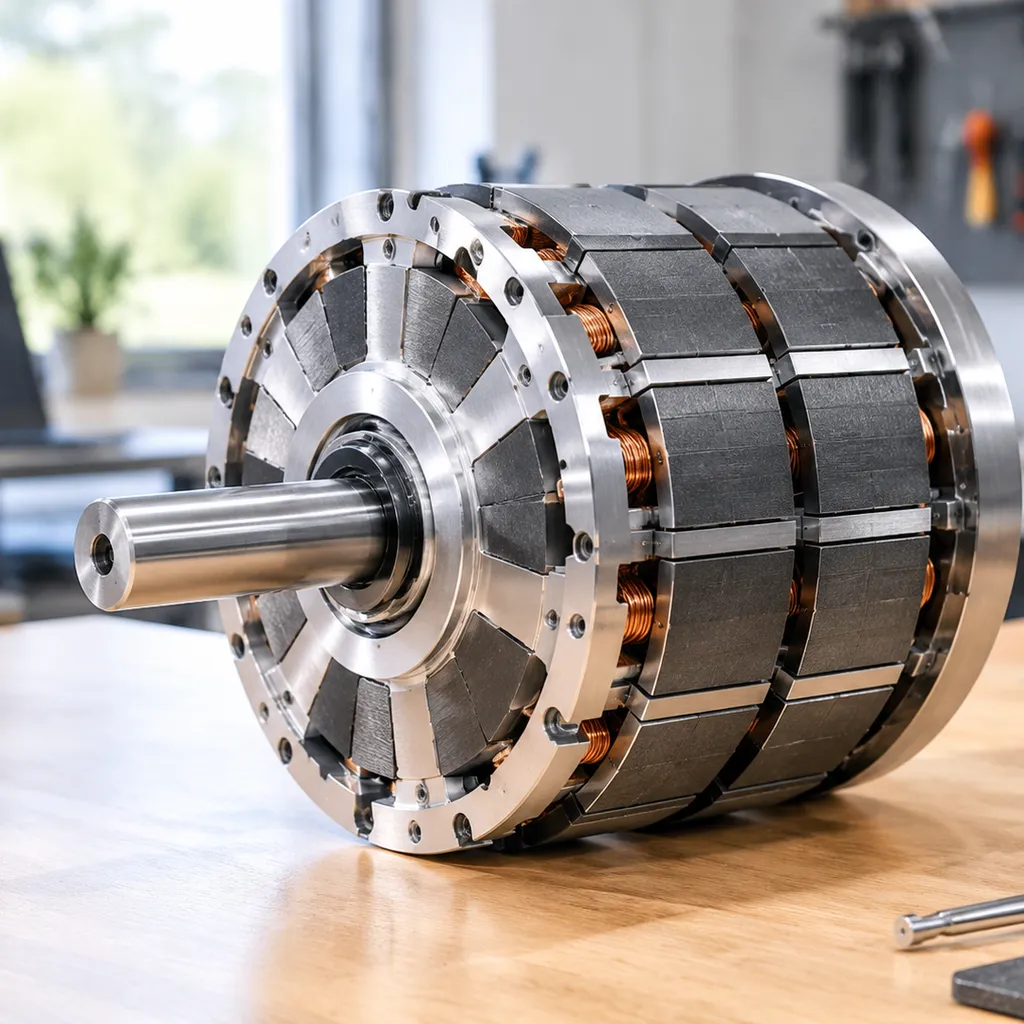
You can ditch the heavy back iron entirely when utilizing a Halbach array in coreless electric motors. Because the spatially rotating magnetization inherently redirects the magnetic circuit back into the active flux gap, the heavy steel backing plate becomes redundant. Removing this structural dead weight allows you to build ultra-lightweight, high-RPM motors that run cooler and deliver immediate throttle response.
FAQs About Halbach and Normal Magnet Arrays
Can you make a flexible Halbach array at home?
Yes, you can create a basic version using flexible magnetic sheets or small neodymium blocks. By rotating the magnetization direction of each subsequent magnet by 90 degrees before gluing them down, you can replicate the effect. However, achieving perfect alignment without specialized fixtures is tough, and DIY versions won’t match the precise magnetic flux density of a professionally manufactured Array di Halbach.
Why doesn’t every electric motor use Halbach arrays?
While they offer incredible power density, they aren’t a cure-all. The main roadblocks are manufacturing complexity and cost. Standard alternating pole geometry is much easier to assemble using automated machinery. For everyday appliances where weight isn’t a critical factor, the high production cost of a spatially rotating magnetization setup simply doesn’t justify the minor efficiency gains.
Do Halbach arrays require special shielding on the weak side?
Generally, no. One of the biggest perks of this self-shielding design is that the magnetic stray field on the non-working face is naturally cancelled out. This eliminates the need for heavy back iron or extra shielding plates. It is a massive advantage for weight-sensitive applications like drones and aerospace electronics where stray magnetism could disrupt sensitive instruments.
How much more expensive is a Halbach array compared to a standard layout?
Cost Premium: A Halbach array typically costs 1.5x to 3x more than a conventional magnet array.
The price gap boils down to three main factors:
Assembly Labor: Fighting the intense magnetic repulsion during manufacturing requires complex, heavy-duty jigs.
Magnet Segmentation: You need more individual magnet pieces with precise, multi-directional orientation.
Scrap Rates: The risk of magnets chipping or misaligning during high-volume production drives up waste and initial setup costs.

 Italian
 English
 German
 Vietnamese
 Spanish (Mexico)
 Russian
 Turkish
 Polish
 Hindi
 Thai
 Malay
 Korean
 Japanese
 French
 Czech
 Danish
 Dutch
 Finnish
 Portuguese (Brazil)
 Portuguese (Portugal)
 Slovenian
 Ukrainian
 Hebrew
 Scottish Gaelic
 Hungarian
 Tagalog
 Spanish (Spain)
 Serbian
 Indonesian
 Slovak
 Dutch (Belgium)
 Persian
 Arabic
 Romanian
 Estonian
 Greek
 Bulgarian

Lascia un commento