
Ceiling Fan Wobbling Causes and Magnetic Solutions
Have you ever looked up at a shaking ceiling fan and wondered if it was about to fly off the ceiling? You are not alone. A rattling fan is a universal nuisance that plagues millions of households and commercial spaces worldwide. While most people tolerate the annoying clicking sounds and rhythmic swaying as minor inconveniences, a shaky fan is often a warning sign of deeper mechanical or electrical failure.
Ignoring a wobbly ceiling fan carries severe hidden risks. According to safety data from agencies like the CPSC, structural failures can lead to falling fixtures, property damage, and personal injury. Beyond the immediate safety hazards, the downstream costs are substantial. Continuous wobbling accelerates bearing wear and structural fatigue, permanently damaging the motor stator and rotor. What starts as a simple alignment issue quickly escalates into a complete system replacement.
Resolving this widespread issue requires looking beyond temporary fixes. While external adjustments can help, the ultimate solution lies in advanced motor engineering. True stability is achieved by addressing internal 자기장 균일성 and adopting next-generation component designs that eliminate motor vibration at its source.
Diagnostic Blueprint: Why Do Ceiling Fans Wobble?
When a ceiling fan starts shaking, it is rarely a single, isolated issue. The root ceiling fan wobbling causes generally split into two categories: obvious external mechanical issues or hidden, internal motor-driven engineering flaws. Understanding exactly what triggers this instability is the only way to implement permanent 자성 솔루션 instead of temporary fixes.
2.1 External & Mechanical Catalysts (The DIY Fixes)
Most homeowners and maintenance teams face basic mechanical imbalances first. These are the straightforward, external culprits behind a shaky fan:
- Dust Accumulation: Even a few grams of unevenly distributed dust on the top of the blades can completely throw off the fan’s balance during high-speed rotation.
- Fastener Laxity: Over time, operational vibrations lead to loose blade irons and stripped screws. If the brackets connecting the blades to the motor housing loosen even a fraction of a millimeter, the fan will wobble.
- Structural Deficiencies: Warped blades, mismatched replacement parts, or a loose ceiling junction box fail to provide the rigid support required for smooth operation.
2.2 Internal & Motor-Driven Flaws (The Engineering Root Causes)
When cleaning and tightening hardware fails, the issue lies deeper within the motor assembly itself. For manufacturers and engineers, resolving ceiling fan motor vibration requires addressing the internal physics of the rotor.
+————————–+———————————————————+
| Internal Root Cause | Physical Impact on Fan Stability |
+————————–+———————————————————+
| Rotor Radial Runout | Causes physical eccentricity; the rotor spins off-axis. |
| — | — |
| Magnetic Asymmetry | Creates uneven pulling forces, shifting the centerline. |
+————————–+———————————————————+
Rotor Radial Runout
Rotor eccentricity runout occurs when the rotating component of the motor deviates from its true center axis. This physical misalignment creates a heavy side during rotation. The resulting centrifugal force inflicts severe bearing wear and structural fatigue, which rapidly shortens the overall lifespan of the motor.
Magnetic Asymmetry
Traditional permanent magnet motor balancing relies on gluing individual magnetic tiles around the rotor. If these tiles vary slightly in magnetic strength, composition, or positioning, the motor experiences magnetic asymmetry. This uneven magnetic field creates localized, fluctuating pull forces against the stator. Even if a rotor is perfectly balanced mechanically, this magnetic imbalance triggers an inevitable, aggressive shake during operation.
cURL Too many subrequests by single Worker invocation. To configure this limit, refer to https://developers.cloudflare.com/workers/wrangler/configuration/#limits 페라이트 자석과 네오디뮴 자석 비교 cURL Too many subrequests by single Worker invocation. To configure this limit, refer to https://developers.cloudflare.com/workers/wrangler/configuration/#limits
cURL Too many subrequests by single Worker invocation. To configure this limit, refer to https://developers.cloudflare.com/workers/wrangler/configuration/#limits
cURL Too many subrequests by single Worker invocation. To configure this limit, refer to https://developers.cloudflare.com/workers/wrangler/configuration/#limits ceiling fan wobbling causescURL Too many subrequests by single Worker invocation. To configure this limit, refer to https://developers.cloudflare.com/workers/wrangler/configuration/#limits
cURL Too many subrequests by single Worker invocation. To configure this limit, refer to https://developers.cloudflare.com/workers/wrangler/configuration/#limits
cURL Too many subrequests by single Worker invocation. To configure this limit, refer to https://developers.cloudflare.com/workers/wrangler/configuration/#limits
- cURL Too many subrequests by single Worker invocation. To configure this limit, refer to https://developers.cloudflare.com/workers/wrangler/configuration/#limits cURL Too many subrequests by single Worker invocation. To configure this limit, refer to https://developers.cloudflare.com/workers/wrangler/configuration/#limits ceiling fan motor vibration.
- cURL Too many subrequests by single Worker invocation. To configure this limit, refer to https://developers.cloudflare.com/workers/wrangler/configuration/#limits cURL Too many subrequests by single Worker invocation. To configure this limit, refer to https://developers.cloudflare.com/workers/wrangler/configuration/#limits loose blade irons cURL Too many subrequests by single Worker invocation. To configure this limit, refer to https://developers.cloudflare.com/workers/wrangler/configuration/#limits
- cURL Too many subrequests by single Worker invocation. To configure this limit, refer to https://developers.cloudflare.com/workers/wrangler/configuration/#limits cURL Too many subrequests by single Worker invocation. To configure this limit, refer to https://developers.cloudflare.com/workers/wrangler/configuration/#limits
cURL Too many subrequests by single Worker invocation. To configure this limit, refer to https://developers.cloudflare.com/workers/wrangler/configuration/#limits
cURL Too many subrequests by single Worker invocation. To configure this limit, refer to https://developers.cloudflare.com/workers/wrangler/configuration/#limits
| cURL Too many subrequests by single Worker invocation. To configure this limit, refer to https://developers.cloudflare.com/workers/wrangler/configuration/#limits | cURL Too many subrequests by single Worker invocation. To configure this limit, refer to https://developers.cloudflare.com/workers/wrangler/configuration/#limits | cURL Too many subrequests by single Worker invocation. To configure this limit, refer to https://developers.cloudflare.com/workers/wrangler/configuration/#limits |
|---|---|---|
| cURL Too many subrequests by single Worker invocation. To configure this limit, refer to https://developers.cloudflare.com/workers/wrangler/configuration/#limits | cURL Too many subrequests by single Worker invocation. To configure this limit, refer to https://developers.cloudflare.com/workers/wrangler/configuration/#limits | cURL Too many subrequests by single Worker invocation. To configure this limit, refer to https://developers.cloudflare.com/workers/wrangler/configuration/#limits |
| cURL Too many subrequests by single Worker invocation. To configure this limit, refer to https://developers.cloudflare.com/workers/wrangler/configuration/#limits | cURL Too many subrequests by single Worker invocation. To configure this limit, refer to https://developers.cloudflare.com/workers/wrangler/configuration/#limits | cURL Too many subrequests by single Worker invocation. To configure this limit, refer to https://developers.cloudflare.com/workers/wrangler/configuration/#limits |
If one blade sits lower than the rest, gently nudge the blade iron upward or check if the bracket itself is bent. Vertical misalignment forces the fan out of its natural plane, causing severe rotor eccentricity runout.
Step 3: Utilizing a Standard Balancing Kit
When cleaning and tightening do not solve the problem, the issue is an internal weight imbalance. You can correct this using a plastic clip and adhesive weights found in a standard ceiling fan balancing kit.
- Test with the Clip: Slide the plastic balancing clip onto the middle of any blade. Turn the fan on to check the wobble. Repeat this process on every single blade, noting which placement reduces the shaking the most.
- Find the Sweet Spot: Once you identify the problem blade, move the clip inward and outward along that specific blade’s edge. Stop where the fan runs the smoothest.
- Apply the Permanent Weight: Peel the backing off the adhesive weight from the kit. Stick it directly on the top centerline of the blade, right next to where the plastic clip was positioned. Remove the test clip.
Pro Tip: If standard balancing kits only offer a temporary fix, the underlying issue might not be external weight at all. Advanced systems require uniform magnetic performance. To understand how material design solves these deep-seated motor issues, explore how manufacturers utilize 고성능 자성 소재 to achieve perfect permanent magnet motor balancing straight from the factory.
The Engineering Bottleneck: Why Traditional Motor Magnets Fail
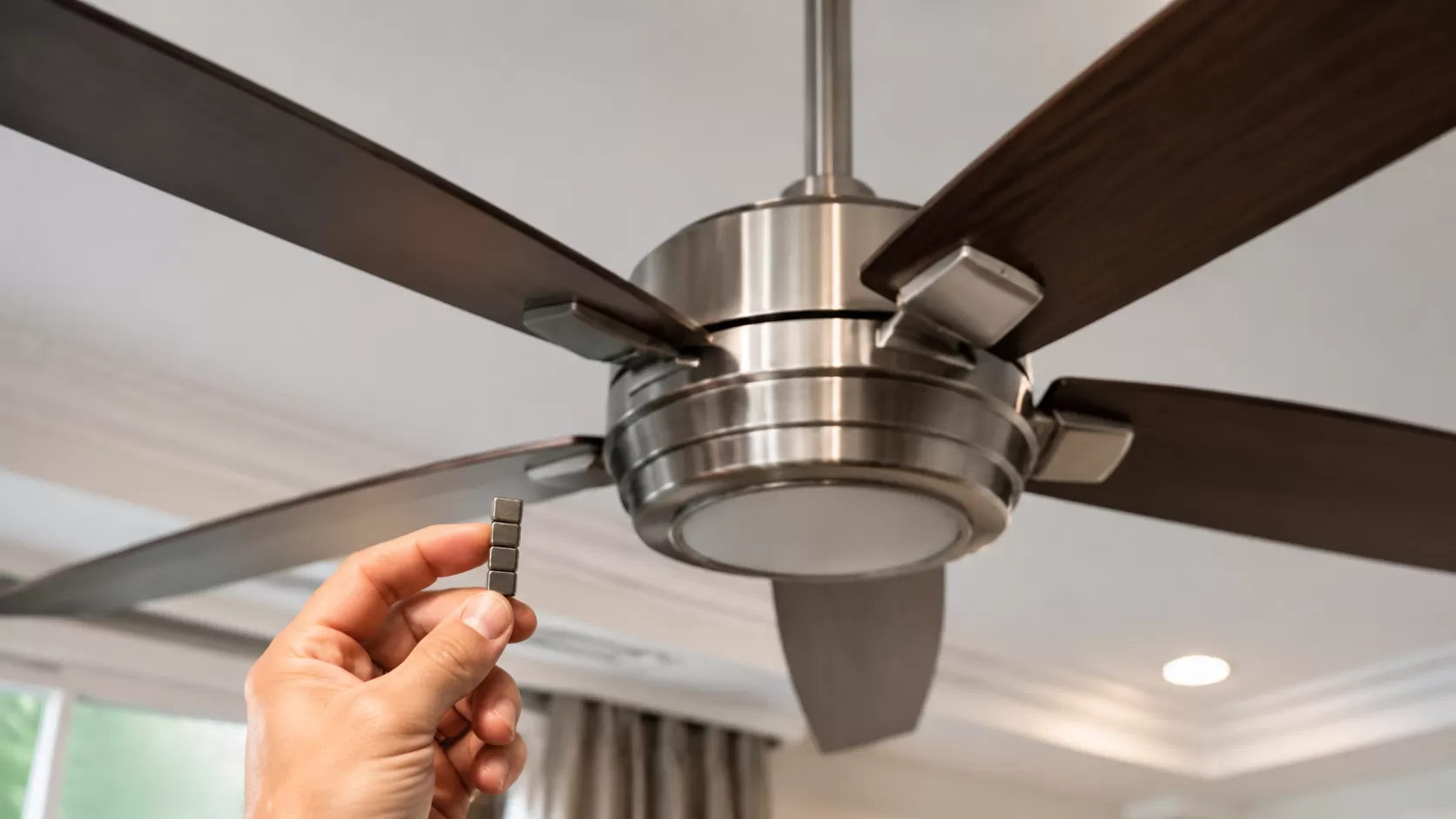
When troubleshooting a shaky ceiling fan, most people blame the blades. However, the true culprit of chronic ceiling fan motor vibration often lies deep within the motor core. Traditional permanent magnet motors rely on multiple separate magnetic tile segments glued along the rotor casing. This legacy design creates a massive engineering bottleneck that guarantees motor stator and rotor failure 이 시간에 따라 유지되는지에 달려 있습니다.
The Multi-Tile Segment Vulnerability
Using individual magnetic tiles introduces severe manufacturing variances. If even one tile is microscopicly misaligned or varies slightly in mass, it disrupts the 자기장 균일성. This imbalance triggers rotor eccentricity runout, causing the motor to pull unevenly during rotation. No matter how many times you adjust a external balancing kit, you cannot fix an internal magnetic pull that is fundamentally off-center.
Traditional Magnetic Tile Adhesive Aging
The Achilles’ heel of this design is the glue. Ceiling fan motors generate constant internal heat, and after years of thermal cycles, traditional magnetic tile adhesive aging is inevitable.
- Adhesive Degradation: The glue becomes brittle, cracks, and loses its grip.
- Magnet Shifting: Micro-shifts in tile positioning alter the magnetic gaps.
- Structural Fatigue: The shifting weight distribution accelerates bearing wear and structural fatigue.
The Cascade Effect
Once adhesive degradation starts, it triggers a destructive cascade effect. A tiny shift in a single magnet amplifies the mechanical wobble. This wobble puts uneven force on the bearings, destroying the seals and causing the fan to loud, grind, and shake violently. To prevent these costly issues, manufacturers must move away from piecemeal designs and focus on precision 자磁 가공 and advanced single-piece components to secure true rotational balance.
cURL Too many subrequests by single Worker invocation. To configure this limit, refer to https://developers.cloudflare.com/workers/wrangler/configuration/#limits
cURL Too many subrequests by single Worker invocation. To configure this limit, refer to https://developers.cloudflare.com/workers/wrangler/configuration/#limits
cURL Too many subrequests by single Worker invocation. To configure this limit, refer to https://developers.cloudflare.com/workers/wrangler/configuration/#limits cURL Too many subrequests by single Worker invocation. To configure this limit, refer to https://developers.cloudflare.com/workers/wrangler/configuration/#limits cURL Too many subrequests by single Worker invocation. To configure this limit, refer to https://developers.cloudflare.com/workers/wrangler/configuration/#limits
cURL Too many subrequests by single Worker invocation. To configure this limit, refer to https://developers.cloudflare.com/workers/wrangler/configuration/#limits 네오디뮴 자석의 품질 cURL Too many subrequests by single Worker invocation. To configure this limit, refer to https://developers.cloudflare.com/workers/wrangler/configuration/#limits
cURL Too many subrequests by single Worker invocation. To configure this limit, refer to https://developers.cloudflare.com/workers/wrangler/configuration/#limits
cURL Too many subrequests by single Worker invocation. To configure this limit, refer to https://developers.cloudflare.com/workers/wrangler/configuration/#limits
- cURL Too many subrequests by single Worker invocation. To configure this limit, refer to https://developers.cloudflare.com/workers/wrangler/configuration/#limits cURL Too many subrequests by single Worker invocation. To configure this limit, refer to https://developers.cloudflare.com/workers/wrangler/configuration/#limits
- cURL Too many subrequests by single Worker invocation. To configure this limit, refer to https://developers.cloudflare.com/workers/wrangler/configuration/#limits cURL Too many subrequests by single Worker invocation. To configure this limit, refer to https://developers.cloudflare.com/workers/wrangler/configuration/#limits ceiling fan motor vibration.
- cURL Too many subrequests by single Worker invocation. To configure this limit, refer to https://developers.cloudflare.com/workers/wrangler/configuration/#limits cURL Too many subrequests by single Worker invocation. To configure this limit, refer to https://developers.cloudflare.com/workers/wrangler/configuration/#limits
- cURL Too many subrequests by single Worker invocation. To configure this limit, refer to https://developers.cloudflare.com/workers/wrangler/configuration/#limits cURL Too many subrequests by single Worker invocation. To configure this limit, refer to https://developers.cloudflare.com/workers/wrangler/configuration/#limits bearing wear and structural fatiguecURL Too many subrequests by single Worker invocation. To configure this limit, refer to https://developers.cloudflare.com/workers/wrangler/configuration/#limits
cURL Too many subrequests by single Worker invocation. To configure this limit, refer to https://developers.cloudflare.com/workers/wrangler/configuration/#limits
cURL Too many subrequests by single Worker invocation. To configure this limit, refer to https://developers.cloudflare.com/workers/wrangler/configuration/#limits cURL Too many subrequests by single Worker invocation. To configure this limit, refer to https://developers.cloudflare.com/workers/wrangler/configuration/#limits.
| 성능 지표 | cURL Too many subrequests by single Worker invocation. To configure this limit, refer to https://developers.cloudflare.com/workers/wrangler/configuration/#limits | cURL Too many subrequests by single Worker invocation. To configure this limit, refer to https://developers.cloudflare.com/workers/wrangler/configuration/#limits |
|---|---|---|
| cURL Too many subrequests by single Worker invocation. To configure this limit, refer to https://developers.cloudflare.com/workers/wrangler/configuration/#limits | cURL Too many subrequests by single Worker invocation. To configure this limit, refer to https://developers.cloudflare.com/workers/wrangler/configuration/#limits | Excellent (100% continuous) |
| Structural Balance | Requires heavy post-production weights | Inherently self-balancing |
| Thermal Resistance | Weak (glue degrades under heat) | High (polymers withstand high temps) |
| 조립 정밀도 | Low (relies on manual placement) | High (automated injection molding) |
By optimizing the magnetic circuit and ensuring a completely consistent air gap between the stator and rotor, the motor draws less power while delivering identical airflow. The result is a completely silent, wobble-free ceiling fan that runs cooler and consumes noticeably less energy.
B2B Industry Spotlight: NBAEM’s Magnetic Solutions for Seamless Fan Engineering
At NBAEM, we solve the engineering bottlenecks that cause ceiling fan wobbling. As a premier manufacturer of high-performance magnetic materials, we supply global Original Equipment Manufacturers (OEMs) with the precise components needed to eliminate motor stator and rotor failure. By replacing unstable multi-tile setups with our advanced 적층 코어 and integrated rings, we help brands deliver whisper-quiet, wobble-free ventilation products to the global market.
Tailored Technical Integration
We don’t believe in one-size-fits-all manufacturing. Our engineering team collaborates directly with your R&D department to customize magnetic properties, dimensions, and pole configurations for your specific motor designs. Whether you are optimizing high-efficiency Brushless DC (BLDC) fan motors or upgrading traditional AC models, our tailored integration ensures perfect alignment, maximum magnetic field uniformity, and zero rotor eccentricity runout.
Why Global OEMs Partner with NBAEM
Global brands trust us to secure their supply chain and elevate their product reliability. We combine advanced material science with strict industrial quality control to eliminate the structural risks that lead to bearing wear and structural fatigue.
| Partner Advantages | What NBAEM Delivers | OEM Business Impact |
|---|---|---|
| 정밀 엔지니어링 | Zero-tolerance manufacturing that minimizes ceiling fan motor vibration. | Drastically reduces product return rates and warranty claims. |
| Material Longevity | Eliminates traditional magnetic tile adhesive aging issues completely. | Extends the operational lifespan of the ceiling fan. |
| Scalable Supply | Large-scale production capacity for various magnet shapes and custom assemblies. | Ensures seamless just-in-time delivery for global assembly lines. |
| Global Standards | Full compliance with international safety and performance regulations. | Smooths the pathway for international market certification. |
 Korean
  English
  German
  Vietnamese
  Spanish (Mexico)
  Russian
  Turkish
  Polish
  Hindi
Hindi  Thai
Thai  Malay
Malay  Japanese
  French
  Czech
Czech  Danish
  Dutch
Dutch  Finnish
  Italian
  Portuguese (Brazil)
  Portuguese (Portugal)
  Slovenian
  Ukrainian
  Hebrew
  Scottish Gaelic
  Hungarian
  Tagalog
  Spanish (Spain)
  Serbian
  Indonesian
  Slovak
  Dutch (Belgium)
  Persian
  Arabic
  Romanian
  Estonian
  Greek
Greek  Bulgarian

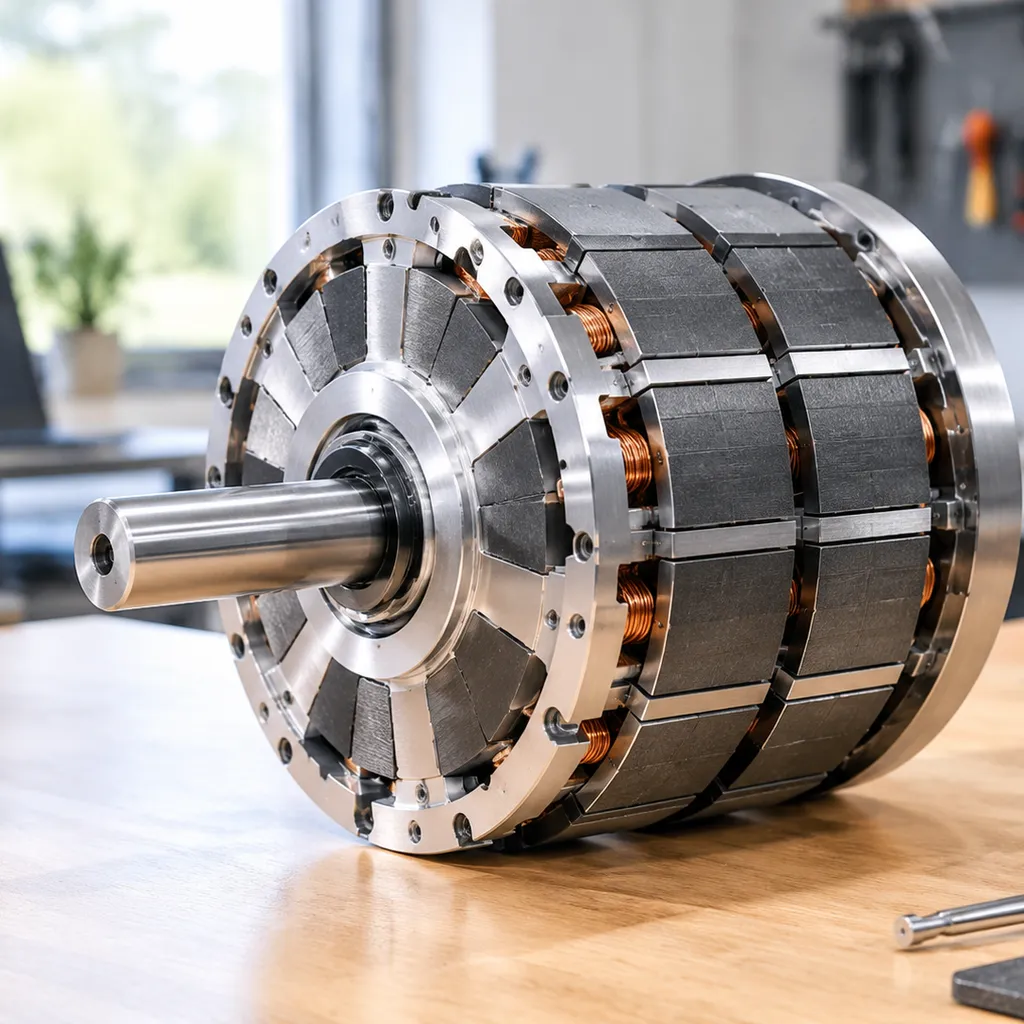
[…] in high-speed axial flux applications. Avoiding common mechanical balance issues like those seen in preventing ceiling fan wobbling with magnetic tracking, our precise material pairing ensures perfect dynamic balance and uniform magnetic fields across […]