
Are you pushing your compact actuator to its limits, only to watch your torque output suddenly drop off a cliff?
When integrating a frameless torque motor, frameless motor magnet demagnetization is one of the fastest—and most expensive—ways to permanently ruin a high-performance build. Because these motors rely entirely on your custom housing to pull heat away, a single peak current spike combined with trapped stator heat can silently push your rotor magnets past their point of no return.
In this guide, you’ll learn exactly what triggers irreversible torque loss, how to compare NdFeB and SmCo magnet grades for extreme environments, and the practical current and thermal limits you need to set to protect your hardware.
Let’s dive in!
Reversible vs. Irreversible Demagnetization in Frameless Motors
When a frameless torque motor loses torque output under heavy duty cycles, the root cause often comes down to frameless motor magnet demagnetization. To troubleshoot or prevent permanent flux loss on the bench, you first need to separate temporary thermal dips from permanent structural damage inside the rotor magnets.
Reading the Second-Quadrant B-H Curve (The “Knee” Point)
Every permanent magnet operates along the second quadrant of its B-H demagnetization curve, which tracks how magnetic flux density (Br, or remanence) holds up against opposing magnetic fields and heat.
-
- Reversible Flux Loss: As winding temperatures rise, a magnet naturally loses a small percentage of its flux density (Br). Once the motor cools back down, full magnetic strength returns with zero permanent harm.
- Irreversible Demagnetization Knee Point: Intrinsic coercivity (Hcj) measures a magnet’s resistance to being demagnetized. High heat pushes the Hcj curve downward, creating a sharp bend known as the “knee.” If the motor’s operating point drops below this knee under load, magnetic domains permanently misalign—and cooling the motor will never restore lost torque.
Why Frameless Architectures Face Unique Demagnetization Risks
Unlike traditional housed motors, a frameless stator-rotor kit ships without an enclosure, endbells, bearings, or built-in cooling fins. You integrate the active electromagnetic components directly into your own mechanical assembly.
In tightly packaged robotics joints, cobot actuators, and aerospace gimbals, space constraints often leave minimal room for heat sinks or airflow. Because the rotor sits directly inside the stator bore with no external cooling path, heat from peak torque bursts transfers straight across the air gap into the magnets, accelerating frameless motor magnet demagnetization much faster than in standard frame-mounted motors.
Primary Causes of Frameless Motor Magnet Demagnetization
When a compact joint actuator suddenly starts drawing higher phase current just to hold a routine payload, frameless motor magnet demagnetization is usually the root cause. Unlike housed motors with built-in cooling fins and rigid endbells, frameless kits rely completely on your surrounding mechanical structure to manage heat and magnetic stress. If one variable slips during integration, permanent flux loss follows quickly.
Thermal Overload and Air-Gap Heat Transfer
In tightly packaged joints, stator copper losses ($I^2R$) are the biggest threat to rotor health. Because a frameless rotor sits inside a narrow air gap without dedicated airflow, radiant heat from the stator windings transfers straight into the permanent magnets.
-
- Exceeding Tmax: Once heat pushes the magnets past their maximum continuous operating temperature ($T_{max}$), their intrinsic coercivity ($H_{cj}$) drops sharply.
- Approaching the Curie Point: If a stalled actuator cooks the windings near the Curie temperature ($T_c$), the magnetic domains randomize completely, wiping out torque output for good.
cURL Too many subrequests by single Worker invocation. To configure this limit, refer to https://developers.cloudflare.com/workers/wrangler/configuration/#limits
cURL Too many subrequests by single Worker invocation. To configure this limit, refer to https://developers.cloudflare.com/workers/wrangler/configuration/#limits cURL Too many subrequests by single Worker invocation. To configure this limit, refer to https://developers.cloudflare.com/workers/wrangler/configuration/#limits.
-
- cURL Too many subrequests by single Worker invocation. To configure this limit, refer to https://developers.cloudflare.com/workers/wrangler/configuration/#limits cURL Too many subrequests by single Worker invocation. To configure this limit, refer to https://developers.cloudflare.com/workers/wrangler/configuration/#limits
- cURL Too many subrequests by single Worker invocation. To configure this limit, refer to https://developers.cloudflare.com/workers/wrangler/configuration/#limits cURL Too many subrequests by single Worker invocation. To configure this limit, refer to https://developers.cloudflare.com/workers/wrangler/configuration/#limits cURL Too many subrequests by single Worker invocation. To configure this limit, refer to https://developers.cloudflare.com/workers/wrangler/configuration/#limitscURL Too many subrequests by single Worker invocation. To configure this limit, refer to https://developers.cloudflare.com/workers/wrangler/configuration/#limits
cURL Too many subrequests by single Worker invocation. To configure this limit, refer to https://developers.cloudflare.com/workers/wrangler/configuration/#limits
cURL Too many subrequests by single Worker invocation. To configure this limit, refer to https://developers.cloudflare.com/workers/wrangler/configuration/#limits
-
- cURL Too many subrequests by single Worker invocation. To configure this limit, refer to https://developers.cloudflare.com/workers/wrangler/configuration/#limits cURL Too many subrequests by single Worker invocation. To configure this limit, refer to https://developers.cloudflare.com/workers/wrangler/configuration/#limits
- cURL Too many subrequests by single Worker invocation. To configure this limit, refer to https://developers.cloudflare.com/workers/wrangler/configuration/#limits cURL Too many subrequests by single Worker invocation. To configure this limit, refer to https://developers.cloudflare.com/workers/wrangler/configuration/#limits
cURL Too many subrequests by single Worker invocation. To configure this limit, refer to https://developers.cloudflare.com/workers/wrangler/configuration/#limits
cURL Too many subrequests by single Worker invocation. To configure this limit, refer to https://developers.cloudflare.com/workers/wrangler/configuration/#limits
-
- cURL Too many subrequests by single Worker invocation. To configure this limit, refer to https://developers.cloudflare.com/workers/wrangler/configuration/#limits cURL Too many subrequests by single Worker invocation. To configure this limit, refer to https://developers.cloudflare.com/workers/wrangler/configuration/#limits
- cURL Too many subrequests by single Worker invocation. To configure this limit, refer to https://developers.cloudflare.com/workers/wrangler/configuration/#limits cURL Too many subrequests by single Worker invocation. To configure this limit, refer to https://developers.cloudflare.com/workers/wrangler/configuration/#limits
cURL Too many subrequests by single Worker invocation. To configure this limit, refer to https://developers.cloudflare.com/workers/wrangler/configuration/#limits
cURL Too many subrequests by single Worker invocation. To configure this limit, refer to https://developers.cloudflare.com/workers/wrangler/configuration/#limits frameless motor magnet demagnetization cURL Too many subrequests by single Worker invocation. To configure this limit, refer to https://developers.cloudflare.com/workers/wrangler/configuration/#limits
cURL Too many subrequests by single Worker invocation. To configure this limit, refer to https://developers.cloudflare.com/workers/wrangler/configuration/#limits
Before you pull the rotor out of the assembly, your servo drive telemetry usually gives away the early warning signs of motor torque constant Kt degradation:
-
- Higher phase current draw for standard loads: If your axis suddenly needs 10% to 15% more current to hold the exact same payload or hit the same acceleration profile, your magnets have likely lost magnetic flux density.
- Unexplained operating temperature rises: Because copper losses scale with the square of the current, even a small drop in magnet strength forces the drive to pump more amps into the windings, creating a feedback loop of extra heat.
- Increased torque ripple or acoustic noise: Partial or uneven flux loss across the rotor poles throws off the magnetic balance, which shows up as cogging, low-speed vibration, or an unfamiliar whine under load.
Step-by-Step Bench Test for Measuring Back-EMF (Ke)
The fastest way to confirm back-EMF constant Ke drop is an open-circuit spin test on the bench. Since back-EMF is directly proportional to the rotor’s magnetic flux, any permanent drop in voltage proves the magnets are damaged.
-
- Disconnect the motor phases: Unplug all three power leads (U, V, and W) from the servo drive so the stator windings are completely open-circuit with zero load.
- Back-drive the rotor at a known constant RPM: Couple the shaft to a drill press, test fixture, or secondary drive motor and spin it at a steady, repeatable speed (for example, 1,000 RPM).
- Measure line-to-line voltage (VLL) on an oscilloscope: Probe across two phases (U-V, V-W, and W-U) to capture the peak-to-peak or RMS sinusoidal voltage waveform.
- Compare against baseline specs: Calculate your measured Ke (Volts per kRPM) and compare it to your original datasheet or a known-good reference unit; a drop greater than 3% to 5% confirms irreversible demagnetization.
Gaussmeter Surface Flux Mapping
If your back-EMF test looks borderline—or if you suspect a localized fault like a short-circuit spike damaged just one section of the rotor—you need to inspect the poles directly. This is especially important when validating custom assemblies or comparing radial designs against https://nbaem.com/high-performance-axial-flux-magnets-for-https://nbaem.com/high-performance-axial-flux-magnets-for-motors/”>high-performance axial flux magnets for motors, where pole-to-pole uniformity dictates smooth torque delivery.
-
- Zero the Hall-effect probe: Calibrate your Gaussmeter away from stray magnetic fields and keep the probe tip flat against a non-magnetic spacer so your standoff distance stays identical on every reading.
- Scan each pole center: Slowly index the rotor by hand and record the peak flux density (in Gauss or Tesla) at the geometric center of every North and South pole.
- Check pole corners and edges: Sweep along the leading and trailing edges of each magnet segment, as localized reverse fields almost always demagnetize the corners first before affecting the center.
- Look for asymmetry: A healthy rotor shows consistent peak readings within 2% to 3% across all poles, while a single weak pole or sharp drop at the magnet edges pinpoints exact localized damage.
Magnet Material and Grade Selection to Prevent Demagnetization
Picking the wrong magnet grade is one of the fastest ways to ruin a prototype on the dyno. When you push high current into a tightly packed actuator, choosing the right permanent magnet chemistry is your primary defense against frameless motor magnet demagnetization.
cURL Too many subrequests by single Worker invocation. To configure this limit, refer to https://developers.cloudflare.com/workers/wrangler/configuration/#limits
cURL Too many subrequests by single Worker invocation. To configure this limit, refer to https://developers.cloudflare.com/workers/wrangler/configuration/#limits intrinzično koercivnost (Hcj) cURL Too many subrequests by single Worker invocation. To configure this limit, refer to https://developers.cloudflare.com/workers/wrangler/configuration/#limits
cURL Too many subrequests by single Worker invocation. To configure this limit, refer to https://developers.cloudflare.com/workers/wrangler/configuration/#limits cURL Too many subrequests by single Worker invocation. To configure this limit, refer to https://developers.cloudflare.com/workers/wrangler/configuration/#limits:
-
- cURL Too many subrequests by single Worker invocation. To configure this limit, refer to https://developers.cloudflare.com/workers/wrangler/configuration/#limits cURL Too many subrequests by single Worker invocation. To configure this limit, refer to https://developers.cloudflare.com/workers/wrangler/configuration/#limits
- cURL Too many subrequests by single Worker invocation. To configure this limit, refer to https://developers.cloudflare.com/workers/wrangler/configuration/#limits cURL Too many subrequests by single Worker invocation. To configure this limit, refer to https://developers.cloudflare.com/workers/wrangler/configuration/#limits
- cURL Too many subrequests by single Worker invocation. To configure this limit, refer to https://developers.cloudflare.com/workers/wrangler/configuration/#limits cURL Too many subrequests by single Worker invocation. To configure this limit, refer to https://developers.cloudflare.com/workers/wrangler/configuration/#limits
- cURL Too many subrequests by single Worker invocation. To configure this limit, refer to https://developers.cloudflare.com/workers/wrangler/configuration/#limits cURL Too many subrequests by single Worker invocation. To configure this limit, refer to https://developers.cloudflare.com/workers/wrangler/configuration/#limits
cURL Too many subrequests by single Worker invocation. To configure this limit, refer to https://developers.cloudflare.com/workers/wrangler/configuration/#limits Dysprosij (Dy) in Terbij (Tb)cURL Too many subrequests by single Worker invocation. To configure this limit, refer to https://developers.cloudflare.com/workers/wrangler/configuration/#limits
cURL Too many subrequests by single Worker invocation. To configure this limit, refer to https://developers.cloudflare.com/workers/wrangler/configuration/#limits
cURL Too many subrequests by single Worker invocation. To configure this limit, refer to https://developers.cloudflare.com/workers/wrangler/configuration/#limits Samarium Cobalt (Sm2Co17)cURL Too many subrequests by single Worker invocation. To configure this limit, refer to https://developers.cloudflare.com/workers/wrangler/configuration/#limits
cURL Too many subrequests by single Worker invocation. To configure this limit, refer to https://developers.cloudflare.com/workers/wrangler/configuration/#limits
-
- cURL Too many subrequests by single Worker invocation. To configure this limit, refer to https://developers.cloudflare.com/workers/wrangler/configuration/#limits cURL Too many subrequests by single Worker invocation. To configure this limit, refer to https://developers.cloudflare.com/workers/wrangler/configuration/#limits
- cURL Too many subrequests by single Worker invocation. To configure this limit, refer to https://developers.cloudflare.com/workers/wrangler/configuration/#limits cURL Too many subrequests by single Worker invocation. To configure this limit, refer to https://developers.cloudflare.com/workers/wrangler/configuration/#limits
- cURL Too many subrequests by single Worker invocation. To configure this limit, refer to https://developers.cloudflare.com/workers/wrangler/configuration/#limits cURL Too many subrequests by single Worker invocation. To configure this limit, refer to https://developers.cloudflare.com/workers/wrangler/configuration/#limits
Because SmCo naturally resists oxidation, you also eliminate the risk of nickel or epoxy coating delamination peeling off inside tight radial air gaps. For engineers weighing similar high-temperature magnetic assemblies, our https://nbaem.com/magnetic-coupling-types-and-https://nbaem.com/magnetic-coupling-types-and-selection-guide/”>magnetic coupling types and selection guide breaks down how different rare-earth grades hold up under thermal and mechanical stress.
NdFeB (UH/EH) vs. SmCo Comparison for Frameless Rotors
Deciding between NdFeB vs SmCo magnets for motors comes down to balancing peak torque density against thermal safety margins and budget.
| Selection Factor | High-Temp NdFeB (UH / EH Grades) | Samarium Cobalt (Sm2Co17) |
|---|---|---|
| Najvišja delovna temperatura | 180°C to 200°C | 300°C to 350°C |
| Intrinzična koercivnost (Hcj) | High (25–30+ kOe at 20°C, drops rapidly with heat) | High (18–25+ kOe, stays stable at high heat) |
| Temp Coefficient of Br | -0.09% to -0.11% per °C | -0.03% to -0.04% per °C |
| Odpornost proti koroziji | Low (requires Ni-Cu-Ni, epoxy, or parylene coating) | Excellent (no surface coating required) |
| Mechanical Brittleness | Moderately brittle | Very brittle (requires careful rotor assembly) |
| Relative Material Cost | Moderate to High (driven by Dy/Tb content) | Very High (driven by Cobalt and Samarium pricing) |
If your stator windings stay under 160°C and you need maximum torque per cubic millimeter, UH or EH grade NdFeB gives you the highest air-gap flux density. If your thermal model shows rotor temperatures pushing past 180°C—or if you cannot afford torque constant drift across wide temperature swings—Sm2Co17 is the safer engineering choice.
System-Level Engineering Safeguards During Integration
Even the best magnet grade will fail if you drop it into a poorly cooled housing or run an aggressive servo loop without guardrails. When we help engineers integrate frameless kits into tight robotics joints, we always lock down four system-level safeguards to prevent frameless motor magnet demagnetization before it starts.
Optimizing Housing Thermal Interfaces
A frameless stator relies entirely on your surrounding mechanical housing to pull heat away from the copper windings. If heat gets trapped in the stator, it radiates straight across the air gap into the rotor magnets.
-
- Maximize contact area: Machine tight, uniform bores so the outer stator lamination stack sits flush against the housing wall with minimal radial air gaps.
- Use thermal gap fillers: Apply high-conductivity thermal potting compounds or thin interface pads between the stator OD and the housing to eliminate insulating air pockets.
- Create direct heat paths: Route heat toward external structural metal or liquid-cooled plates rather than trapping the motor inside sealed composite or plastic enclosures.
cURL Too many subrequests by single Worker invocation. To configure this limit, refer to https://developers.cloudflare.com/workers/wrangler/configuration/#limits
cURL Too many subrequests by single Worker invocation. To configure this limit, refer to https://developers.cloudflare.com/workers/wrangler/configuration/#limits
-
- cURL Too many subrequests by single Worker invocation. To configure this limit, refer to https://developers.cloudflare.com/workers/wrangler/configuration/#limits cURL Too many subrequests by single Worker invocation. To configure this limit, refer to https://developers.cloudflare.com/workers/wrangler/configuration/#limits cURL Too many subrequests by single Worker invocation. To configure this limit, refer to https://developers.cloudflare.com/workers/wrangler/configuration/#limits cURL Too many subrequests by single Worker invocation. To configure this limit, refer to https://developers.cloudflare.com/workers/wrangler/configuration/#limits
- cURL Too many subrequests by single Worker invocation. To configure this limit, refer to https://developers.cloudflare.com/workers/wrangler/configuration/#limits cURL Too many subrequests by single Worker invocation. To configure this limit, refer to https://developers.cloudflare.com/workers/wrangler/configuration/#limits
cURL Too many subrequests by single Worker invocation. To configure this limit, refer to https://developers.cloudflare.com/workers/wrangler/configuration/#limits
cURL Too many subrequests by single Worker invocation. To configure this limit, refer to https://developers.cloudflare.com/workers/wrangler/configuration/#limits
-
- cURL Too many subrequests by single Worker invocation. To configure this limit, refer to https://developers.cloudflare.com/workers/wrangler/configuration/#limits cURL Too many subrequests by single Worker invocation. To configure this limit, refer to https://developers.cloudflare.com/workers/wrangler/configuration/#limits cURL Too many subrequests by single Worker invocation. To configure this limit, refer to https://developers.cloudflare.com/workers/wrangler/configuration/#limits.
- cURL Too many subrequests by single Worker invocation. To configure this limit, refer to https://developers.cloudflare.com/workers/wrangler/configuration/#limits cURL Too many subrequests by single Worker invocation. To configure this limit, refer to https://developers.cloudflare.com/workers/wrangler/configuration/#limits
cURL Too many subrequests by single Worker invocation. To configure this limit, refer to https://developers.cloudflare.com/workers/wrangler/configuration/#limits
cURL Too many subrequests by single Worker invocation. To configure this limit, refer to https://developers.cloudflare.com/workers/wrangler/configuration/#limits frameless motor magnet demagnetization during high-load testing. Standard catalog parts rarely match the exact thermal limits or peak-current spikes of a custom robotic or gimbal envelope.
Custom Magnet Engineering and Grade Matching
We engineer rotor magnets around your real-world duty cycle rather than relying on generic room-temperature ratings. Depending on your operating heat and torque demands, we tailor the geometry and alloy grade to hold magnetic flux steady under load:
-
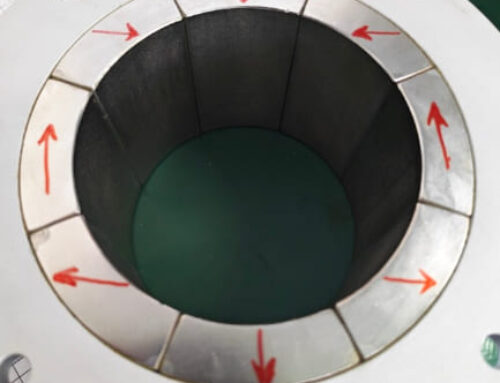
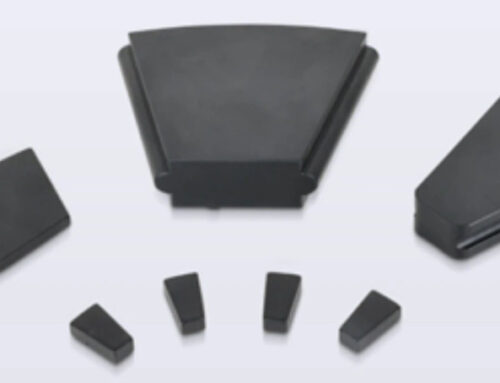
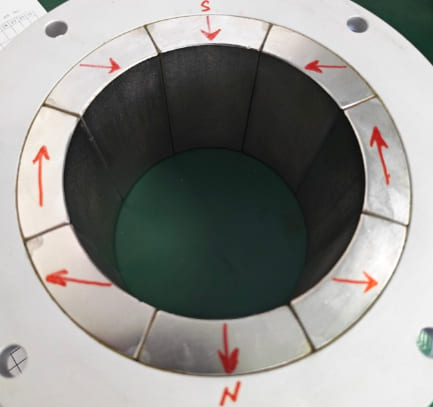
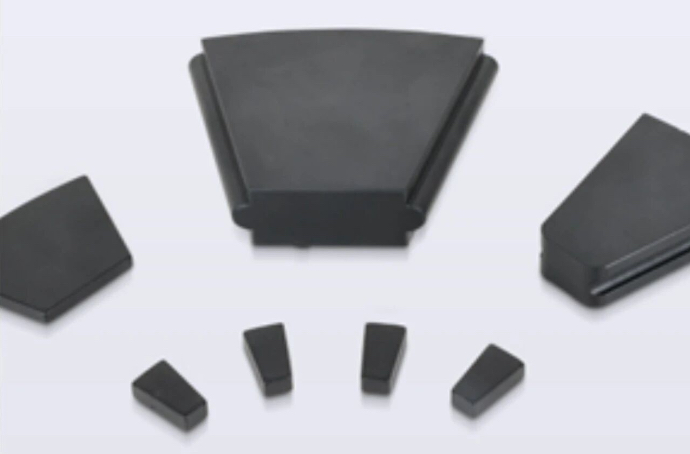
- Arc Segments and Multi-Pole Rings: Custom-sized sintered NdFeB and SmCo geometries built to fit tight radial air gaps and maximize torque density.
- Halbachovi množici: Custom-oriented pole assemblies that concentrate flux on the stator side while cutting back-iron weight and stray magnetic fields.
- Duty-Cycle Grade Matching: Selecting high-coercivity NdFeB grades (SH, UH, EH, AH) or Samarium Cobalt based on your exact peak armature current and worst-case winding temperatures.
Quality Assurance and B-H Curve Verification
A grade stamp on a datasheet does not guarantee performance once the rotor heats up on the bench. Every production batch goes through strict verification before shipping so you do not get surprised by early motor torque constant Kt degradation:
-
- Hysteresisgraph Testing: Batch-level verification of remanence (Br), normal coercivity (Hcb), and intrinsic coercivity (Hcj) across your target operating temperatures to confirm the B-H demagnetization curve knee point stays safely out of reach.
- Precision Mechanical Tolerances: Tight dimensional control following strict magnetnega dimenzioniranja geometrije in toleranc standards to ensure uniform air gaps, balanced rotation, and reliable rotor bonding.
Frequently Asked Questions About Frameless Motor Magnet Demagnetization
When we troubleshoot torque loss on the test bench, the same practical questions always come up. Here is a quick diagnostic breakdown of what we see in the field, followed by specific answers for your motor builds.
| Symptom or Condition | Threshold / Trigger | Permanent Damage Risk | Field Fixability |
|---|---|---|---|
| Back-EMF ($K_e$) Drop | Greater than 3%–5% at room temp | High (Irreversible loss) | Requires rotor replacement |
| Standard N-Grade NdFeB Temp | Above 80°C | High (Rapid knee-point shift) | Cannot re-magnetize in-housing |
| Peak Current Spike ($I_q$ / $I_d$) | Exceeds $H_{cj}$ limit at operating temp | High (Localized corner loss) | Requires rotor replacement |
How much back-EMF (Ke) drop confirms irreversible magnet demagnetization?
A room-temperature drop of cURL Too many subrequests by single Worker invocation. To configure this limit, refer to https://developers.cloudflare.com/workers/wrangler/configuration/#limits cURL Too many subrequests by single Worker invocation. To configure this limit, refer to https://developers.cloudflare.com/workers/wrangler/configuration/#limits
cURL Too many subrequests by single Worker invocation. To configure this limit, refer to https://developers.cloudflare.com/workers/wrangler/configuration/#limits
cURL Too many subrequests by single Worker invocation. To configure this limit, refer to https://developers.cloudflare.com/workers/wrangler/configuration/#limits
cURL Too many subrequests by single Worker invocation. To configure this limit, refer to https://developers.cloudflare.com/workers/wrangler/configuration/#limits
cURL Too many subrequests by single Worker invocation. To configure this limit, refer to https://developers.cloudflare.com/workers/wrangler/configuration/#limits 80°CcURL Too many subrequests by single Worker invocation. To configure this limit, refer to https://developers.cloudflare.com/workers/wrangler/configuration/#limits cURL Too many subrequests by single Worker invocation. To configure this limit, refer to https://developers.cloudflare.com/workers/wrangler/configuration/#limits cURL Too many subrequests by single Worker invocation. To configure this limit, refer to https://developers.cloudflare.com/workers/wrangler/configuration/#limits
cURL Too many subrequests by single Worker invocation. To configure this limit, refer to https://developers.cloudflare.com/workers/wrangler/configuration/#limits
Izberi cURL Too many subrequests by single Worker invocation. To configure this limit, refer to https://developers.cloudflare.com/workers/wrangler/configuration/#limits cURL Too many subrequests by single Worker invocation. To configure this limit, refer to https://developers.cloudflare.com/workers/wrangler/configuration/#limits 300°C–350°C cURL Too many subrequests by single Worker invocation. To configure this limit, refer to https://developers.cloudflare.com/workers/wrangler/configuration/#limits
cURL Too many subrequests by single Worker invocation. To configure this limit, refer to https://developers.cloudflare.com/workers/wrangler/configuration/#limits
cURL Too many subrequests by single Worker invocation. To configure this limit, refer to https://developers.cloudflare.com/workers/wrangler/configuration/#limits cURL Too many subrequests by single Worker invocation. To configure this limit, refer to https://developers.cloudflare.com/workers/wrangler/configuration/#limits cURL Too many subrequests by single Worker invocation. To configure this limit, refer to https://developers.cloudflare.com/workers/wrangler/configuration/#limits B-H demagnetization curve cURL Too many subrequests by single Worker invocation. To configure this limit, refer to https://developers.cloudflare.com/workers/wrangler/configuration/#limitshttps://nbaem.com/cause-demagnetization
cURL Too many subrequests by single Worker invocation. To configure this limit, refer to https://developers.cloudflare.com/workers/wrangler/configuration/#limits


 Slovenian
 English
 German
 Vietnamese
 Spanish (Mexico)
 Russian
 Turkish
 Polish
 Hindi
 Thai
 Malay
 Korean
 Japanese
 French
 Czech
 Danish
 Dutch
 Finnish
 Italian
 Portuguese (Brazil)
 Portuguese (Portugal)
 Ukrainian
 Hebrew
 Scottish Gaelic
 Hungarian
 Tagalog
 Spanish (Spain)
 Serbian
 Indonesian
 Slovak
 Dutch (Belgium)
 Persian
 Arabic
 Romanian
 Estonian
 Greek
 Bulgarian

Pusti komentar