
What Are Magnetic Field Lines?
Magnetic field lines, often referred to as magnetic lines of force, are visual models we use to represent the invisible forces surrounding a magnet. While magnetism cannot be seen with the naked eye, these lines map the trajectory and behavior of magnetic vectors across space.
-
- Visual Representation: They illustrate how magnetic force propagates around magnetic objects and electrical currents.
- Vector Indicator: The tangent at any point along a line shows the exact magnetic field direction at that position.
- Force Visualization: Tightly packed lines indicate high magnetic strength, while spread-out lines reveal weaker zones.
Mapping Invisible Magnetic Fields
Because magnetic fields exist continuously in three dimensions, mapping them requires a clear framework. We use imaginary field lines to turn abstract magnetic potential into measurable, predictable patterns.
This mapping framework provides critical data for engineering:
1. Field Orientation: Shows which way a magnetic dipole or test compass will align.
2. Gradient Analysis: Identifies how field intensity drops over distance.
3. Flux Distribution: Helps us design balanced magnetic circuits and efficient electromechanical systems.
Direction of Field Lines: Outside vs. Inside
A fundamental rule of magnetism is that field lines form continuous, unbreakable loops. The direction shifts depending on whether you observe the field outside or inside the magnet:
-
- Outside the Magnet: Field lines emerge from the ng magnet and curve through the surrounding space toward the Timugang polo.
- Inside the Magnet: The lines continue straight through the magnetic material, traveling from the Timugang polo back to the ng magnet.
This seamless loop ensures that magnetic poles always operate in pairs, creating a closed-circuit flow of magnetic flux.
Key Properties of Magnetic Field Lines
To properly analyze magnetic circuits and assemblies, we rely on core geometric rules that define how ang mga linya ng magnetic na larangan behave in space.
Continuous Closed Loops
Magnetic lines of force never start or stop abruptly. Instead, they form continuous, unbroken loops:
Outside the magnet: cURL Too many subrequests by single Worker invocation. To configure this limit, refer to https://developers.cloudflare.com/workers/wrangler/configuration/#limits
cURL Too many subrequests by single Worker invocation. To configure this limit, refer to https://developers.cloudflare.com/workers/wrangler/configuration/#limits cURL Too many subrequests by single Worker invocation. To configure this limit, refer to https://developers.cloudflare.com/workers/wrangler/configuration/#limits
cURL Too many subrequests by single Worker invocation. To configure this limit, refer to https://developers.cloudflare.com/workers/wrangler/configuration/#limits cURL Too many subrequests by single Worker invocation. To configure this limit, refer to https://developers.cloudflare.com/workers/wrangler/configuration/#limits cURL Too many subrequests by single Worker invocation. To configure this limit, refer to https://developers.cloudflare.com/workers/wrangler/configuration/#limits
cURL Too many subrequests by single Worker invocation. To configure this limit, refer to https://developers.cloudflare.com/workers/wrangler/configuration/#limits
cURL Too many subrequests by single Worker invocation. To configure this limit, refer to https://developers.cloudflare.com/workers/wrangler/configuration/#limits
cURL Too many subrequests by single Worker invocation. To configure this limit, refer to https://developers.cloudflare.com/workers/wrangler/configuration/#limits
cURL Too many subrequests by single Worker invocation. To configure this limit, refer to https://developers.cloudflare.com/workers/wrangler/configuration/#limits lakas ng magnetic field cURL Too many subrequests by single Worker invocation. To configure this limit, refer to https://developers.cloudflare.com/workers/wrangler/configuration/#limits
cURL Too many subrequests by single Worker invocation. To configure this limit, refer to https://developers.cloudflare.com/workers/wrangler/configuration/#limits cURL Too many subrequests by single Worker invocation. To configure this limit, refer to https://developers.cloudflare.com/workers/wrangler/configuration/#limits
cURL Too many subrequests by single Worker invocation. To configure this limit, refer to https://developers.cloudflare.com/workers/wrangler/configuration/#limits cURL Too many subrequests by single Worker invocation. To configure this limit, refer to https://developers.cloudflare.com/workers/wrangler/configuration/#limits
cURL Too many subrequests by single Worker invocation. To configure this limit, refer to https://developers.cloudflare.com/workers/wrangler/configuration/#limits multipole magnetic ring cURL Too many subrequests by single Worker invocation. To configure this limit, refer to https://developers.cloudflare.com/workers/wrangler/configuration/#limits
cURL Too many subrequests by single Worker invocation. To configure this limit, refer to https://developers.cloudflare.com/workers/wrangler/configuration/#limits
cURL Too many subrequests by single Worker invocation. To configure this limit, refer to https://developers.cloudflare.com/workers/wrangler/configuration/#limits
-
- cURL Too many subrequests by single Worker invocation. To configure this limit, refer to https://developers.cloudflare.com/workers/wrangler/configuration/#limits cURL Too many subrequests by single Worker invocation. To configure this limit, refer to https://developers.cloudflare.com/workers/wrangler/configuration/#limits
- cURL Too many subrequests by single Worker invocation. To configure this limit, refer to https://developers.cloudflare.com/workers/wrangler/configuration/#limits cURL Too many subrequests by single Worker invocation. To configure this limit, refer to https://developers.cloudflare.com/workers/wrangler/configuration/#limits
cURL Too many subrequests by single Worker invocation. To configure this limit, refer to https://developers.cloudflare.com/workers/wrangler/configuration/#limits
cURL Too many subrequests by single Worker invocation. To configure this limit, refer to https://developers.cloudflare.com/workers/wrangler/configuration/#limits
cURL Too many subrequests by single Worker invocation. To configure this limit, refer to https://developers.cloudflare.com/workers/wrangler/configuration/#limits
Ang iron filings experiment remains the most intuitive way to reveal a magnetic field pattern in real time. Iron shavings act like tiny magnetic dipoles, physically aligning along the magnetic lines of force.
Here is how we set it up:
-
- Place the magnet: Lay a magnet flat on a clean, level surface.
- Add a barrier: Place a sheet of white paper, clear acrylic, or cardstock directly over the magnet.
- Sprinkle the filings: Lightly and evenly dust fine iron filings across the sheet from a short height.
- Tap the surface: Gently tap the edge of the sheet. The vibration overcomes surface friction, allowing the filings to align smoothly along the curves of the field.
- Observe the pattern: Notice how the density of filings peaks near the poles, clearly displaying where the field is concentrated.
Using a Plotting Compass to Map Field Directions
While iron filings show shape and density, they do not show polarity direction. A small plotting compass lets us trace the actual vector path from the north pole to the south pole.
-
- Place the magnet on a sheet of grid paper and trace its outline.
- Place the compass near the magnet’s north pole and mark dots where the needle points.
- Move the compass so its tail aligns with the previous dot, mark the new tip position, and repeat.
- Connect the dots to draw a smooth, continuous line showing the exact magnetic field direction.
Digital Field Sensors and Magnetic Viewing Film
For engineering design, quality control, and advanced testing, modern diagnostic tools provide cleaner, non-destructive visualization:
-
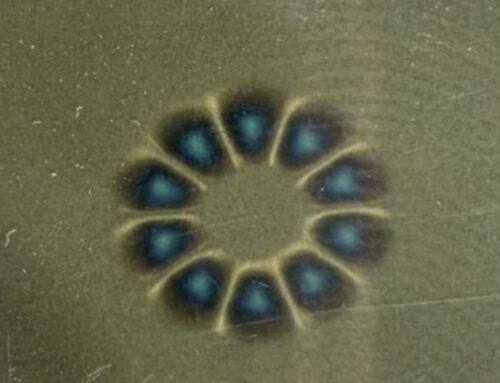
- Magnetic Viewing Film: This flexible sheet contains micro-encapsulated nickel flakes suspended in oil. Laying the film over a magnetic assembly reveals pole boundaries, multi-pole patterns, and flux leakage in seconds without messy cleanups.
- Digital Hall Effect Sensors: Electronic Gauss meters and digital probes measure precise magnetic flux density at specific coordinates, turning physical field lines into quantitative 2D or 3D data.
Understanding how these flux paths align is essential when designing high-torque drive systems, such as seeing what is mining magnetic coupling and how it works through non-contact magnetic alignment in industrial machinery.
Magnetic Field Line Patterns in Different Setups
Magnetic field line patterns shift dramatically depending on the source, geometry, and proximity of other magnetic objects. When we map these configurations, we see distinct line distributions that govern how forces interact in real-world systems.
Single Bar Magnet vs. Interacting Magnets
A single bar magnet produces an uncomplicated dipole field where lines exit the north pole, curve outward in broad symmetrical arcs, and enter the south pole. Introducing a second magnet alters this landscape immediately:
-
- Opposite Poles Attracting (North–South): cURL Too many subrequests by single Worker invocation. To configure this limit, refer to https://developers.cloudflare.com/workers/wrangler/configuration/#limits
- cURL Too many subrequests by single Worker invocation. To configure this limit, refer to https://developers.cloudflare.com/workers/wrangler/configuration/#limits cURL Too many subrequests by single Worker invocation. To configure this limit, refer to https://developers.cloudflare.com/workers/wrangler/configuration/#limits
cURL Too many subrequests by single Worker invocation. To configure this limit, refer to https://developers.cloudflare.com/workers/wrangler/configuration/#limits what is the difference between N52 and N55 magnetscURL Too many subrequests by single Worker invocation. To configure this limit, refer to https://developers.cloudflare.com/workers/wrangler/configuration/#limits
cURL Too many subrequests by single Worker invocation. To configure this limit, refer to https://developers.cloudflare.com/workers/wrangler/configuration/#limits
cURL Too many subrequests by single Worker invocation. To configure this limit, refer to https://developers.cloudflare.com/workers/wrangler/configuration/#limits
-
- cURL Too many subrequests by single Worker invocation. To configure this limit, refer to https://developers.cloudflare.com/workers/wrangler/configuration/#limits cURL Too many subrequests by single Worker invocation. To configure this limit, refer to https://developers.cloudflare.com/workers/wrangler/configuration/#limits cURL Too many subrequests by single Worker invocation. To configure this limit, refer to https://developers.cloudflare.com/workers/wrangler/configuration/#limits magnetic south polecURL Too many subrequests by single Worker invocation. To configure this limit, refer to https://developers.cloudflare.com/workers/wrangler/configuration/#limits
- cURL Too many subrequests by single Worker invocation. To configure this limit, refer to https://developers.cloudflare.com/workers/wrangler/configuration/#limits
- cURL Too many subrequests by single Worker invocation. To configure this limit, refer to https://developers.cloudflare.com/workers/wrangler/configuration/#limits
cURL Too many subrequests by single Worker invocation. To configure this limit, refer to https://developers.cloudflare.com/workers/wrangler/configuration/#limits
cURL Too many subrequests by single Worker invocation. To configure this limit, refer to https://developers.cloudflare.com/workers/wrangler/configuration/#limits
-
- cURL Too many subrequests by single Worker invocation. To configure this limit, refer to https://developers.cloudflare.com/workers/wrangler/configuration/#limits cURL Too many subrequests by single Worker invocation. To configure this limit, refer to https://developers.cloudflare.com/workers/wrangler/configuration/#limits
- cURL Too many subrequests by single Worker invocation. To configure this limit, refer to https://developers.cloudflare.com/workers/wrangler/configuration/#limits cURL Too many subrequests by single Worker invocation. To configure this limit, refer to https://developers.cloudflare.com/workers/wrangler/configuration/#limits
- cURL Too many subrequests by single Worker invocation. To configure this limit, refer to https://developers.cloudflare.com/workers/wrangler/configuration/#limits cURL Too many subrequests by single Worker invocation. To configure this limit, refer to https://developers.cloudflare.com/workers/wrangler/configuration/#limits
cURL Too many subrequests by single Worker invocation. To configure this limit, refer to https://developers.cloudflare.com/workers/wrangler/configuration/#limits
cURL Too many subrequests by single Worker invocation. To configure this limit, refer to https://developers.cloudflare.com/workers/wrangler/configuration/#limits
-
- cURL Too many subrequests by single Worker invocation. To configure this limit, refer to https://developers.cloudflare.com/workers/wrangler/configuration/#limits cURL Too many subrequests by single Worker invocation. To configure this limit, refer to https://developers.cloudflare.com/workers/wrangler/configuration/#limits
- Outside the Coil: The field lines spread out in wide loops from one end of the coil to the other, creating clearly defined north and south magnetic poles.
- Electromagnet Core Boost: Inserting a ferromagnetic iron core inside the solenoid concentrates the magnetic field lines, multiplying the overall magnetic flux density without changing the basic field geometry.
Magnetic Field Pattern Comparison
| Setup | Field Line Geometry | Peak Field Location | Primary Application |
|---|---|---|---|
| Single Bar Magnet | Symmetrical loops, North to South | Magnetic pole faces | Latches, compass needles, sensors |
| Attracting Magnets | Direct bridging lines between poles | Gap between opposite faces | Clamping assemblies, coupling drives |
| Repelling Magnets | Diverging lines pushed outward | Outer boundaries away from gap | Maglev systems, magnetic bearings |
| Straight Wire | Concentric circles around wire | Wire surface | Signal cables, basic power conductors |
| Solenoid / Electromagnet | Parallel interior lines, external loops | Inside coil core | Relays, actuators, MRI scanners |
Practical Applications of Magnetic Field Lines
Understanding how ang mga linya ng magnetic na larangan behave allows us to design and optimize critical technologies across everyday electronics and heavy industries. By controlling the path and density of these invisible lines of force, we convert energy, protect sensitive components, and capture high-precision data.
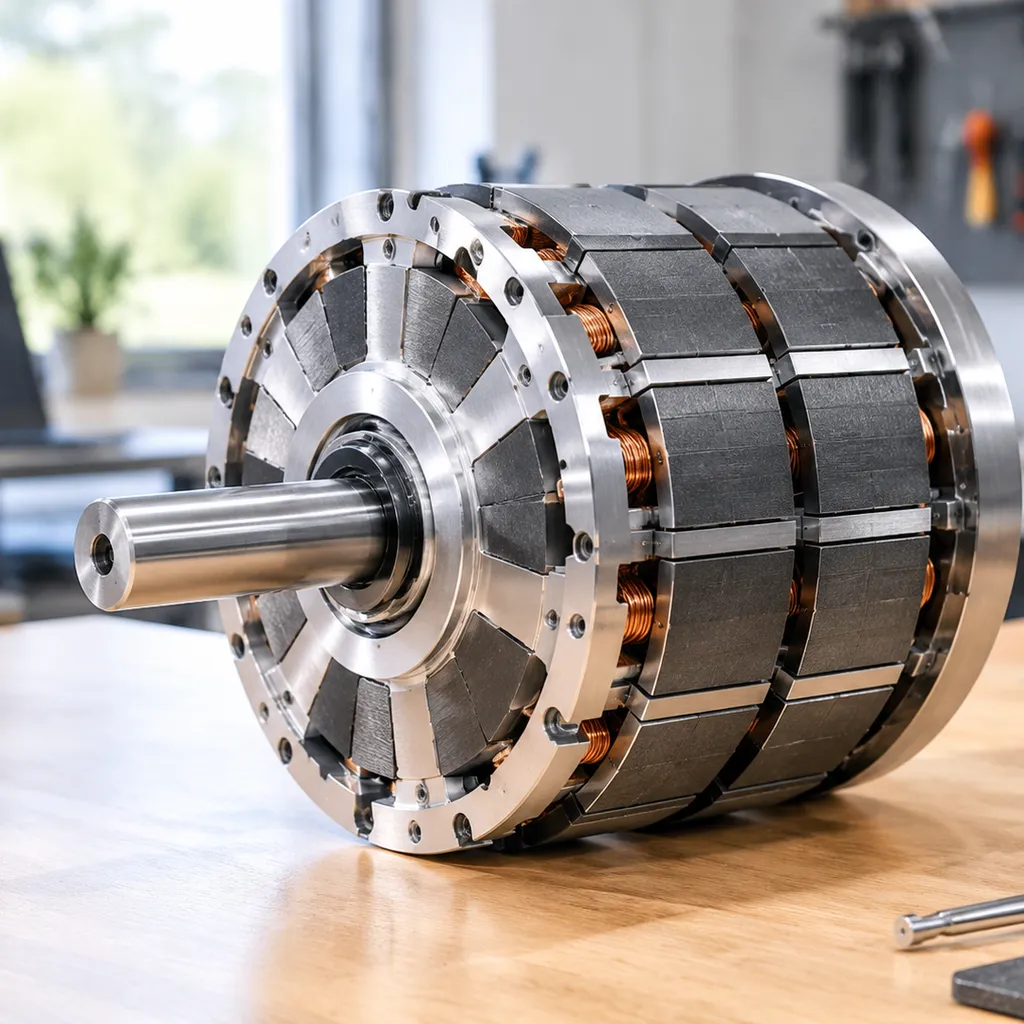
How Electric Motors and Generators Harness Field Lines
Motors and generators rely directly on the interaction between magnetic fields and electrical conductors.
Elektronikong Motor: When current passes through wire coils placed within a magnetic field, the interacting ang mga linya ng magnetic na larangan produce a mechanical force (Lorentz force) that turns the rotor.
Mga Generator: Moving a conductor through a concentrated densidad ng flux ng magnetic cURL Too many subrequests by single Worker invocation. To configure this limit, refer to https://developers.cloudflare.com/workers/wrangler/configuration/#limits
cURL Too many subrequests by single Worker invocation. To configure this limit, refer to https://developers.cloudflare.com/workers/wrangler/configuration/#limits cURL Too many subrequests by single Worker invocation. To configure this limit, refer to https://developers.cloudflare.com/workers/wrangler/configuration/#limits
cURL Too many subrequests by single Worker invocation. To configure this limit, refer to https://developers.cloudflare.com/workers/wrangler/configuration/#limits
cURL Too many subrequests by single Worker invocation. To configure this limit, refer to https://developers.cloudflare.com/workers/wrangler/configuration/#limits lakas ng magnetic field cURL Too many subrequests by single Worker invocation. To configure this limit, refer to https://developers.cloudflare.com/workers/wrangler/configuration/#limits cURL Too many subrequests by single Worker invocation. To configure this limit, refer to https://developers.cloudflare.com/workers/wrangler/configuration/#limits.
cURL Too many subrequests by single Worker invocation. To configure this limit, refer to https://developers.cloudflare.com/workers/wrangler/configuration/#limits
cURL Too many subrequests by single Worker invocation. To configure this limit, refer to https://developers.cloudflare.com/workers/wrangler/configuration/#limits
cURL Too many subrequests by single Worker invocation. To configure this limit, refer to https://developers.cloudflare.com/workers/wrangler/configuration/#limits cURL Too many subrequests by single Worker invocation. To configure this limit, refer to https://developers.cloudflare.com/workers/wrangler/configuration/#limits
cURL Too many subrequests by single Worker invocation. To configure this limit, refer to https://developers.cloudflare.com/workers/wrangler/configuration/#limits cURL Too many subrequests by single Worker invocation. To configure this limit, refer to https://developers.cloudflare.com/workers/wrangler/configuration/#limits
cURL Too many subrequests by single Worker invocation. To configure this limit, refer to https://developers.cloudflare.com/workers/wrangler/configuration/#limits cURL Too many subrequests by single Worker invocation. To configure this limit, refer to https://developers.cloudflare.com/workers/wrangler/configuration/#limits
cURL Too many subrequests by single Worker invocation. To configure this limit, refer to https://developers.cloudflare.com/workers/wrangler/configuration/#limits
cURL Too many subrequests by single Worker invocation. To configure this limit, refer to https://developers.cloudflare.com/workers/wrangler/configuration/#limits
cURL Too many subrequests by single Worker invocation. To configure this limit, refer to https://developers.cloudflare.com/workers/wrangler/configuration/#limits cURL Too many subrequests by single Worker invocation. To configure this limit, refer to https://developers.cloudflare.com/workers/wrangler/configuration/#limits ang mga linya ng magnetic na larangan cURL Too many subrequests by single Worker invocation. To configure this limit, refer to https://developers.cloudflare.com/workers/wrangler/configuration/#limits
cURL Too many subrequests by single Worker invocation. To configure this limit, refer to https://developers.cloudflare.com/workers/wrangler/configuration/#limits cURL Too many subrequests by single Worker invocation. To configure this limit, refer to https://developers.cloudflare.com/workers/wrangler/configuration/#limits
cURL Too many subrequests by single Worker invocation. To configure this limit, refer to https://developers.cloudflare.com/workers/wrangler/configuration/#limits
cURL Too many subrequests by single Worker invocation. To configure this limit, refer to https://developers.cloudflare.com/workers/wrangler/configuration/#limits
Magnetic field lines cURL Too many subrequests by single Worker invocation. To configure this limit, refer to https://developers.cloudflare.com/workers/wrangler/configuration/#limits magnetic field direction cURL Too many subrequests by single Worker invocation. To configure this limit, refer to https://developers.cloudflare.com/workers/wrangler/configuration/#limits
Why do magnetic field lines form closed loops unlike electric field lines?
Unlike electric fields that start on positive charges and end on negative charges, magnetic monopoles do not exist in nature. Every magnet operates as a dipol na magnetiko with both north at south poles. Because of this, we observe closed loop field lines that travel continuously from the north pole to the south pole outside the magnet, and return from south to north through the interior. This continuous loop behavior is also fundamental when evaluating how energy transfers in systems using magnetic coupling sa mga transformer.
What happens to field lines when opposite magnetic poles meet?
When opposite poles face each other, the lines of force emerge from the north pole and enter directly into the adjacent south pole. This creates a concentrated magnetic field pattern between the two faces, pulling the magnets together:
-
- Shortest path: The lines contract along their length, generating an attractive mechanical force.
- Higher field density: The concentration of flux lines between the poles leads to localized high lakas ng magnetic field.
Can magnetic field lines pass through a vacuum and solid materials?
Yes. Magnetic fields do not require a physical medium to propagate; they pass freely through a vacuum, air, water, and non-magnetic solids like wood, plastic, aluminum, and brass. However, ferromagnetic materials like iron, nickel, and specialized electrical steels redirect and concentrate the lines through their structure rather than letting them pass unaltered.
How does temperature affect magnetic field line strength?
Temperature directly impacts atomic alignment within magnetic materials, influencing overall densidad ng flux ng magnetic:
-
- Low temperatures: Thermal agitation decreases, allowing magnetic domains to align better and strengthening the overall field line concentration.
- High temperatures: Increased thermal vibration disrupts domain alignment, reducing field strength.
- Curie point: If heated past a material’s specific Curie temperature, the permanent magnetic order is lost entirely, causing the external field lines to collapse. Engineers carefully analyze these thermal limits when calculating the strength of a Halbach array magnet field for high-temperature motor and sensor applications.

 Tagalog
 English
 German
 Vietnamese
 Spanish (Mexico)
 Russian
 Turkish
 Polish
 Hindi
 Thai
 Malay
 Korean
 Japanese
 French
 Czech
 Danish
 Dutch
 Finnish
 Italian
 Portuguese (Brazil)
 Portuguese (Portugal)
 Slovenian
 Ukrainian
 Hebrew
 Scottish Gaelic
 Hungarian
 Spanish (Spain)
 Serbian
 Indonesian
 Slovak
 Dutch (Belgium)
 Persian
 Arabic
 Romanian
 Estonian
 Greek
 Bulgarian

Mag-iwan Ng Komento