
What Are Magnet Directions
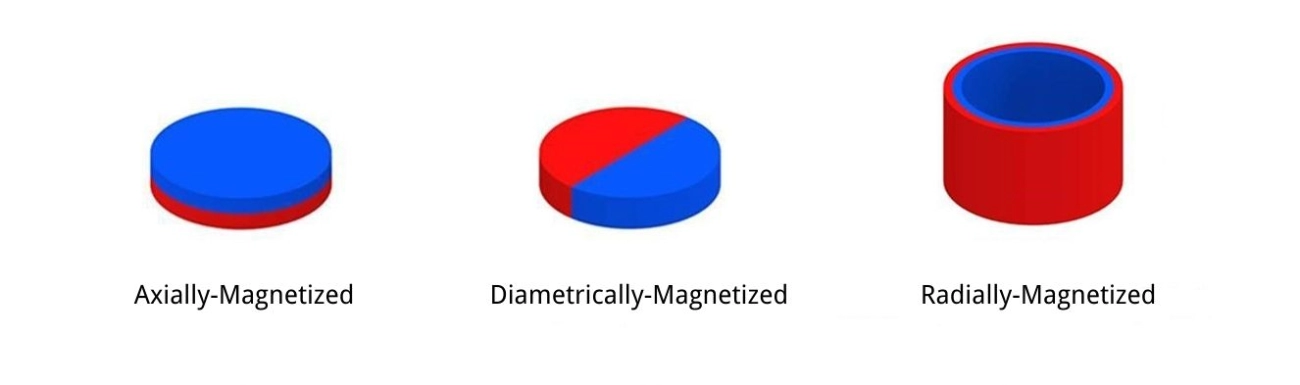
Magnet directions
Magnets have two ends called magnetic poles: the القطب الشمالي و القطب الجنوبي. These poles are where the magnetic force is strongest. By convention, the North pole of a magnet points toward the Earth’s geographic North when allowed to move freely.
Magnetic field lines are invisible lines around a magnet that show the direction of the magnetic force. These lines always flow from the North pole to the South pole outside the magnet and return through the magnet’s interior. This flow helps visualize how magnets attract or repel each other and how they interact with other magnetic materials.
It’s important to understand the difference between geographic North و magnetic North to avoid confusion:
| Term | ما يعنيه | Key Fact |
|---|---|---|
| Geographic North | The Earth’s true North Pole | Fixed location on the planet |
| الشمال المغناطيسي | The point where Earth’s magnetic field points downward | Moves slowly over time due to changes in Earth’s core |
Many people assume a magnet’s North pole points to the geographic North, but actually, the Earth’s magnetic North pole is a magnetic South pole, which is why the magnet’s North pole is attracted to it. This subtle difference is crucial when using compasses or designing magnetic devices.
How to Identify Magnet Poles and Directions
Knowing how to find magnet poles is key for using magnets correctly. The most common way is with a compass: the compass needle points toward the magnet’s north pole. Simply bring the compass close to the magnet and watch which side pulls the needle’s north end—that’s the magnet’s south pole, since opposites attract.
Another easy method is using iron filings. Sprinkle them around the magnet on a flat surface and the filings will line up along magnetic field lines. The filings gather densely at the north and south poles, making these areas visible.
For a quick check, some professionals use markers like small pieces of metal or even another magnet with known poles. Slowly move the known magnet around your magnet; attraction indicates opposite poles, while repulsion signals like poles.
In many industries, color coding and labeling help identify poles quickly:
- Red usually marks the north pole
- Blue or black cURL Too many subrequests by single Worker invocation. To configure this limit, refer to https://developers.cloudflare.com/workers/wrangler/configuration/#limits cURL Too many subrequests by single Worker invocation. To configure this limit, refer to https://developers.cloudflare.com/workers/wrangler/configuration/#limits
cURL Too many subrequests by single Worker invocation. To configure this limit, refer to https://developers.cloudflare.com/workers/wrangler/configuration/#limits
cURL Too many subrequests by single Worker invocation. To configure this limit, refer to https://developers.cloudflare.com/workers/wrangler/configuration/#limits
- cURL Too many subrequests by single Worker invocation. To configure this limit, refer to https://developers.cloudflare.com/workers/wrangler/configuration/#limits
- cURL Too many subrequests by single Worker invocation. To configure this limit, refer to https://developers.cloudflare.com/workers/wrangler/configuration/#limits
- cURL Too many subrequests by single Worker invocation. To configure this limit, refer to https://developers.cloudflare.com/workers/wrangler/configuration/#limits
cURL Too many subrequests by single Worker invocation. To configure this limit, refer to https://developers.cloudflare.com/workers/wrangler/configuration/#limits cURL Too many subrequests by single Worker invocation. To configure this limit, refer to https://developers.cloudflare.com/workers/wrangler/configuration/#limits.
cURL Too many subrequests by single Worker invocation. To configure this limit, refer to https://developers.cloudflare.com/workers/wrangler/configuration/#limits
cURL Too many subrequests by single Worker invocation. To configure this limit, refer to https://developers.cloudflare.com/workers/wrangler/configuration/#limits
cURL Too many subrequests by single Worker invocation. To configure this limit, refer to https://developers.cloudflare.com/workers/wrangler/configuration/#limits
cURL Too many subrequests by single Worker invocation. To configure this limit, refer to https://developers.cloudflare.com/workers/wrangler/configuration/#limits
cURL Too many subrequests by single Worker invocation. To configure this limit, refer to https://developers.cloudflare.com/workers/wrangler/configuration/#limits
cURL Too many subrequests by single Worker invocation. To configure this limit, refer to https://developers.cloudflare.com/workers/wrangler/configuration/#limits
cURL Too many subrequests by single Worker invocation. To configure this limit, refer to https://developers.cloudflare.com/workers/wrangler/configuration/#limits
cURL Too many subrequests by single Worker invocation. To configure this limit, refer to https://developers.cloudflare.com/workers/wrangler/configuration/#limits
cURL Too many subrequests by single Worker invocation. To configure this limit, refer to https://developers.cloudflare.com/workers/wrangler/configuration/#limits
- cURL Too many subrequests by single Worker invocation. To configure this limit, refer to https://developers.cloudflare.com/workers/wrangler/configuration/#limitscURL Too many subrequests by single Worker invocation. To configure this limit, refer to https://developers.cloudflare.com/workers/wrangler/configuration/#limits
- cURL Too many subrequests by single Worker invocation. To configure this limit, refer to https://developers.cloudflare.com/workers/wrangler/configuration/#limitscURL Too many subrequests by single Worker invocation. To configure this limit, refer to https://developers.cloudflare.com/workers/wrangler/configuration/#limits
- cURL Too many subrequests by single Worker invocation. To configure this limit, refer to https://developers.cloudflare.com/workers/wrangler/configuration/#limitscURL Too many subrequests by single Worker invocation. To configure this limit, refer to https://developers.cloudflare.com/workers/wrangler/configuration/#limits
- cURL Too many subrequests by single Worker invocation. To configure this limit, refer to https://developers.cloudflare.com/workers/wrangler/configuration/#limits: Prevent shifting during use, which can cause misalignment and reduce effectiveness.
Avoiding interference and keeping magnetic efficiency high involves:
- Steering clear of other magnets or metals near your setup that might disturb the magnetic field.
- Shielding sensitive electronics to prevent magnetic interference.
- Checking for demagnetization signs, especially in strong electromagnetic environments.
If you run into magnet misdirection issues, try these fixes:
- Recheck the poles with a compass to ensure correct orientation.
- Adjust the physical placement to restore proper magnetic field lines.
- Use color coding or labels so you avoid mistakes during setup.
- Replace magnets that show signs of damage or weakening which can throw off their directional properties.
Following these steps helps maximize the power and reliability of your magnets, whether for everyday use or professional applications.
Advances and Innovations in Magnetic Direction Technology
Magnetic direction technology is evolving fast, with new materials and manufacturing techniques improving precision and control. Recent trends focus on developing magnets that offer highly accurate directional properties, which is crucial for industries like electronics, automotive, and renewable energy.
NBAEM has been at the forefront of these innovations. Their latest breakthroughs include advanced directional magnet production methods that enhance magnetic field alignment, ensuring stronger and more reliable magnetic forces. These improvements help create specialized magnets tailored for sensors, electric motors, and magnetic separators, boosting overall performance.
FAQs about Magnet Directions
How do I know which side of the magnet is north
You can find the north pole of a magnet by using a simple compass. The compass needle’s north end is attracted to the magnet’s south pole, so the opposite end of that needle points to the magnet’s north pole. Another easy way is using iron filings—they tend to cluster at both poles—but marking the side that aligns with the compass needle’s south end is a good rule of thumb for the magnet’s north pole.
Can magnet directions change over time or with usage
Yes, magnet directions can shift, especially if the magnet is exposed to strong heat, physical shocks, or other magnetic fields. Over time, magnets may also lose strength or slightly change their poles due to wear or environmental factors. However, high-quality industrial magnets, like those from NBAEM, are designed to keep their directional properties stable for long-term use.
What magnets are best suited for directional applications
For consistent and reliable magnet directions, rare-earth magnets like neodymium magnets are a popular choice because they offer strong, stable magnetic fields. Ceramic magnets are more affordable and work well in many applications, but they’re less strong and can be more prone to shifting. For precise industrial or sensor uses, choose magnets that come with clear magnetic pole labeling and directional stability, like those offered by NBAEM.

 Arabic
 English
 German
 Vietnamese
 Spanish (Mexico)
 Russian
 Turkish
 Polish
 Hindi
 Thai
 Malay
 Korean
 Japanese
 French
 Czech
 Danish
 Dutch
 Finnish
 Italian
 Portuguese (Brazil)
 Portuguese (Portugal)
 Slovenian
 Ukrainian
 Hebrew
 Scottish Gaelic
 Hungarian
 Tagalog
 Spanish (Spain)
 Serbian
 Indonesian
 Slovak
 Dutch (Belgium)
 Persian
 Romanian
 Estonian
 Greek
 Bulgarian



اترك تعليقًا