
Have you ever wondered how magnets can produce electricity? It might seem like magic, but it’s actually one of the most fascinating principles in physics — electromagnetic induction. From powering your home to fueling renewable energy solutions, magnets play a crucial role in generating electric current. Whether you’re a student, hobbyist, or simply curious about the science behind it, you’re in the right place to uncover how moving magnets and wires work together to light up the world.
In this post, you’ll get a clear, straightforward explanation of how magnets create electricity, why the strength and type of magnets matter, and how this principle is harnessed in real-world devices like generators and motors. Plus, you’ll learn practical tips and even a simple experiment to try at home. Ready to dive into the amazing connection between magnets and electricity? Haideți să începem!
The Scientific Principle Electromagnetic Induction
Have you ever wondered how a magnet can produce electricity? The answer lies in a scientific principle called electromagnetic induction. This discovery dates back to 1831 when Michael Faraday, a pioneering scientist, found that moving a magnet near a conductor (like a wire) creates an electric current.
Here’s the basic physics behind it:
- Magnetic fields are invisible fields around magnets that exert force.
- Conductors like copper wires allow electric charges to move.
- Când o magnetic field changes or moves near a conductor, it pushes electric charges inside the conductor, creating an electric current.
This process is known as electromagnetic induction. Faraday’s work led to two important laws:
- Faraday’s Law of Induction states that the induced voltage in a conductor is proportional to how fast the magnetic field changes around it.
- Lenz’s Law tells us that the current generated will flow in a direction that opposes the change in magnetic field that created it.
Put simply, moving magnets near wires or changing magnetic fields will make electricity flow. This principle is the foundation of how generators, transformers, and many electrical devices work. Understanding this helps explain how magnets play a crucial role in producing electricity today.
How Magnets Produce Electricity Step-by-Step Process

Electricity from magnets happens when a magnet moves close to a coil of wire or the wire moves near a magnet. This movement creates a changing magnetic field around the wire, which makes electric current flow inside the wire.
Here’s why the motion matters:
- Relative motion between the magnetic field and the conductor (wire) is key. If both the magnet and wire are still, no electricity is produced.
- Moving the magnet back and forth near a coil changes the magnetic environment inside the coil.
- This changing magnetic field pushes electrons through the wire, creating electric current.
The strength and direction of the electric current depend on a few things:
- Speed of the magnet’s movement: Faster movement means a stronger current.
- Magnet’s strengthcURL Too many subrequests by single Worker invocation. To configure this limit, refer to https://developers.cloudflare.com/workers/wrangler/configuration/#limits
- cURL Too many subrequests by single Worker invocation. To configure this limit, refer to https://developers.cloudflare.com/workers/wrangler/configuration/#limitscURL Too many subrequests by single Worker invocation. To configure this limit, refer to https://developers.cloudflare.com/workers/wrangler/configuration/#limits
cURL Too many subrequests by single Worker invocation. To configure this limit, refer to https://developers.cloudflare.com/workers/wrangler/configuration/#limits
cURL Too many subrequests by single Worker invocation. To configure this limit, refer to https://developers.cloudflare.com/workers/wrangler/configuration/#limits
cURL Too many subrequests by single Worker invocation. To configure this limit, refer to https://developers.cloudflare.com/workers/wrangler/configuration/#limits permanenţi și electromagneți.
Magneți permanenți cURL Too many subrequests by single Worker invocation. To configure this limit, refer to https://developers.cloudflare.com/workers/wrangler/configuration/#limits
ElectromagnețicURL Too many subrequests by single Worker invocation. To configure this limit, refer to https://developers.cloudflare.com/workers/wrangler/configuration/#limits
cURL Too many subrequests by single Worker invocation. To configure this limit, refer to https://developers.cloudflare.com/workers/wrangler/configuration/#limits
cURL Too many subrequests by single Worker invocation. To configure this limit, refer to https://developers.cloudflare.com/workers/wrangler/configuration/#limits
cURL Too many subrequests by single Worker invocation. To configure this limit, refer to https://developers.cloudflare.com/workers/wrangler/configuration/#limits
cURL Too many subrequests by single Worker invocation. To configure this limit, refer to https://developers.cloudflare.com/workers/wrangler/configuration/#limits
cURL Too many subrequests by single Worker invocation. To configure this limit, refer to https://developers.cloudflare.com/workers/wrangler/configuration/#limits
cURL Too many subrequests by single Worker invocation. To configure this limit, refer to https://developers.cloudflare.com/workers/wrangler/configuration/#limits
cURL Too many subrequests by single Worker invocation. To configure this limit, refer to https://developers.cloudflare.com/workers/wrangler/configuration/#limits
cURL Too many subrequests by single Worker invocation. To configure this limit, refer to https://developers.cloudflare.com/workers/wrangler/configuration/#limits
cURL Too many subrequests by single Worker invocation. To configure this limit, refer to https://developers.cloudflare.com/workers/wrangler/configuration/#limits
cURL Too many subrequests by single Worker invocation. To configure this limit, refer to https://developers.cloudflare.com/workers/wrangler/configuration/#limits
cURL Too many subrequests by single Worker invocation. To configure this limit, refer to https://developers.cloudflare.com/workers/wrangler/configuration/#limits
cURL Too many subrequests by single Worker invocation. To configure this limit, refer to https://developers.cloudflare.com/workers/wrangler/configuration/#limits
cURL Too many subrequests by single Worker invocation. To configure this limit, refer to https://developers.cloudflare.com/workers/wrangler/configuration/#limits
cURL Too many subrequests by single Worker invocation. To configure this limit, refer to https://developers.cloudflare.com/workers/wrangler/configuration/#limits
cURL Too many subrequests by single Worker invocation. To configure this limit, refer to https://developers.cloudflare.com/workers/wrangler/configuration/#limits
Materiale necesare
- cURL Too many subrequests by single Worker invocation. To configure this limit, refer to https://developers.cloudflare.com/workers/wrangler/configuration/#limits magnet de neodimiu cURL Too many subrequests by single Worker invocation. To configure this limit, refer to https://developers.cloudflare.com/workers/wrangler/configuration/#limits
- A coil of copper wire (around 100 turns)
- A galvanometer (to detect electric current) or a small LED light
Step-by-Step Instructions
- Set up the coil: Connect the ends of your copper wire coil to the terminals of the galvanometer or LED.
- Move the magnet: Quickly push the magnet in and out of the coil’s center.
- Watch for a reaction: The galvanometer needle will move, or the LED might light up briefly each time the magnet moves.
- Try reversing direction: Pull the magnet out slowly or push it faster to see how the needle or light changes.
What You’re Seeing
When the magnet moves through the coil, its magnetic field changes inside the wire loop. This changing magnetic field causes an electric current to flow—which the galvanometer or LED detects. This is a simple demonstration of Faraday’s law of electromagnetic induction in action.
This experiment shows how relative motion between a magnetic field and a conductor generates electricity. The faster the magnet moves, or the stronger the magnet, the bigger the current you’ll see. It’s the same basic principle behind how real generators work every day.
Future Trends in Magnet-Based Electricity Generation
Magnet-based electricity generation is evolving fast thanks to advances in magnetic materials. Companies and researchers are developing stronger, lighter magnets that boost generator efficiency, helping produce more power while using less energy.
Some exciting new technologies are emerging that use magnetism in innovative ways:
- Magnetic Refrigeration: A greener way to cool homes and businesses by using magnetic fields instead of traditional gas-based coolants. It’s more energy-efficient and eco-friendly.
- Wireless Power Transfer: Using magnetic fields to send electricity without wires, powering devices like phones or electric vehicles with ease and convenience.
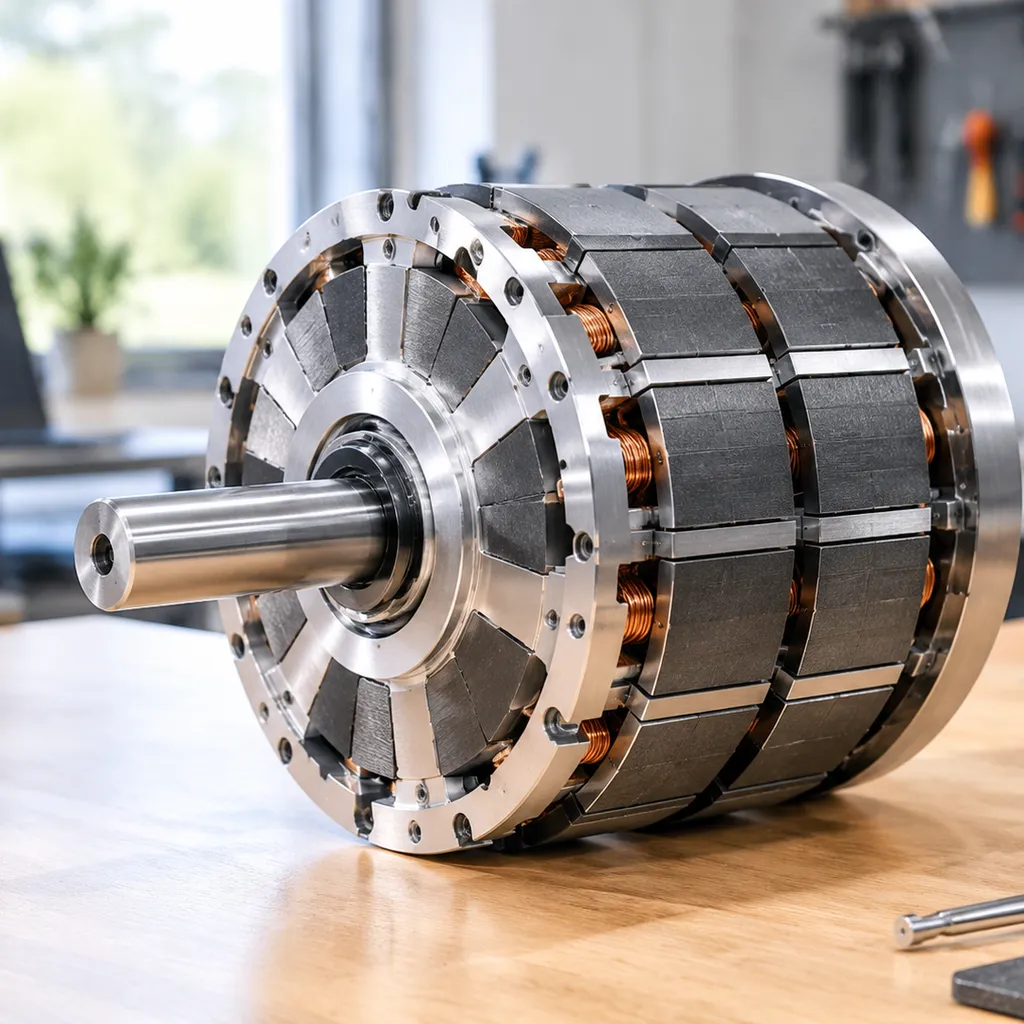
- High-Performance Magnets: Materials like neodymium and rare-earth magnets continue to improve, enabling generators to deliver more power in a smaller package, perfect for renewable energy systems like wind and hydro.
These trends open up new possibilities for cleaner, smarter energy solutions, making magnet-based electricity generation a key player in the future of power technology.
FAQs Common Questions About Magnets and Electricity
Can any magnet produce electricity?
Not all magnets will produce electricity effectively. To generate a usable electric current, the magnet needs to move relative to a conductor or have a changing magnetic field nearby. Stronger magnets, like neodymium magnets, generally do a better job because their magnetic fields are more powerful.
Does size or shape matter?
Yes, both size and shape influence how much electricity a magnet can help produce. Larger magnets or those shaped to focus magnetic fields (like horseshoe magnets) tend to induce a stronger current. Also, more coil turns around the magnet increase the output.
What are the environmental benefits?
Using magnets for electricity helps clean energy solutions shine. Magnets in generators power wind turbines and hydroelectric plants with no emissions. This cuts down reliance on fossil fuels and lowers pollution, making it an eco-friendly choice for electricity generation.
How does NBAEM ensure magnetic quality?
NBAEM focuses on high-quality magnetic materials, like rare-earth neodymium and ferrite magnets, made to meet strict standards. Their quality control ensures consistent magnetic strength and durability, which improves efficiency in electrical devices and generators. Plus, NBAEM customizes magnets to fit specific electrical engineering needs for U.S. customers, supporting reliable and energy-efficient technologies.

 Romanian
 English
 German
 Vietnamese
 Spanish (Mexico)
 Russian
 Turkish
 Polish
 Hindi
 Thai
 Malay
 Korean
 Japanese
 French
 Czech
 Danish
 Dutch
 Finnish
 Italian
 Portuguese (Brazil)
 Portuguese (Portugal)
 Slovenian
 Ukrainian
 Hebrew
 Scottish Gaelic
 Hungarian
 Tagalog
 Spanish (Spain)
 Serbian
 Indonesian
 Slovak
 Dutch (Belgium)
 Persian
 Arabic
 Estonian
 Greek
 Bulgarian

cURL Too many subrequests by single Worker invocation. To configure this limit, refer to https://developers.cloudflare.com/workers/wrangler/configuration/#limits
cURL Too many subrequests by single Worker invocation. To configure this limit, refer to https://developers.cloudflare.com/workers/wrangler/configuration/#limits
cURL Too many subrequests by single Worker invocation. To configure this limit, refer to https://developers.cloudflare.com/workers/wrangler/configuration/#limits
cURL Too many subrequests by single Worker invocation. To configure this limit, refer to https://developers.cloudflare.com/workers/wrangler/configuration/#limits
cURL Too many subrequests by single Worker invocation. To configure this limit, refer to https://developers.cloudflare.com/workers/wrangler/configuration/#limits