
إذا كنت تساءلت يوماً what is the main magnetic property that defines how materials respond to magnetic fields, you’re in the right place. Understanding key magnetic properties of materials isn’t just academic—it’s essential for choosing the right magnetic materials in electronics, motors, data storage, and more. Whether you’re an engineer, researcher, or buyer, getting a clear grasp of concepts like magnetization, coercivity, و المسامية المغناطيسية can make all the difference. In this guide, we’ll break down the essentials and show how these properties influence performance and application—powered by NBAEM’s expertise as a leading magnetic material supplier in China. Let’s cut through the noise and get to the heart of magnetism!
What Are Magnetic Properties
Magnetic properties describe how materials respond to magnetic fields. These properties determine whether a material is attracted to, repelled by, or unaffected by magnets. Essentially, magnetic properties reveal the internal magnetic behavior of a material and influence its performance in various applications.
There are two types of magnetic properties: intrinsic and extrinsic. Intrinsic properties are inherent to the material’s atomic structure and include factors like electron spin and atomic arrangement. These properties remain consistent regardless of external conditions. Extrinsic properties, on the other hand, depend on external factors such as temperature, mechanical stress, and the material’s shape or size. Together, intrinsic and extrinsic factors shape the overall magnetic response.
Understanding magnetic properties is crucial because they directly impact how materials perform in devices such as sensors, motors, and data storage systems. Materials with certain magnetic characteristics can enhance efficiency, durability, and precision in industrial and technological applications.
The Main Magnetic Properties Explained
Understanding the main magnetic properties helps us know how materials behave in different magnetic fields. Here’s a quick rundown:
-
Magnetization (M)
This is the measure of how strongly a material becomes magnetized when exposed to a magnetic field. It’s important because it shows the level of magnetic response and determines the material’s usefulness in devices like motors and sensors.
-
Magnetic Permeability (µ)
This property tells us how well a material can support a magnetic field within itself. High permeability means the material easily allows magnetic lines of force to pass through, which is key for magnetic cores and transformers.
-
القسرية (Hc)
Coercivity measures the resistance of a magnetic material to becoming demagnetized. Materials with high coercivity retain their magnetism better, making them suitable for permanent magnets.
-
الارتداد (بروم)
Remanence is the leftover or residual magnetization in a material after the external magnetic field is removed. It helps us understand how well a material can hold a magnetic charge. For more on this, check out remanence meaning.
-
Magnetic Susceptibility (χ)
This defines how much a material will become magnetized when exposed to an external magnetic field. It indicates the ease of magnetization and can be positive or negative depending on the material.
-
Curie Temperature (Tc)
This is the critical temperature where a material loses its magnetic properties entirely. Beyond the Curie temperature, materials behave like non-magnetic substances, which is crucial to consider when materials are used in high-temperature environments.
Knowing these properties allows industries to choose the right magnetic materials for the right applications.
Types of Magnetic Materials Based on Properties
Magnetic materials fall into five main types based on their magnetic properties. Understanding these helps you pick the right material for your needs.
-
ديو مغناطيسية
These materials create a weak magnetic field opposite to an applied magnetic field. They don’t retain magnetization. Examples include copper, silver, and gold. Diamagnetic materials are mostly used where no magnetic interference is desired.
-
بارامغناطيسية
Paramagnetic materials weakly attract magnetic fields and only show magnetization when an external field is applied. Aluminum and platinum are common examples. They don’t hold magnetization after the field is removed and are often used in sensors.
-
فِرومغناطيسية
Ferromagnetic materials strongly attract and retain magnetization. Iron, nickel, and cobalt are classic examples. These are widely used in magnets, transformers, and data storage because they hold large magnetic moments.
-
Ferrimagnetic
Found mainly in certain ceramics like magnetite, ferrimagnetic materials show a net magnetization like ferromagnets but with magnetic moments aligned oppositely in unequal amounts. This makes them useful in microwave devices and magnetic recording.
-
Antiferromagnetic
In antiferromagnetic materials, adjacent atoms have opposing magnetic moments that cancel each other out. Examples include manganese oxide and chromium. These materials don’t show a net magnetic field but are important in advanced magnetic sensors and spintronics.
cURL Too many subrequests by single Worker invocation. To configure this limit, refer to https://developers.cloudflare.com/workers/wrangler/configuration/#limits
- cURL Too many subrequests by single Worker invocation. To configure this limit, refer to https://developers.cloudflare.com/workers/wrangler/configuration/#limits cURL Too many subrequests by single Worker invocation. To configure this limit, refer to https://developers.cloudflare.com/workers/wrangler/configuration/#limits
- cURL Too many subrequests by single Worker invocation. To configure this limit, refer to https://developers.cloudflare.com/workers/wrangler/configuration/#limits cURL Too many subrequests by single Worker invocation. To configure this limit, refer to https://developers.cloudflare.com/workers/wrangler/configuration/#limits
- cURL Too many subrequests by single Worker invocation. To configure this limit, refer to https://developers.cloudflare.com/workers/wrangler/configuration/#limits cURL Too many subrequests by single Worker invocation. To configure this limit, refer to https://developers.cloudflare.com/workers/wrangler/configuration/#limits
cURL Too many subrequests by single Worker invocation. To configure this limit, refer to https://developers.cloudflare.com/workers/wrangler/configuration/#limits
cURL Too many subrequests by single Worker invocation. To configure this limit, refer to https://developers.cloudflare.com/workers/wrangler/configuration/#limits
cURL Too many subrequests by single Worker invocation. To configure this limit, refer to https://developers.cloudflare.com/workers/wrangler/configuration/#limits
على سبيل المثال:
- cURL Too many subrequests by single Worker invocation. To configure this limit, refer to https://developers.cloudflare.com/workers/wrangler/configuration/#limits cURL Too many subrequests by single Worker invocation. To configure this limit, refer to https://developers.cloudflare.com/workers/wrangler/configuration/#limits
- cURL Too many subrequests by single Worker invocation. To configure this limit, refer to https://developers.cloudflare.com/workers/wrangler/configuration/#limits cURL Too many subrequests by single Worker invocation. To configure this limit, refer to https://developers.cloudflare.com/workers/wrangler/configuration/#limits
- cURL Too many subrequests by single Worker invocation. To configure this limit, refer to https://developers.cloudflare.com/workers/wrangler/configuration/#limits cURL Too many subrequests by single Worker invocation. To configure this limit, refer to https://developers.cloudflare.com/workers/wrangler/configuration/#limits
- الطاقة المتجددة: cURL Too many subrequests by single Worker invocation. To configure this limit, refer to https://developers.cloudflare.com/workers/wrangler/configuration/#limits
cURL Too many subrequests by single Worker invocation. To configure this limit, refer to https://developers.cloudflare.com/workers/wrangler/configuration/#limits
cURL Too many subrequests by single Worker invocation. To configure this limit, refer to https://developers.cloudflare.com/workers/wrangler/configuration/#limits

cURL Too many subrequests by single Worker invocation. To configure this limit, refer to https://developers.cloudflare.com/workers/wrangler/configuration/#limits
- مقياس مغناطيسية العينة الاهتزازية (VSM): cURL Too many subrequests by single Worker invocation. To configure this limit, refer to https://developers.cloudflare.com/workers/wrangler/configuration/#limits
- cURL Too many subrequests by single Worker invocation. To configure this limit, refer to https://developers.cloudflare.com/workers/wrangler/configuration/#limits cURL Too many subrequests by single Worker invocation. To configure this limit, refer to https://developers.cloudflare.com/workers/wrangler/configuration/#limits
- cURL Too many subrequests by single Worker invocation. To configure this limit, refer to https://developers.cloudflare.com/workers/wrangler/configuration/#limits cURL Too many subrequests by single Worker invocation. To configure this limit, refer to https://developers.cloudflare.com/workers/wrangler/configuration/#limits
- Hysteresis Loop Tracers: Help determine coercivity, remanence, and saturation magnetization by plotting magnetization changes as magnetic field varies.
Precise measurement is essential because magnetic properties like coercivity, permeability, and remanent magnetization influence how a material performs in different environments. For example, selecting the right magnetic material for electronics or motors depends heavily on these accurate tests. It also ensures consistent quality and helps customize materials to fit specific industrial needs.
At NBAEM, we leverage these testing methods to deliver materials tailored perfectly to the standards and demands of various industries. Accurate data on magnetic susceptibility, Curie temperature, and magnetization helps us guide customers toward the best-matched products.
For more on magnetic material types and properties, check out our detailed guide on paramagnetic and diamagnetic materials.
How to Choose Magnetic Materials Based on Magnetic Properties
When selecting magnetic materials, consider these key factors:
- Magnetic Permeability: How easily the material supports magnetic fields. High permeability is ideal for transformers and inductors.
- قمعية: The material’s resistance to losing magnetization. High coercivity suits permanent magnets; low coercivity works for soft magnetic cores.
- Temperature Stability: Magnetic properties can change with heat. Materials with stable Curie temperature are important for harsh environments or high-temp applications.
Choosing Materials for Different Industries
| الصناعة | Key Magnetic Property | لماذا يهم | Example Application |
|---|---|---|---|
| سيارات | High coercivity and temp stability | Ensures strong, reliable magnets in motors and sensors | Electric vehicle motors |
| الإلكترونيات | High permeability, low coercivity | Allows fast magnetization changes for inductors and transformers | Circuit boards, inductors |
| أجهزة طبية | Stable remanence and biocompatibility | Precise control and reliability in imaging and diagnostics | MRI machines, magnetic sensors |
Tips for Choosing the Right Material
- Match coercivity to whether the magnet needs to be permanent or easily magnetized/demagnetized.
- Check permeability values to enhance efficiency in electromagnets or transformers.
- Consider Curie temperature to avoid loss of magnetic function under heat.
- Evaluate corrosion resistance and mechanical strength alongside magnetic traits.
How NBAEM Supports Your Choice
At NBAEM, we offer expert guidance tailored to your application. Whether you need materials for cutting-edge electronics or durable industrial magnets, we provide customized solutions to fit your specs. Our deep knowledge of magnetic materials helps you get exactly the right balance of permeability, coercivity, and stability.
Explore our range and expertise to find the best magnetic materials for your needs—including support in automotive, electronics, and beyond.
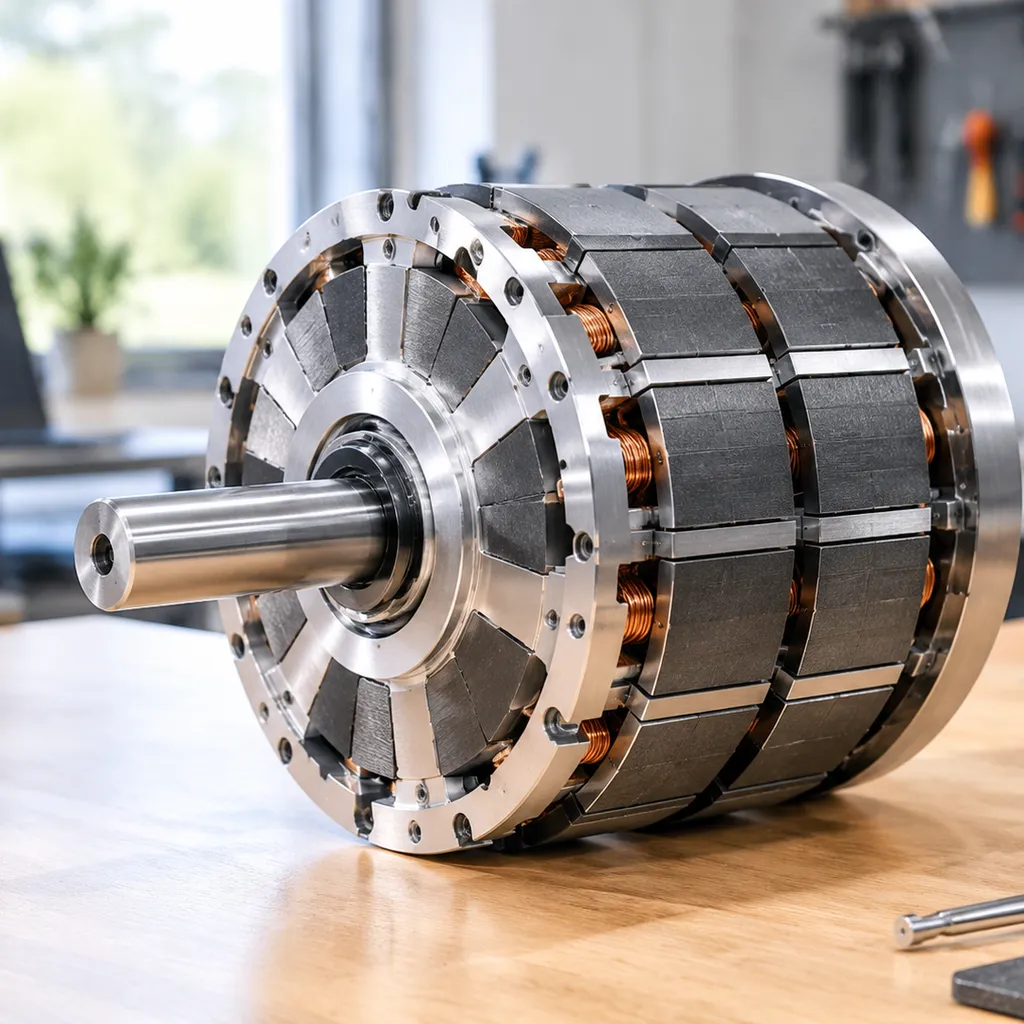
For details on magnetic materials in motor technology, visit المواد المغناطيسية في تكنولوجيا المحرك.
Emerging Trends and Innovations in Magnetic Materials
The world of magnetic materials is evolving fast, especially with the rise of new tech demands here in the U.S. Today, we see more materials engineered specifically for tailored magnetic properties. This means manufacturers can design magnets to fit exact needs, whether it’s higher strength, better temperature stability, or unique magnetic responses.
Nanomagnetic materials are a big part of this innovation. By working at the nanoscale, these materials offer improved performance in electronics, sensors, and data storage. Composites combining magnetic particles with other materials create lighter, more flexible, and often more durable options. This opens doors for cutting-edge applications in automotive tech and medical devices.
Sustainability is becoming a top priority too. Developing eco-friendly magnetic materials that reduce heavy metal use or lower energy consumption during manufacturing aligns with growing green standards. Companies are investing in recyclable magnets and materials that perform well without harming the environment.
These trends mean magnetic properties like magnetization, coercivity, and permeability are being fine-tuned more than ever. For U.S. industries looking to stay competitive, keeping up with these innovations ensures that products remain efficient, reliable, and future-ready.

 Arabic
 English
 German
 Vietnamese
 Spanish (Mexico)
 Russian
 Turkish
 Polish
 Hindi
 Thai
 Malay
 Korean
 Japanese
 French
 Czech
 Danish
 Dutch
 Finnish
 Italian
 Portuguese (Brazil)
 Portuguese (Portugal)
 Slovenian
 Ukrainian
 Hebrew
 Scottish Gaelic
 Hungarian
 Tagalog
 Spanish (Spain)
 Serbian
 Indonesian
 Slovak
 Dutch (Belgium)
 Persian
 Romanian
 Estonian
 Greek
 Bulgarian

اترك تعليقًا