
If you’re designing or selecting a permanent magnet motor, understanding the difference between Surface Permanent Magnet (SPM) and Interior Permanent Magnet (IPM) motors is crucial. These two designs power most modern EV traction motors, industrial drives, and wind turbines—but they deliver very different results. From torque output and efficiency to manufacturing complexity and cost, knowing when to choose SPM vs IPM can make or break your project’s performance and budget. In this guide, we’ll break down the key structural and electromagnetic distinctions, backed by insights from NBAEM—the trusted NdFeB magnet supplier to global leaders like FAW and Siemens. Ready to unlock which magnet placement best matches your needs? Let’s dive in.
Core Structural Differences: Surface vs. Interior Permanent Magnets
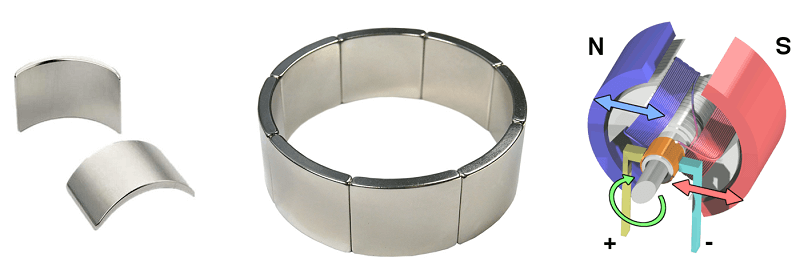
When comparing Surface Permanent Magnets (SPM) and Interior Permanent Magnets (IPM), the key difference lies in how magnets are placed on the rotor.
| Feature | Surface Permanent Magnet (SPM) | Interior Permanent Magnet (IPM) |
|---|---|---|
| Magnet Position | Magnets bonded directly on rotor surface | Magnets embedded inside rotor core slots |
| Visual Representation | Cylindrical rotor with exposed magnets | Cross-sectional rotor showing magnet pockets |
| Manufacturing Complexity | Simple assembly, magnets glued or bonded | Requires precision machining for magnet pockets |
| Rotor Protection | Magnets exposed to environment | Magnets protected inside rotor material |
SPM rotors look like a smooth cylinder with magnets clearly visible, while IPM rotors show magnets safely tucked in internal slots when viewed in cross-section.
Manufacturing Impact
- SPM: Faster and more cost-effective to produce. It’s ideal for applications with less strict mechanical demands.
- IPM: More complex manufacturing due to accurately machined magnet pockets, but offers better magnet retention and structural strength.
Understanding these structural differences helps you select the right magnet placement for your motor’s performance and production needs.
Performance Comparison: Surface Permanent Magnet vs. Interior Permanent Magnet
| Feature | Surface Permanent Magnet (SPM) | Interior Permanent Magnet (IPM) |
|---|---|---|
| Torque Production | Permanent magnet (PM) torque only | Combined PM torque + reluctance torque (15–25% boost) |
| Max Speed Range | Limited by magnet retention (risk of magnets detaching at high speeds) | Wider range thanks to field-weakening capability (extends constant power speed by 2–3×) |
| Efficiency at High Load | Good efficiency | Superior efficiency due to reluctance torque contribution |
| Power Density | Moderate power density | High power density with better torque output per volume |
| Demagnetization Risk | Higher risk due to exposed magnets | Lower risk as magnets are embedded and better protected |
The addition of reluctance torque in IPM designs not only raises total output torque but also improves motor efficiency under heavy loads. On the other hand, SPM motors have simpler magnet placement but face limits in high-speed and high-torque applications due to magnet exposure and retention issues.
For deeper insights on magnet grades suited for these designs, check out NBAEM’s range of high-performance neodymium magnet materials.
Electromagnetic Advantages of SPM vs IPM
One of the biggest electromagnetic perks of the internal permanent magnet (IPM) design is its reluctance torque, which can boost total torque by 15–25% compared to surface permanent magnet (SPM) motors. This comes from the clever way magnets are embedded inside the rotor, creating extra torque from the rotor’s magnetic saliency.
On the flip side, SPM motors have a simpler flux path, resulting in lower inductance and a faster dynamic response. This means quicker changes in torque and speed, useful for applications needing rapid control.
Another standout is field weakening: IPM motors can safely extend their constant power speed range by 2 to 3 times thanks to their internal magnet layout, allowing efficient operation at higher speeds. SPM motors typically lack this ability because their magnets are exposed on the surface, which limits their high-speed performance.
Together, these electromagnetic traits make IPM motors a top choice for high-performance applications like EV traction where torque, efficiency, and speed range matter most. For a deeper dive into magnet strength’s role in motor performance, check out NBAEM’s guide on how to measure magnet strength.
Thermal & Mechanical Reliability
Surface permanent magnets (SPM) sit exposed on the rotor surface, which makes them prone to thermal hotspots during high-load operation. This exposure can cause adhesive failures over time, as the bond material weakens under heat stress. In contrast, interior permanent magnets (IPM) are embedded inside the rotor core, offering better heat dissipation and improved mechanical strength. This embedding protects magnets from mechanical damage and reduces demagnetization risk caused by overheating.
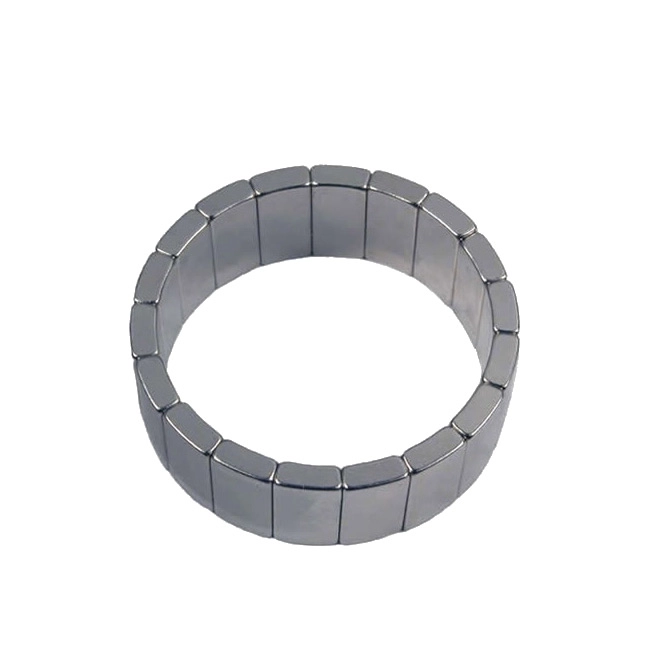
For SPM designs, NBAEM provides corrosion-resistant coatings—such as epoxy combined with NiCuNi plating—that enhance durability and help prevent magnet degradation from environmental exposure. These protective layers are essential when magnets are mounted on the surface and more vulnerable to mechanical and thermal wear.
This focus on thermal and mechanical robustness is critical when selecting between SPM and IPM motors for demanding applications like EV traction or industrial drives. For more on magnet materials and coatings, NBAEM’s range of neodymium ring magnets offers solutions tailored for thermal resilience and longevity.
Cost & Manufacturing Breakdown
Surface Permanent Magnet (SPM) motors benefit from lower tooling costs and faster assembly processes, making them a great fit for applications under 100 kW where budget and production speed matter. Their simpler rotor structure means fewer machining steps and easier magnet placement.
On the other hand, Interior Permanent Magnet (IPM) motors involve more complex rotor designs since magnets are embedded inside the core. This complexity raises manufacturing costs and requires precision machining. However, many IPM designs save on copper usage by optimizing rotor windings, which can offset some expenses.
Material-wise, IPM motors use about 10–20% less NdFeB magnet material to deliver the same torque as SPMs, thanks to enhanced magnetic circuit efficiency. This magnet saving is a key factor in reducing overall motor weight and cost, especially in high-volume EV production.
For manufacturers interested in magnetic material specifics, exploring NBAEM’s advanced magnetic technologies helps optimize magnet grade selection and cost efficiency.
Application Sweet Spots

Photo from control engineering
Surface permanent magnet (SPM) motors are a great fit for household appliances, low-speed pumps, and cost-sensitive drones. Their simpler design and lower cost make them ideal when budget and ease of manufacture are key. On the other hand, interior permanent magnet (IPM) motors really shine in demanding applications like EV traction motors—think Tesla Model 3 and NIO ET7—where high power density, better efficiency, and field-weakening capabilities matter most. IPMs are also common in wind pitch drives and high-speed spindles due to their mechanical robustness and thermal advantages.
There are also hybrid cases worth noting: the BMW i4 uses an IPM rotor for optimal performance, while the Renault Zoe opts for an SPM design to keep costs down without sacrificing too much. This balance shows how choosing between SPM and IPM depends heavily on the specific application requirements and priorities.
NBAEM Product Mapping for SPM and IPM Magnets
NBAEM offers specialized magnet grades tailored for both surface permanent magnet (SPM) and internal permanent magnet (IPM) motors, optimizing performance and reliability in various applications.
- SPM Grades: The N52SH arc magnets, sized between R30 and R55 mm, are designed with a 120°C temperature rating. These magnets are ideal for classic surface-mounted setups where stable magnetic performance and easier assembly are priorities.
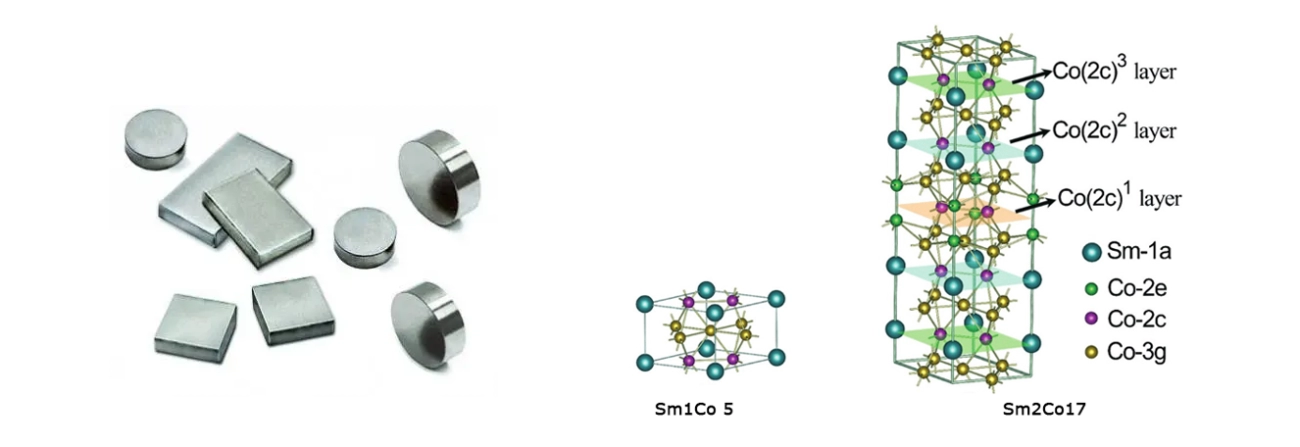
- IPM Grades: For interior permanent magnet rotors, NBAEM provides M45UH block magnets. These are pocket-optimized for embedding within the rotor core and come with a higher temperature rating of 180°C, ensuring durability under demanding thermal and mechanical stresses.
A real-world example highlights NBAEM’s impact: a Tier-1 electric vehicle supplier saw a 30% cost reduction by switching from conventional magnets to NBAEM’s IPM blanks. This showcases not only material and manufacturing efficiency but also the value of advanced magnet designs in EV traction motor development.
Selection Checklist: Choose SPM or IPM in 2 Minutes
To quickly decide between a Surface Permanent Magnet (SPM) and an Internal Permanent Magnet (IPM) motor, ask yourself these 7 key questions:
| Question | If Yes → Choose SPM | If No → Consider IPM |
|---|---|---|
| Is your application low to mid-speed? | ✔ Ideal for SPM | |
| Do you need high torque with reluctance boost? | ✔ IPM suits this best | |
| Is compact size and high power density a must? | ✔ IPM preferred | |
| Will the motor run at high speeds with field weakening? | ✔ IPM excels | |
| Is lower initial cost a priority? | ✔ SPM has simpler manufacturing | |
| Are you worried about demagnetization risk? | ✔ IPM magnets are embedded and safer | |
| Do you demand high efficiency under load? | ✔ IPM offers better efficiency |
Speed vs. Torque Priority Matrix
| Priority | Best Motor Type |
|---|---|
| High Speed | IPM (field weakening extends speed) |
| High Torque | IPM (reluctance torque boost) |
| Balanced | SPM (simpler design, moderate torque) |
Use this quick checklist to narrow down your motor choice based on your performance and cost targets. For more on magnet materials and their use in motors, check out Magnetic Materials in Motor Technology .

 Dutch (Belgium)
  English
  German
  Vietnamese
  Spanish (Mexico)
  Russian
  Turkish
  Polish
  Hindi
Hindi  Thai
Thai  Malay
Malay  Korean
  Japanese
  French
  Czech
Czech  Danish
  Dutch
Dutch  Finnish
  Italian
  Portuguese (Brazil)
  Portuguese (Portugal)
  Slovenian
  Ukrainian
  Hebrew
  Scottish Gaelic
  Hungarian
  Tagalog
  Spanish (Spain)
  Serbian
  Indonesian
  Slovak
  Persian
  Arabic
  Romanian

Leave A Comment