
Ever wondered how a transformer transfers megawatts of power from one circuit to another without a single physical wire connection? The answer lies in magnetic coupling in transformer designs—a fundamental electromagnetic process that enables efficient power transfer alongside complete galvanic isolation.
Here is the exact step-by-step physics behind how we harness magnetic coupling to transfer electrical energy reliably.
How Magnetic Coupling Works: Step-by-Step Physics
Step 1: AC Current Input & Dynamic Magnetic Field Generation
Every magnetic coupling process starts at the primary winding. When an alternating current (AC) flows through this input coil, it creates an oscillating magnetic field. Because AC continually changes direction and magnitude, the resulting magnetic field is dynamic—expanding and collapsing in tandem with the input waveform.
-
- Key Mechanism: The rate of current change directly dictates the strength and frequency of the magnetic field.
- Core Requirement: Energy transfer relies on this continuous field variation; a static DC current cannot sustain dynamic coupling.
Step 2: Flux Concentration via High Permeability Core
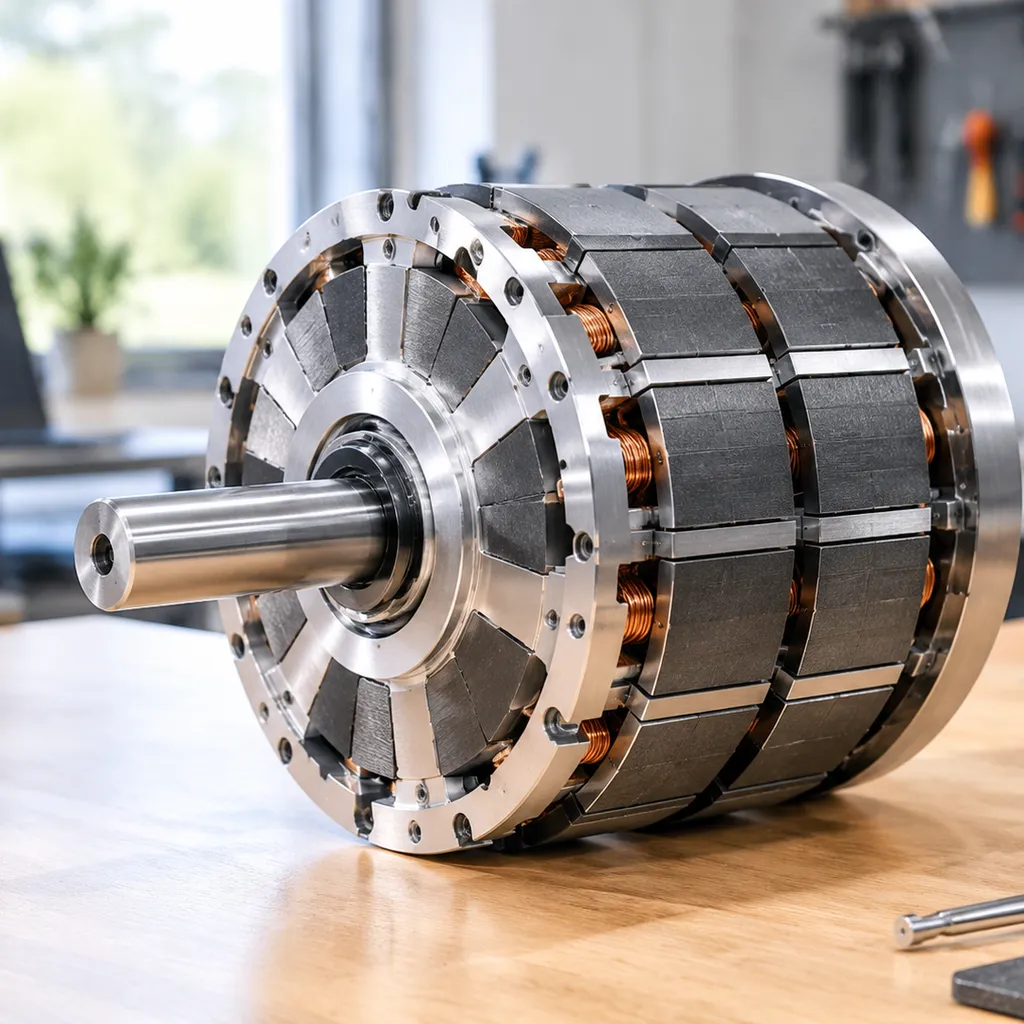
In open air, magnetic fields disperse in all directions, causing severe energy loss. To maximize magnetic coupling, we route this energy through a high magnetic permeability core (such as laminated silicon steel or advanced soft magnetic alloys).
-
- Flux Channeling: The core provides a low-reluctance path, trapping and concentrating the magnetic flux linkage.
- Leakage Control: Confining the magnetic lines of force prevents flux leakage, ensuring the vast majority of generated energy travels straight to the output winding.
Step 3: Voltage Induction in Secondary Winding
As the dynamic magnetic flux travels through the core, it links directly with the secondary winding. This changing magnetic environment triggers Faraday’s Law of Electromagnetic Induction.
-
- EMF Generation: The time-varying magnetic flux cuts across the secondary coil turns, inducing an electromotive force (EMF) and generating a precise output voltage.
- Galvanic Isolation: Power moves strictly through magnetic flux, keeping the primary and secondary circuits completely isolated electrically.
Key Parameters Governing Magnetic Coupling
When we design high-efficiency transformers, key electrical parameters define how effectively magnetic energy moves between coils. Controlling these variables allows us to maximize energy transfer while minimizing unwanted loss.
Self-Inductance & Mutual Inductance
-
- cURL Too many subrequests by single Worker invocation. To configure this limit, refer to https://developers.cloudflare.com/workers/wrangler/configuration/#limits cURL Too many subrequests by single Worker invocation. To configure this limit, refer to https://developers.cloudflare.com/workers/wrangler/configuration/#limits
- cURL Too many subrequests by single Worker invocation. To configure this limit, refer to https://developers.cloudflare.com/workers/wrangler/configuration/#limits cURL Too many subrequests by single Worker invocation. To configure this limit, refer to https://developers.cloudflare.com/workers/wrangler/configuration/#limits magnetic coupling cURL Too many subrequests by single Worker invocation. To configure this limit, refer to https://developers.cloudflare.com/workers/wrangler/configuration/#limits
cURL Too many subrequests by single Worker invocation. To configure this limit, refer to https://developers.cloudflare.com/workers/wrangler/configuration/#limits
cURL Too many subrequests by single Worker invocation. To configure this limit, refer to https://developers.cloudflare.com/workers/wrangler/configuration/#limitskcURL Too many subrequests by single Worker invocation. To configure this limit, refer to https://developers.cloudflare.com/workers/wrangler/configuration/#limits 0 cURL Too many subrequests by single Worker invocation. To configure this limit, refer to https://developers.cloudflare.com/workers/wrangler/configuration/#limits 1 cURL Too many subrequests by single Worker invocation. To configure this limit, refer to https://developers.cloudflare.com/workers/wrangler/configuration/#limits
cURL Too many subrequests by single Worker invocation. To configure this limit, refer to https://developers.cloudflare.com/workers/wrangler/configuration/#limits cURL Too many subrequests by single Worker invocation. To configure this limit, refer to https://developers.cloudflare.com/workers/wrangler/configuration/#limits
cURL Too many subrequests by single Worker invocation. To configure this limit, refer to https://developers.cloudflare.com/workers/wrangler/configuration/#limits
| cURL Too many subrequests by single Worker invocation. To configure this limit, refer to https://developers.cloudflare.com/workers/wrangler/configuration/#limits | cURL Too many subrequests by single Worker invocation. To configure this limit, refer to https://developers.cloudflare.com/workers/wrangler/configuration/#limits | cURL Too many subrequests by single Worker invocation. To configure this limit, refer to https://developers.cloudflare.com/workers/wrangler/configuration/#limits | cURL Too many subrequests by single Worker invocation. To configure this limit, refer to https://developers.cloudflare.com/workers/wrangler/configuration/#limits |
|---|---|---|---|
| cURL Too many subrequests by single Worker invocation. To configure this limit, refer to https://developers.cloudflare.com/workers/wrangler/configuration/#limits | cURL Too many subrequests by single Worker invocation. To configure this limit, refer to https://developers.cloudflare.com/workers/wrangler/configuration/#limits | cURL Too many subrequests by single Worker invocation. To configure this limit, refer to https://developers.cloudflare.com/workers/wrangler/configuration/#limits | cURL Too many subrequests by single Worker invocation. To configure this limit, refer to https://developers.cloudflare.com/workers/wrangler/configuration/#limits |
| cURL Too many subrequests by single Worker invocation. To configure this limit, refer to https://developers.cloudflare.com/workers/wrangler/configuration/#limits | cURL Too many subrequests by single Worker invocation. To configure this limit, refer to https://developers.cloudflare.com/workers/wrangler/configuration/#limits | cURL Too many subrequests by single Worker invocation. To configure this limit, refer to https://developers.cloudflare.com/workers/wrangler/configuration/#limits | Grid power transformers, step-up/down units. |
| Loose Coupling | k < 0.5 | Large air gaps; low magnetic linkage. | Wireless charging, resonant converters. |
Transformer Polarity: The Dot Convention
Winding orientation dictates voltage phase relationships between input and output terminals. We rely on the dot convention to maintain precise circuit polarity:
-
- In-Phase Condition: When current flows into the dotted primary terminal, the dotted secondary terminal instantly becomes positive.
- Phase Inversion: When current enters the undotted primary terminal, the dotted secondary terminal generates negative relative voltage.
Accurately matching polarity prevents signal cancellation and stops destructive circulating currents in parallel transformer configurations.
Efficiency Losses and Design Factors Affecting Coupling
Even with high magnetic permeability materials, no real-world system achieves perfect magnetic coupling in transformer applications. When we build and optimize high-efficiency transformers, several physical design factors prevent complete flux transfer from the primary to the secondary winding. Understanding these loss mechanisms allows us to maximize energy transfer and maintain a high coupling coefficient (k).
Leakage Flux and Leakage Inductance
Not all magnetic flux generated by the primary winding travels through the core to link with the secondary winding. Some flux escapes into the surrounding air—this is leakage flux.
-
- System Impact: Leakage flux creates leakage inductance, which behaves as an unwanted inductive impedance in series with the transformer windings.
- Efficiency Loss: Increased leakage flux lowers the total magnetic flux linkage (Φ), directly reducing the coupling coefficient below ideal levels.
- Design Control: We minimize leakage inductance through tight winding geometries, concentric coil arrangements, and high-permeability core designs.
Core Losses in Coupling Systems
Core losses occur within the magnetic core material itself during magnetic cycling. These losses dissipate energy as heat, lowering overall system efficiency.
| Loss Mechanism | Przyczyna | Engineering Solution |
|---|---|---|
| cURL Too many subrequests by single Worker invocation. To configure this limit, refer to https://developers.cloudflare.com/workers/wrangler/configuration/#limits | Induced circulating currents inside the conductive core material due to changing magnetic fields. | Use a cURL Too many subrequests by single Worker invocation. To configure this limit, refer to https://developers.cloudflare.com/workers/wrangler/configuration/#limits cURL Too many subrequests by single Worker invocation. To configure this limit, refer to https://developers.cloudflare.com/workers/wrangler/configuration/#limits |
| Strata histerezy | cURL Too many subrequests by single Worker invocation. To configure this limit, refer to https://developers.cloudflare.com/workers/wrangler/configuration/#limits | cURL Too many subrequests by single Worker invocation. To configure this limit, refer to https://developers.cloudflare.com/workers/wrangler/configuration/#limits materiały magnetyczne miękkie cURL Too many subrequests by single Worker invocation. To configure this limit, refer to https://developers.cloudflare.com/workers/wrangler/configuration/#limits |
cURL Too many subrequests by single Worker invocation. To configure this limit, refer to https://developers.cloudflare.com/workers/wrangler/configuration/#limits
cURL Too many subrequests by single Worker invocation. To configure this limit, refer to https://developers.cloudflare.com/workers/wrangler/configuration/#limits
cURL Too many subrequests by single Worker invocation. To configure this limit, refer to https://developers.cloudflare.com/workers/wrangler/configuration/#limits cURL Too many subrequests by single Worker invocation. To configure this limit, refer to https://developers.cloudflare.com/workers/wrangler/configuration/#limits.
-
- cURL Too many subrequests by single Worker invocation. To configure this limit, refer to https://developers.cloudflare.com/workers/wrangler/configuration/#limits cURL Too many subrequests by single Worker invocation. To configure this limit, refer to https://developers.cloudflare.com/workers/wrangler/configuration/#limits
- cURL Too many subrequests by single Worker invocation. To configure this limit, refer to https://developers.cloudflare.com/workers/wrangler/configuration/#limits cURL Too many subrequests by single Worker invocation. To configure this limit, refer to https://developers.cloudflare.com/workers/wrangler/configuration/#limits
- cURL Too many subrequests by single Worker invocation. To configure this limit, refer to https://developers.cloudflare.com/workers/wrangler/configuration/#limits cURL Too many subrequests by single Worker invocation. To configure this limit, refer to https://developers.cloudflare.com/workers/wrangler/configuration/#limits
cURL Too many subrequests by single Worker invocation. To configure this limit, refer to https://developers.cloudflare.com/workers/wrangler/configuration/#limits
cURL Too many subrequests by single Worker invocation. To configure this limit, refer to https://developers.cloudflare.com/workers/wrangler/configuration/#limits
cURL Too many subrequests by single Worker invocation. To configure this limit, refer to https://developers.cloudflare.com/workers/wrangler/configuration/#limits
cURL Too many subrequests by single Worker invocation. To configure this limit, refer to https://developers.cloudflare.com/workers/wrangler/configuration/#limits
-
- cURL Too many subrequests by single Worker invocation. To configure this limit, refer to https://developers.cloudflare.com/workers/wrangler/configuration/#limits cURL Too many subrequests by single Worker invocation. To configure this limit, refer to https://developers.cloudflare.com/workers/wrangler/configuration/#limits
- cURL Too many subrequests by single Worker invocation. To configure this limit, refer to https://developers.cloudflare.com/workers/wrangler/configuration/#limits cURL Too many subrequests by single Worker invocation. To configure this limit, refer to https://developers.cloudflare.com/workers/wrangler/configuration/#limits
- cURL Too many subrequests by single Worker invocation. To configure this limit, refer to https://developers.cloudflare.com/workers/wrangler/configuration/#limits cURL Too many subrequests by single Worker invocation. To configure this limit, refer to https://developers.cloudflare.com/workers/wrangler/configuration/#limits
- High Electrical Resistivity: Suppresses eddy currents to maintain low core losses.
- Structural Stability: Delivers mechanical reliability under operating stress, unlike hard magnetic systems where kruchość materiałów magnetycznych stałych presents processing challenges.
Comparison of Soft Magnetic Material Options
Different operating frequencies require tailored soft magnetic materials to optimize performance and prevent energy loss:
| Typ materiału | Przenikalność magnetyczna (µ) | Saturation Flux Density (Bs) | Optimal Frequency Range | Core Strength |
|---|---|---|---|---|
| Laminated Silicon Steel | Wysoki | Very High (~2.0 T) | 50 Hz – 400 Hz | Maximum power handling for line-frequency transformers |
| MnZn / NiZn Ferrite | Średnia do wysokiej | Low (~0.4 – 0.5 T) | 20 kHz – 1 MHz+ | High resistivity, near-zero eddy current losses |
| Amorphous Alloy | Bardzo wysoka | Medium (~1.5 T) | 50 Hz – 10 kHz | Ultra-low core loss for high-efficiency distribution |
| Nanokrystaliczne | Najwyższy | Medium-High (~1.2 T) | 10 kHz – 100 kHz+ | Top-tier permeability with minimal thermal dissipation |
By matching core material characteristics directly to operational frequencies, we eliminate magnetic stray flux and maximize coupling performance across custom transformer designs.
High-Performance Transformer Lamination Solutions by NBAEM
At NBAEM, we design and manufacture precision core laminations engineered to maximize magnetic coupling in transformer applications while minimizing stray energy losses. Our advanced manufacturing capabilities help power electronics engineers achieve tight magnetic flux linkage, reduced leakage inductance, and superior thermal efficiency across high-performance power transformers.
Custom Lamination Core Stacks
Every transformer topology presents unique physical and electrical constraints. We specialize in custom-tailored lamination stacks built to your exact performance specifications:
-
- Tailored Core Geometries: EI, UI, EFD, PQ, and custom stamped configurations optimized for high slot-fill and compact footprints.
- Precision Stacking & Bonding: Interlocking, laser welding, and specialized epoxy bonding techniques designed to eliminate acoustic noise and mechanical vibration.
- Minimized Stray Loss: cURL Too many subrequests by single Worker invocation. To configure this limit, refer to https://developers.cloudflare.com/workers/wrangler/configuration/#limits
cURL Too many subrequests by single Worker invocation. To configure this limit, refer to https://developers.cloudflare.com/workers/wrangler/configuration/#limits
cURL Too many subrequests by single Worker invocation. To configure this limit, refer to https://developers.cloudflare.com/workers/wrangler/configuration/#limits materiały magnetyczne miękkie cURL Too many subrequests by single Worker invocation. To configure this limit, refer to https://developers.cloudflare.com/workers/wrangler/configuration/#limits
-
- cURL Too many subrequests by single Worker invocation. To configure this limit, refer to https://developers.cloudflare.com/workers/wrangler/configuration/#limits cURL Too many subrequests by single Worker invocation. To configure this limit, refer to https://developers.cloudflare.com/workers/wrangler/configuration/#limits
- cURL Too many subrequests by single Worker invocation. To configure this limit, refer to https://developers.cloudflare.com/workers/wrangler/configuration/#limits cURL Too many subrequests by single Worker invocation. To configure this limit, refer to https://developers.cloudflare.com/workers/wrangler/configuration/#limits
- Stopy nikiel-żelazo (Permalloy): cURL Too many subrequests by single Worker invocation. To configure this limit, refer to https://developers.cloudflare.com/workers/wrangler/configuration/#limits
- cURL Too many subrequests by single Worker invocation. To configure this limit, refer to https://developers.cloudflare.com/workers/wrangler/configuration/#limits cURL Too many subrequests by single Worker invocation. To configure this limit, refer to https://developers.cloudflare.com/workers/wrangler/configuration/#limits czy aluminium jest materiałem magnetycznymcURL Too many subrequests by single Worker invocation. To configure this limit, refer to https://developers.cloudflare.com/workers/wrangler/configuration/#limits
Standardy produkcyjne i kontrola jakości
cURL Too many subrequests by single Worker invocation. To configure this limit, refer to https://developers.cloudflare.com/workers/wrangler/configuration/#limits magnetic coupling in transformer cURL Too many subrequests by single Worker invocation. To configure this limit, refer to https://developers.cloudflare.com/workers/wrangler/configuration/#limits
| cURL Too many subrequests by single Worker invocation. To configure this limit, refer to https://developers.cloudflare.com/workers/wrangler/configuration/#limits | cURL Too many subrequests by single Worker invocation. To configure this limit, refer to https://developers.cloudflare.com/workers/wrangler/configuration/#limits | Engineering Benefit |
|---|---|---|
| cURL Too many subrequests by single Worker invocation. To configure this limit, refer to https://developers.cloudflare.com/workers/wrangler/configuration/#limits | cURL Too many subrequests by single Worker invocation. To configure this limit, refer to https://developers.cloudflare.com/workers/wrangler/configuration/#limits | cURL Too many subrequests by single Worker invocation. To configure this limit, refer to https://developers.cloudflare.com/workers/wrangler/configuration/#limits |
| cURL Too many subrequests by single Worker invocation. To configure this limit, refer to https://developers.cloudflare.com/workers/wrangler/configuration/#limits | cURL Too many subrequests by single Worker invocation. To configure this limit, refer to https://developers.cloudflare.com/workers/wrangler/configuration/#limits | cURL Too many subrequests by single Worker invocation. To configure this limit, refer to https://developers.cloudflare.com/workers/wrangler/configuration/#limits |
| Tolerancja wymiarowa | cURL Too many subrequests by single Worker invocation. To configure this limit, refer to https://developers.cloudflare.com/workers/wrangler/configuration/#limits | cURL Too many subrequests by single Worker invocation. To configure this limit, refer to https://developers.cloudflare.com/workers/wrangler/configuration/#limits |
cURL Too many subrequests by single Worker invocation. To configure this limit, refer to https://developers.cloudflare.com/workers/wrangler/configuration/#limits
Najczęściej zadawane pytania (FAQ)
Here are direct answers to the most common engineering questions we receive about magnetic coupling in transformers.
What is the main difference between direct electrical coupling and magnetic coupling?
Direct electrical coupling uses a continuous physical conductor to transfer electrical signals, allowing both AC and DC to pass. Magnetic coupling in transformers transfers energy through a shared magnetic field across an isolated core without a direct metallic connection. This provides complete galvanic isolation, protecting downstream equipment from dangerous DC offsets and high-voltage surges.
| Cecha | Direct Electrical Coupling | Magnetic Coupling in Transformer |
|---|---|---|
| Physical Path | Direct conductive wiring | Non-contact magnetic flux path |
| Galvanic Isolation | None (shared ground potential) | Full physical and electrical isolation |
| DC Signal Transfer | Supported | Blocked (transfers AC only) |
| Noise & Safety | Prone to ground loops and high noise | Superior noise suppression and safety |
Why is the coupling coefficient (k) in real transformers always less than 1?
In a theoretical ideal transformer, every line of magnetic flux created by the primary winding passes through the secondary winding, resulting in a coupling coefficient of k = 1.
In real-world transformers, k is always less than 1 because some magnetic lines escape into the surrounding air or core insulation. This unlinked field is called leakage flux. Factors that cause k to drop below 1 include:
-
- Physical winding separation and core geometry
- Finite magnetic permeability of the core material
- High operational frequencies causing flux scattering
How does core lamination improve magnetic coupling in transformers?
Alternating magnetic fields induce circulating electric currents—known as prądami wirowymi—inside solid conductive cores. These currents cause massive energy loss and heavy overheating.
Laminating a core involves stacking thin, electrically insulated sheets of silicon steel together. To understand how magnetic fields are channeled without loss, studying how magnetic rod structures work offers great insight into flux direction. In transformer cores, laminations break up eddy current pathways, concentrating maximum magnetic flux into the secondary winding while preserving system efficiency.
What soft magnetic material is best suited for high-frequency transformer coupling?
cURL Too many subrequests by single Worker invocation. To configure this limit, refer to https://developers.cloudflare.com/workers/wrangler/configuration/#limits
-
- cURL Too many subrequests by single Worker invocation. To configure this limit, refer to https://developers.cloudflare.com/workers/wrangler/configuration/#limits cURL Too many subrequests by single Worker invocation. To configure this limit, refer to https://developers.cloudflare.com/workers/wrangler/configuration/#limits
- cURL Too many subrequests by single Worker invocation. To configure this limit, refer to https://developers.cloudflare.com/workers/wrangler/configuration/#limits cURL Too many subrequests by single Worker invocation. To configure this limit, refer to https://developers.cloudflare.com/workers/wrangler/configuration/#limits

 Polish
 English
 German
 Vietnamese
 Spanish (Mexico)
 Russian
 Turkish
 Hindi
 Thai
 Malay
 Korean
 Japanese
 French
 Czech
 Danish
 Dutch
 Finnish
 Italian
 Portuguese (Brazil)
 Portuguese (Portugal)
 Slovenian
 Ukrainian
 Hebrew
 Scottish Gaelic
 Hungarian
 Tagalog
 Spanish (Spain)
 Serbian
 Indonesian
 Slovak
 Dutch (Belgium)
 Persian
 Arabic
 Romanian
 Estonian
 Greek
 Bulgarian

cURL Too many subrequests by single Worker invocation. To configure this limit, refer to https://developers.cloudflare.com/workers/wrangler/configuration/#limits
cURL Too many subrequests by single Worker invocation. To configure this limit, refer to https://developers.cloudflare.com/workers/wrangler/configuration/#limits