
Why Neodymium Magnets Power the Microrobot Revolution
Microrobot and Neodymium Magnets have strong connection.When we design microrobots, the primary challenge is generating enough force to overcome fluid drag and friction without adding bulk. Nam châm neodymium (NdFeB) are the undisputed choice because they offer the highest magnetic energy density available today. In the micro-world, where every micron of space is a premium, the ability of a tiny magnet to respond to external fields determines the robot’s success or failure.
High Energy Product (BHmax) and Size-to-Power Ratio
The “strength” of a magnet is measured by its Sản phẩm năng lượng tối đa (BHmax). Neodymium magnets possess a BHmax significantly higher than ceramic or Alnico magnets. This allows us to create kim loại micro-actuators that are incredibly small yet powerful enough to perform mechanical work.
- Miniaturization: We can shrink the magnetic component to sub-millimeter scales while maintaining high độ từ dư.
- Force Density: High BHmax ensures that the magnetic torque generated by an external system is sufficient to rotate or propel the microrobot through viscous fluids like human blood.
- Hiệu quả: A smaller, stronger magnet means the microrobot can carry a larger payload, such as a drug dose or a micro-sensor.
Precision Actuation via Magnetic Field Gradients
Movement at the micro-scale isn’t about internal motors; it’s about how the onboard Nam châm Neodymium interact with an external magnetic field gradient. By manipulating these gradients, we achieve wireless steering control with sub-millimeter precision.
| Đặc điểm | Impact on Microrobotics |
|---|---|
| Trị từ rất cao | Prevents the microrobot from being demagnetized by external control fields. |
| Magnetic Torque | Allows for precise orientation and “swimming” motions in 3D space. |
| Gradient Response | Enables the robot to be “pulled” toward a specific target with high accuracy. |
NBAEM Insights: Choosing Grade N35 vs. N52
In my experience at NBAEM, selecting the right grade of nam châm Neodymium nung chảy is a balancing act between raw power and manufacturing feasibility.
- Grade N52: This is the “gold standard” for maximum pull force. We recommend N52 when the microrobot must navigate high-flow environments or require maximum magnetic steering control. However, it can be more brittle during the micro-machining process.
- cURL Too many subrequests by single Worker invocation. To configure this limit, refer to https://developers.cloudflare.com/workers/wrangler/configuration/#limits cURL Too many subrequests by single Worker invocation. To configure this limit, refer to https://developers.cloudflare.com/workers/wrangler/configuration/#limits
cURL Too many subrequests by single Worker invocation. To configure this limit, refer to https://developers.cloudflare.com/workers/wrangler/configuration/#limits cURL Too many subrequests by single Worker invocation. To configure this limit, refer to https://developers.cloudflare.com/workers/wrangler/configuration/#limits cURL Too many subrequests by single Worker invocation. To configure this limit, refer to https://developers.cloudflare.com/workers/wrangler/configuration/#limits
cURL Too many subrequests by single Worker invocation. To configure this limit, refer to https://developers.cloudflare.com/workers/wrangler/configuration/#limits
cURL Too many subrequests by single Worker invocation. To configure this limit, refer to https://developers.cloudflare.com/workers/wrangler/configuration/#limits
cURL Too many subrequests by single Worker invocation. To configure this limit, refer to https://developers.cloudflare.com/workers/wrangler/configuration/#limits
cURL Too many subrequests by single Worker invocation. To configure this limit, refer to https://developers.cloudflare.com/workers/wrangler/configuration/#limits
- cURL Too many subrequests by single Worker invocation. To configure this limit, refer to https://developers.cloudflare.com/workers/wrangler/configuration/#limits cURL Too many subrequests by single Worker invocation. To configure this limit, refer to https://developers.cloudflare.com/workers/wrangler/configuration/#limits
- cURL Too many subrequests by single Worker invocation. To configure this limit, refer to https://developers.cloudflare.com/workers/wrangler/configuration/#limits cURL Too many subrequests by single Worker invocation. To configure this limit, refer to https://developers.cloudflare.com/workers/wrangler/configuration/#limits
cURL Too many subrequests by single Worker invocation. To configure this limit, refer to https://developers.cloudflare.com/workers/wrangler/configuration/#limits
cURL Too many subrequests by single Worker invocation. To configure this limit, refer to https://developers.cloudflare.com/workers/wrangler/configuration/#limits cURL Too many subrequests by single Worker invocation. To configure this limit, refer to https://developers.cloudflare.com/workers/wrangler/configuration/#limitscURL Too many subrequests by single Worker invocation. To configure this limit, refer to https://developers.cloudflare.com/workers/wrangler/configuration/#limits
cURL Too many subrequests by single Worker invocation. To configure this limit, refer to https://developers.cloudflare.com/workers/wrangler/configuration/#limits
cURL Too many subrequests by single Worker invocation. To configure this limit, refer to https://developers.cloudflare.com/workers/wrangler/configuration/#limits
cURL Too many subrequests by single Worker invocation. To configure this limit, refer to https://developers.cloudflare.com/workers/wrangler/configuration/#limits
cURL Too many subrequests by single Worker invocation. To configure this limit, refer to https://developers.cloudflare.com/workers/wrangler/configuration/#limits
cURL Too many subrequests by single Worker invocation. To configure this limit, refer to https://developers.cloudflare.com/workers/wrangler/configuration/#limits
cURL Too many subrequests by single Worker invocation. To configure this limit, refer to https://developers.cloudflare.com/workers/wrangler/configuration/#limits Nam châm vĩnh cửu NdFeB cURL Too many subrequests by single Worker invocation. To configure this limit, refer to https://developers.cloudflare.com/workers/wrangler/configuration/#limits
- cURL Too many subrequests by single Worker invocation. To configure this limit, refer to https://developers.cloudflare.com/workers/wrangler/configuration/#limits Ideal for multi-directional joints. They allow for smooth, 360-degree rotation, making them perfect for complex, omnidirectional navigation.
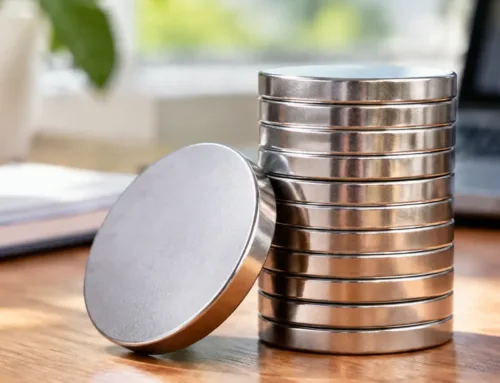
- Nam châm Hình trụ: Best for generating strong, directional magnetic torque. They provide a defined axis, which is highly effective for hinge joints or corkscrew-style swimming mechanisms.
Precise polarity alignment in these tiny components is what makes accurate magnetic steering control possible.
Coating and Durability
Sintered Neodymium magnets are incredibly powerful, but raw NdFeB is highly susceptible to corrosion, especially in fluid or biological environments. Protecting the magnet without adding excessive bulk is critical.
- Ứng dụng công nghiệp: A standard Ni-Cu-Ni (Nickel-Copper-Nickel) plating provides a durable, wear-resistant shell for micro-actuators operating in pipes or circuitry.
- Medical Use: For minimally invasive medicine, biocompatible coatings like Parylene or Titanium are mandatory. These coatings completely seal the magnet, preventing any toxic oxidation while safely preserving the magnet’s high-energy product (BHmax).
When sourcing components from a reliable nam châm neodymium, specifying the correct surface treatment is just as important as selecting the right magnetic grade.
External Control Systems
The primary advantage of using neodymium in nanorobotics is the ability to eliminate onboard batteries and motors. Instead, we rely on wireless power transmission and control through external systems.
Helmholtz coils are the standard infrastructure for this. By manipulating the electrical current running through a multi-axis coil setup, we generate a highly controlled magnetic field gradient in the workspace. The onboard neodymium magnet reacts instantly to these external shifts. This setup allows us to push, pull, and rotate the microrobot through complex environments with sub-millimeter precision, entirely from the outside.
Challenges with Microrobots and Neodymium Magnets
While the potential of combining a microrobot and neodymium magnets is massive, we face significant engineering hurdles when shrinking technology down to the microscopic level. Working with NdFeB permanent magnets at this scale introduces physics and manufacturing problems that simply do not exist in traditional robotics.
The “Sticky” Problem: Van der Waals Forces
At the micro-scale, gravity takes a back seat. Instead, surface forces dominate. Van der Waals forces cause microscopic components to stick together, creating severe friction. Our magnetic micro-actuators must generate enough magnetic torque to overcome this “stiction” to ensure smooth, reliable movement without requiring massive external power sources.
Thermal Stability in Varying Environments
Neodymium magnets are naturally sensitive to temperature changes. Managing the remanence and coercivity of these tiny magnets is critical, especially when they operate in fluctuating environments like the human bloodstream or warm industrial pipelines. Understanding exactly chất liệu của nam châm and optimizing their specific alloy composition is essential to prevent demagnetization under thermal stress.
Scaling Production for Micro-Scale NdFeB
Manufacturing microscopic NdFeB components remains one of our biggest industry bottlenecks.
- cURL Too many subrequests by single Worker invocation. To configure this limit, refer to https://developers.cloudflare.com/workers/wrangler/configuration/#limits cURL Too many subrequests by single Worker invocation. To configure this limit, refer to https://developers.cloudflare.com/workers/wrangler/configuration/#limits cURL Too many subrequests by single Worker invocation. To configure this limit, refer to https://developers.cloudflare.com/workers/wrangler/configuration/#limits cURL Too many subrequests by single Worker invocation. To configure this limit, refer to https://developers.cloudflare.com/workers/wrangler/configuration/#limits
- cURL Too many subrequests by single Worker invocation. To configure this limit, refer to https://developers.cloudflare.com/workers/wrangler/configuration/#limits cURL Too many subrequests by single Worker invocation. To configure this limit, refer to https://developers.cloudflare.com/workers/wrangler/configuration/#limits
- cURL Too many subrequests by single Worker invocation. To configure this limit, refer to https://developers.cloudflare.com/workers/wrangler/configuration/#limits cURL Too many subrequests by single Worker invocation. To configure this limit, refer to https://developers.cloudflare.com/workers/wrangler/configuration/#limits
cURL Too many subrequests by single Worker invocation. To configure this limit, refer to https://developers.cloudflare.com/workers/wrangler/configuration/#limits
cURL Too many subrequests by single Worker invocation. To configure this limit, refer to https://developers.cloudflare.com/workers/wrangler/configuration/#limits
cURL Too many subrequests by single Worker invocation. To configure this limit, refer to https://developers.cloudflare.com/workers/wrangler/configuration/#limits
cURL Too many subrequests by single Worker invocation. To configure this limit, refer to https://developers.cloudflare.com/workers/wrangler/configuration/#limits cURL Too many subrequests by single Worker invocation. To configure this limit, refer to https://developers.cloudflare.com/workers/wrangler/configuration/#limitscURL Too many subrequests by single Worker invocation. To configure this limit, refer to https://developers.cloudflare.com/workers/wrangler/configuration/#limits
- cURL Too many subrequests by single Worker invocation. To configure this limit, refer to https://developers.cloudflare.com/workers/wrangler/configuration/#limits cURL Too many subrequests by single Worker invocation. To configure this limit, refer to https://developers.cloudflare.com/workers/wrangler/configuration/#limits
- cURL Too many subrequests by single Worker invocation. To configure this limit, refer to https://developers.cloudflare.com/workers/wrangler/configuration/#limits cURL Too many subrequests by single Worker invocation. To configure this limit, refer to https://developers.cloudflare.com/workers/wrangler/configuration/#limits
cURL Too many subrequests by single Worker invocation. To configure this limit, refer to https://developers.cloudflare.com/workers/wrangler/configuration/#limits
cURL Too many subrequests by single Worker invocation. To configure this limit, refer to https://developers.cloudflare.com/workers/wrangler/configuration/#limits
- cURL Too many subrequests by single Worker invocation. To configure this limit, refer to https://developers.cloudflare.com/workers/wrangler/configuration/#limits cURL Too many subrequests by single Worker invocation. To configure this limit, refer to https://developers.cloudflare.com/workers/wrangler/configuration/#limits
- cURL Too many subrequests by single Worker invocation. To configure this limit, refer to https://developers.cloudflare.com/workers/wrangler/configuration/#limits cURL Too many subrequests by single Worker invocation. To configure this limit, refer to https://developers.cloudflare.com/workers/wrangler/configuration/#limits
cURL Too many subrequests by single Worker invocation. To configure this limit, refer to https://developers.cloudflare.com/workers/wrangler/configuration/#limits advanced magnetic applications shows exactly how coordinated micro-swarms will revolutionize fields ranging from targeted nanorobotics to automated micro-manufacturing. The combination of flexible magnetic materials and synchronized control is setting the new standard for microscopic innovation.
FAQs: Microrobots and Neodymium Magnets
How do neodymium magnets enable wireless control in microrobots?
Neodymium magnets serve as the internal “engine” for microrobots, responding to external magnetic fields generated by systems like Helmholtz coils. Because Nam châm vĩnh cửu NdFeB have high remanence, they can be manipulated with extreme precision through magnetic torque and gradient forces. By adjusting the external field’s orientation and strength, operators can steer, rotate, or propel the robot through fluids without any physical tether or onboard battery.
Are NdFeB magnets safe for use inside the human body?
In their raw state, neodymium magnets are prone to corrosion and are not biocompatible. However, they become safe for minimally invasive medicine when encapsulated in specialized coatings. We utilize biocompatible coatings such as Gold, Parylene, or medical-grade epoxy to prevent leaching and protect the magnet from bodily fluids. These protective layers ensure that the high-energy performance of the magnet is harnessed safely for targeted drug delivery systems.
What are the biggest challenges in manufacturing micro-scale magnets?
Scaling down nam châm Neodymium nung chảy to the micro-scale presents several technical hurdles:
- Giòn: NdFeB is naturally fragile, making traditional machining difficult at sub-millimeter sizes.
- Magnetic Aggregation: At the micro-scale, the high magnetic force often causes components to stick together prematurely during assembly.
- Surface Area Issues: Smaller magnets have a higher surface-area-to-volume ratio, making them more susceptible to oxidation if not properly sealed.
- Precision Coating: Applying a uniform, pinhole-free coating on a microscopic hình dạng nam châm khác nhau requires advanced vapor deposition techniques to ensure long-term durability.
Can these magnets be integrated into flexible systems?
Yes, the industry is moving toward cURL Too many subrequests by single Worker invocation. To configure this limit, refer to https://developers.cloudflare.com/workers/wrangler/configuration/#limits by embedding neodymium micro-particles into flexible polymers. This allows the microrobot to change shape, crawl, or swim, combining the high-strength magnetic response of NdFeB with the dexterity of soft materials. This integration is essential for navigating the delicate pathways found in micro-electromechanical systems (MEMS) and human vasculature.
 Vietnamese
  English
  German
  Spanish (Mexico)
  Russian
  Turkish
  Polish
  Hindi
Hindi  Thai
Thai  Malay
Malay  Korean
  Japanese
  French
  Czech
Czech  Danish
  Dutch
Dutch  Finnish
  Italian
  Portuguese (Brazil)
  Portuguese (Portugal)
  Slovenian
  Ukrainian
  Hebrew
  Scottish Gaelic
  Hungarian
  Tagalog
  Spanish (Spain)
  Serbian
  Indonesian
  Slovak
  Dutch (Belgium)
  Persian
  Arabic
  Romanian
  Estonian
  Greek
Greek  Bulgarian

[…] opposing magnetic fields during hard acceleration or regenerative braking. By combining high-grade neodymium magnets with GBD processing, we ensure the operating load line stays safely above the knee of the […]